



News:
Brokerage
Posted: September 22, 2008
Despite common misconceptions, everyone needs flood insurance
Flood Insurance is one of the most misunderstood insurance coverages. Even many insurance brokers don't fully understand what is and isn't covered under a flood insurance policy. "Flood insurance is a waste of money unless you live near the water" is a common misconception.
In April of 2007, a tremendous rain storm hit Westchester. New Rochelle, Bronxville and other areas of Westchester were submerged in water. One of the co-op's insured by my agency in Westchester, had to have rowboats help remove the shareholders to safety. Water submerged not only the basement and all heating equipment, but most of the first floor of three separate buildings. The total claim when all was said and done was $750,000. Another co-op in Westchester sustained over $80,000 of damage from the flooding. Four months later in August there was another torrential downpour. Three different co-op buildings adjacent to each other in Forest Hills, sustained damages between $200,000 and $500,000 when rain water cascaded into the basement of each building causing major damage to the electrical system and destroying all of the heating equipment. Had any of these buildings been without Flood Insurance, their financial stability would have been severely jeopardized.
In all of the above instances, the buildings were in low risk flood zones. This leads to some facts that everyone should be aware of:
* 25% of all flood claims occur in areas not identified as high risk flood zones.
* A high risk flood zone is defined as areas having a 26% chance of flooding over the life of a 30-year mortgage.
* A low risk flood zone is defined as an area with a 1% annual chance of a major flood occurring.
* In addition to rainstorms, flood insurance provides coverage for hurricanes, melting snow, damaged water mains, broken levees/dams and ruptured tanks and towers as well.
* Flood insurance will also cover many basement elements, including cleanup expenses and items such as furnaces, water heaters, washers and dryers, air conditioners, freezers, utility connections and pumps.
* Contents coverage is available up to $100,000 for all buildings.
There are two ways to obtain flood insurance. The first is within the package policy that covers the building. The second is to obtain a National Flood Insurance Policy (NFIP). Obtaining flood within the package policy is generally less expensive, however if the building is in a high risk flood zone (generally zones A or V), most insurance companies will not offer the coverage. Another consideration to note is that the deductible can vary considerably within the package policies. Most policies have deductibles ranging from $5,000 to $50,000. On the other hand, National Flood offers a deductible as low as $500.
There are some very big differences when obtaining flood within the package policy versus a national flood policy, such as:
* Flood within the package policy is generally written on a blanket basis in the event there are multiple buildings. National flood requires coverage on each individual building.
* Companies offering flood within the package policy generally offer limits of up to $1 million, while national flood offers a maximum of $250,000 per building for a co-op or apartment building and $500,000 for a commercial building.
* Condominiums can obtain as much as $250,000 of coverage per unit or the replacement cost of the building, whichever is less. This is important to recognize, as a condominium maintaining less than 80% of the replacement cost of the building or $250,000 of coverage per unit, whichever is less, will be penalized in the event of a flood claim.
* National flood will provide coverage for mudflow, while generally the package policy will not. This can be important in hilly areas such as Westchester County.
* The insurance package policy has no restriction as to how much area must be flooded in order for coverage to take effect, whereas national flood requires a number of properties or acres to be flooded before coverage takes effect.
Beginning in January of 2008, the Federal Emergency Management Agency (FEMA), who manages the National Flood Insurance Program, began remapping the United States. The result is that many areas have been recoded and now declared to be high risk flood zones. Many lending institutions are requiring proof that a property owner maintains appropriate flood coverage before obtaining a mortgage.
Speak with your insurance agent/broker and have them check what flood zone your building is in.
Edward Mackoul, CIC, is the president of Mackoul & Associates, Inc., Long Beach, N.Y.
Tags:
Brokerage
MORE FROM Brokerage
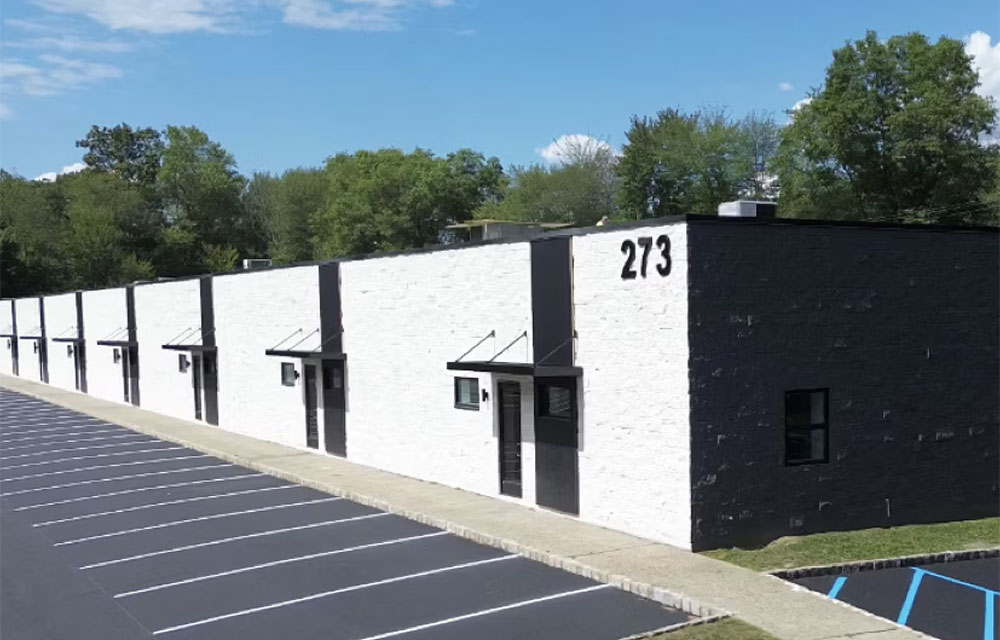
Resource Realty of Northern NJ delivers complete lease-up of 235 Franklin Rd. for Commerce Park Investors
Randolph, NJ Resource Realty of Northern New Jersey (RRNNJ) has completed the lease-up of a 10-unit small-bay industrial property at 273 Franklin Rd., marking the culmination of an investment strategy that began




Columns and Thought Leadership

Hunt commercial real estate question and answer: Fortune 500 wisdom - by David Hunt
Yes, there are lessons to be learned from the largest companies in America when comes to managing your real estate. But the decision to buy or lease real estate may not be one of

A guide to finding the right NYC property management company - by Sanjay Gandhi
Being a small to midsize landlord in NYC is an increasingly demanding endeavor. From navigating complex regulations, increased compliance demands to dealing with tenant issues and remediating violations. It is wise to enlist the assistance of a partner, a professional

New York’s streets are full again, and the retail numbers prove it - by Noam Aziz
Walk down any New York block this year and you can feel it. The sidewalks are crowded, the storefronts are lit, and the energy that defines this city is back at full volume.

Positive forecast for New York’s pro-housing push? - by Philip Butler
New York’s housing crisis remains a hot button topic despite growing consensus that varied and affordable housing is desperately needed statewide. Governor Hochul has recently introduced several initiatives to overcome N.Y.’s anti-housing
.gif)