



News:
Brokerage
Posted: February 10, 2014
Cushman & Wakefield arranges $53.1 million JFK Airgate portfolio trade
Cushman & Wakefield's Metropolitan Area Capital Market Group has arranged the trade of a 229,000 s/f, four-building portfolio situated adjacent to JFK International Airport in Queens. Terreno Realty purchased the properties, known as JFK Airgate, for $53.1 million.
Cushman & Wakefield's Andrew Merin, David Bernhaut, Gary Gabriel and Kyle Schmidt, based in the commercial real estate services firm's East Rutherford, N.J., office, headed the assignment. Gabriel noted that the offering's core characteristics drew an unprecedented level of interest from the investment community.
"The portfolio's functionality - highlighted by market-leading product in an irreplaceable location - is best illustrated by its tenants, which include some of the largest, most sophisticated and best-known logistics firms in the world," Gabriel said. "The buildings are 99 percent leased, with FedEx, UPS, Kuehne + Nagel and SDV USA among the major users. They are here for a reason. "
Built between 1986 and 1991, the JFK Airgate portfolio's one office and three industrial buildings are decades younger than a majority of the surrounding submarket and consequentially offer tenants increased efficiency. Private truck courts accommodate full-size trailers, and below-grade car parking sets it apart from much of the competition and will always be a key differentiator when competing for tenants, according to Schmidt.
"Located just minutes from the tarmac, JFK Airgate serves as a critical conduit between the New York City Metropolitan Area and global commerce," Schmidt said. "This property is wholly integrated with the region's massive logistics and distribution system, providing efficient coordination between 'wings and wheels.'"
In a submarket with extremely high barriers to entry and very few property trades, the JFK Airgate portfolio generated over two dozen bids from major institutional players and REITs. "The seller maintained and leased Airgate to the highest level of institutional standards," Schmidt said. "Terreno Realty's acquisitions team provided assurance that they would close as promised, and then executed their end perfectly."
Tags:
Brokerage
MORE FROM Brokerage
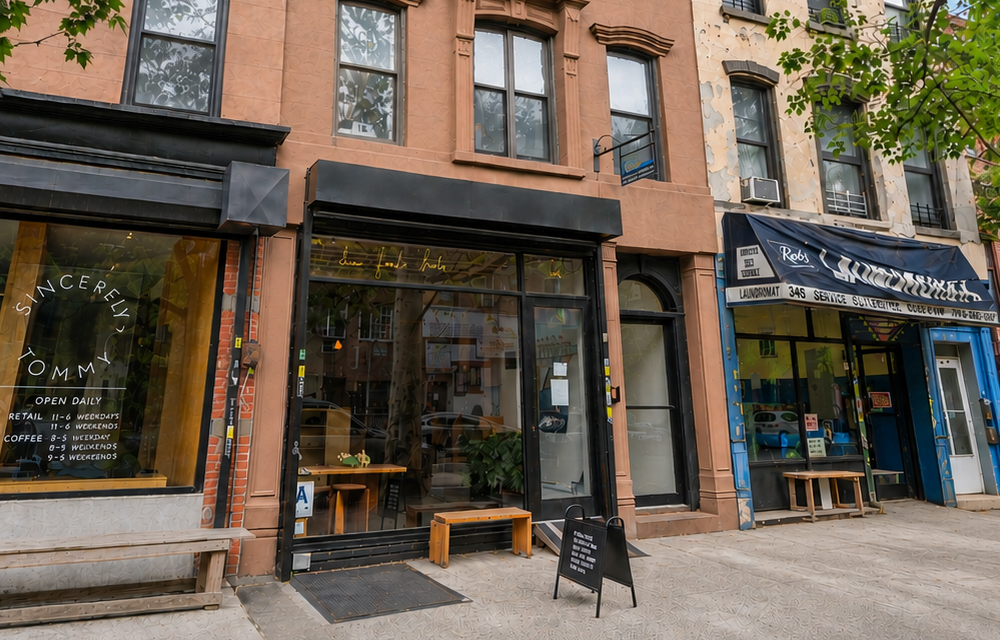
Bestreich, Reynolds, Davila, and Flaherty of Investment Property Realty Group close $1.97 million sale of 343A Tompkins Ave. in Bed-Stuy
Brooklyn, NY Investment Property Realty Group (IPRG) closed the sale of 343A Tompkins Ave., a mixed-use building located in the Bed-Stuy section of the borough, for $1.97 million.


Quick Hits
 (2).gif)

Columns and Thought Leadership

Hunt commercial real estate question and answer: Fortune 500 wisdom - by David Hunt
Yes, there are lessons to be learned from the largest companies in America when comes to managing your real estate. But the decision to buy or lease real estate may not be one of

Hunt CRE question and answer: Choosing a real estate agent - by David Hunt
First, we will only work with one agent exclusively. The primary reason is that we want that agent to legally represent our client’s interests. In New York State, a real estate agent has a fiduciary

A guide to finding the right NYC property management company - by Sanjay Gandhi
Being a small to midsize landlord in NYC is an increasingly demanding endeavor. From navigating complex regulations, increased compliance demands to dealing with tenant issues and remediating violations. It is wise to enlist the assistance of a partner, a professional

New York’s streets are full again, and the retail numbers prove it - by Noam Aziz
Walk down any New York block this year and you can feel it. The sidewalks are crowded, the storefronts are lit, and the energy that defines this city is back at full volume.
.gif)