



News:
Brokerage
Posted: May 10, 2022
CREWNY chats about 'The Great Resignation’

Linda Foggie, Citi Realty; & Karen Zabarsky, Ground Up
It seems like we can’t go anywhere lately without seeing a “We’re Hiring” sign hanging in the windows of our favorite businesses. Labor shortage is at an all-time low. While some are calling this “The Great Resignation,” others have dubbed this lack of employment the “Great Reshuffle” or “The Great Rethink.”
While employees wonder if now is the best time to make a change, according to CNBC, nearly 4.3 million people walked away from their jobs in January. At the CREWNY March Breakfast, members discussed “The Great Resignation: Challenges and Opportunities in CRE” with women leaders who have experienced firsthand the process of turning in a resignation for bigger and better, or simply other, opportunities.
The panel, consisting of Linda Foggie, managing director, global head of real estate operations at Citi Realty; Karen Zabarsky, founder and principal of Ground Up; and Onay Payne, previously a managing director at Clarion Partners; was moderated by Lisa Flicker, managing partner at Rhodes Associates.
The panelists started the discussion by saying “Don’t be afraid to change and try something new. This is especially important to women who often get caught up in their doubts.”
“Be thoughtfully selective in who you talk to,” said one of the panelists. “Some of your contacts will just not be supportive in [you] taking big risks. Think about type of decision you’re trying to make…Decide if it’s better to talk to your husband or your mom.” She said your risk-averse mom might say, ‘are you sure?,’ while your more daring husband might say ‘yes!’ Always try to think about what decision you’re trying to make and who you would get the most honest answer from.
Fresh from graduating school, Payne became an employee of Clarion Partners. After 19 years of dedication to the company, she was presented with a chance to fulfill a growing yearning to do something more, to give back to the community, and accepted new position at Lafayette Square, an impact investment platform.
On her experience switching companies after such a long residence at Clarion Partners, Payne said that nobody ever gives you anything. “You need to prove yourself,” she said. “Nurture the garden you are standing in, but be open to new opportunities.”
"People want to make impact," said Flicker. "Many found that, when they were cooped up in the pandemic, that they wanted to make more of an impact with meaning."
“It developed into a moment in time where one could do a lot of good,” she said. “The Great Impact.”
Zabarsky spoke about the idea of embracing change and getting over the fear of the unknown. During the pandemic, while employed full time, she developed and built her own company, Ground Up, a multidisciplinary creative studio that specializes in the build environment. Zabarsky resigned from her employer in November 2021 and has been building her studio since then.
She spoke about the need to build lasting relationships and connections with those around you.
“Our culture romanticizes jumping ship and the idea of change, but I focused on starting to reach out to connections,” said Zabarsky.
“I started slow," she said. “This helped me to feel more comfortable inching towards it. At the end of the day, it’s all about relationships.”
Zabarsky’s confidant was a friend who was going through a similar transition. “We would have weekly calls where we encouraged each other and would talk through fears,” she said. “This is especially important for women. We need to foster relationships with other women with career sense. It’s critical!”
Payne said another important aspect of change is being comfortable being uncomfortable, that it is part of the process.
“Whenever you go in to talk about a raise or promotion, you should always feel uncomfortable. If you’re comfortable, you’re leaving too much on the table,” said Flicker, who herself had received the same advice early in her career.
A discussion also took place from an employer standpoint, offering advice to employers looking to be mission critical in retaining talent. It was explained that roles in leadership have shifted significantly over the years, depending on how many people being managed. In addition to the fundamental things like taking care of people and providing opportunities, there are some practical things that are important.
“I think about how I speak to my people,” stated one of the panelists. “Instead of asking questions like, ‘how are you today?’, I ask, ‘what obstacles can I remove for you today?’ When I come into a new team, I’m often asked [for] best way [to] communicate with me or how they can adjust to fit, but I say ‘you don’t need to do that; let me figure out how you work; I’m quite flexible and can adjust to you.’ This causes people to become more comfortable more quickly.”
The reality was that both sides adjust to each other at the end of the day. But this way of thinking removes the hierarchy and allows people to feel like they can connect with you. Keep in mind that, when you are dealing with top talent, they’re not going to go to places where they have leaders they don’t get along with. They have choices, so it's important to be that inspirational leader who tries to be a partner.
Final takeaways from the panel were to dare to take risks and to develop your network.
A panelist commented that joining boards and committees are a great way to develop transferable skills. Some of the most important skills have leaders have today is doing volunteer work with various organizations. Learning to lead should come from inspiration, not authority.
Zabarsky predicted that people will take on more empathetic projects and open doors to people who have been looked over in the past. “Try to get excited,” she said. “Reframe an experience that can get you into a proactive mindset, where the sky is the limit.”
Payne emphasized that we are all stronger than we remember sometimes and that, while we may fall, we can always get back up. She said that the past few years have forced us to focus on what we all really want to do and what is authentic to us, as opposed to what was expected of us in the past.
“Traveler, there is no path,” she said. “The path is made when you travel.”
Tags:
Brokerage
MORE FROM Brokerage
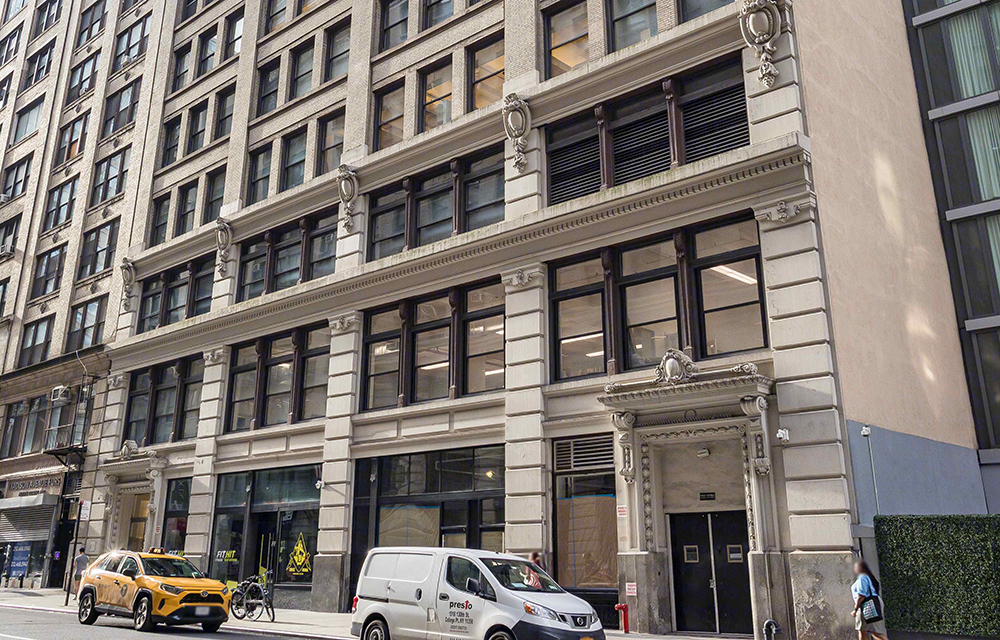
Koeppel Rosen inks 16-year 33,783 s/f lease for coworking firm Nomadworks at 122 West 27th St.
Manhattan, NY According to Koeppel Rosen LLC, leasing and management agent for the Rosen family portfolio, Nomadworks has signed a new 16-year, two-month lease totaling 33,783 s/f at 122 West



Quick Hits
 (2).gif)

Columns and Thought Leadership

Hunt commercial real estate question and answer: Fortune 500 wisdom - by David Hunt
Yes, there are lessons to be learned from the largest companies in America when comes to managing your real estate. But the decision to buy or lease real estate may not be one of

Hunt CRE question and answer: Choosing a real estate agent - by David Hunt
First, we will only work with one agent exclusively. The primary reason is that we want that agent to legally represent our client’s interests. In New York State, a real estate agent has a fiduciary

The art of investing in real estate - by Thomas Donovan
Real estate investing is as much an art as it is a skill. No one can time the market, or the factors that drive it, perfectly. Location, zoning, size, transportation, and neighborhood density give you a baseline for

New York’s streets are full again, and the retail numbers prove it - by Noam Aziz
Walk down any New York block this year and you can feel it. The sidewalks are crowded, the storefronts are lit, and the energy that defines this city is back at full volume.
.gif)