


News:
Owners Developers & Managers
Posted: November 10, 2026
Co-op and Condos United of NY convene at North Shore Towers to keep co-ops affordable
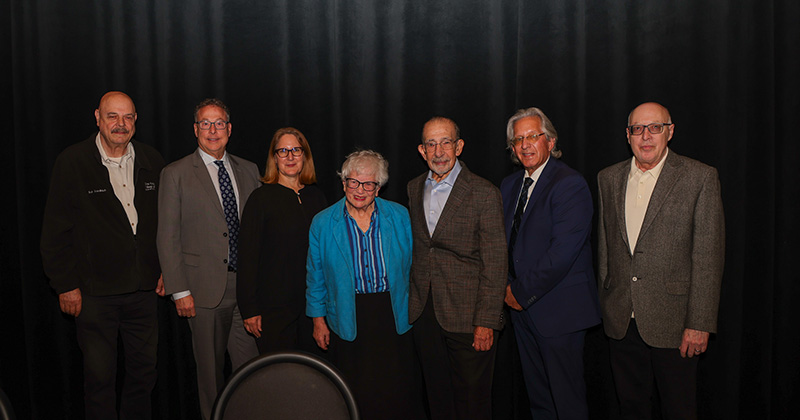
Queens, NY Co-op and Condos United of New York (CCU), a coalition of co-op and condo owners from across the five boroughs that represents the interests of the more than one million New York homeowners who live in this type of housing, hosted a town hall at North Shore Towers to discuss unfunded mandates, such as Local Law 97 (LL97), rising taxes and other policy issues threatening the affordability of the essential housing stock. Building on momentum following recent rallies at Southbridge Towers, Bell Park Manor, and Hilltop Village, the event brought co-op leaders and residents together to address the political issues creating financial burdens for co-ops and condos.
The town hall featured the voices of co-op leaders, nearly 300 residents, and elected officials, including congressman Tom Suozzi (Congressional District 3); New York State senator Toby Ann Stavisky (Senate District 11); and assemblymember Ed Braunstein (Assembly District 26). These dignitaries discussed the affordability crisis currently blighting the cooperative housing community, which serves as one of the last attainable paths to homeownership for the middle class.
LL97 was a central issue co-op leaders rallied against at the town hall. LL97 requires buildings over 25,000 s/f to meet new greenhouse gas emissions limits and take certain measures to reduce their carbon footprint. The high upfront costs for implementation and the severity of fees for lateness or noncompliance - without clear guidance from the city - is inordinate. As it is currently written, LL97 will put co-op communities across the city under extreme financial strain. CCU urges legislators to re-evaluate the timelines and penalties of LL97 to ensure fairness and equity in the implementation of LL97 so that co-ops and condos in NYC remain affordable for working and middle class homeowners. Additionally amendments to the legislation are needed so that seniors and those living on a fixed income can remain in their homes
Additionally, the event focused on the need for policymakers to treat co-ops as distinct and essential building types rather than incorrectly grouping them with landlord-owned or single family homes. When co-ops inevitably fail to fit the molds of entirely different housing types, the results are punitive.
An organization dedicated to ensuring that this significant constituency has a strong, coordinated voice in legislative and policy discussions at both the city and state levels, CCU is focused on advocating for policies that protect and support co-op and condo owners across New York.
“As issues such as LL97 and other unfunded mandates continue to fuel the cost-of-living crisis within co-op and condo buildings, the turnout and energy at the town hall demonstrates that our community is united and eager to be heard in the public arena,” said Jane Menton, legislative director at Co-ops and Condos United NY. “The pressure co-ops and condos face from current policies is untenable, and we were grateful to be joined by so many of our elected officials who are eager to work with us to push public policy solutions forward.”
“Co-ops mean homeownership for middle-class New Yorkers, especially here in Queens,” said congressman Tom Suozzi. “We need to make sure that government laws and regulations don’t impose costs that make it harder for people to afford to stay in their homes. I’m grateful to Co-ops & Condos United of NY, North Shore Towers, and the residents who I stand with as they are making their voices heard and advocating for sensible reforms that protect affordability and strengthen our communities.”
“Co-ops have provided generations of Queens families an affordable path to ownership,” said New York State senator Toby Ann Stavisky. “Assemblymember Braunstein and I have worked for years to keep them affordable. We brought back the J-51 program to help co-ops pay for improvements, such as windows and elevators. We extended the property tax abatement for co-ops across the city. But rising taxes and new mandates still add pressure. Tonight was about listening to the residents and board members who pay for those costs. I thank the shareholders for coming to this town hall, and Co-ops and Condos United for organizing these forums.”
“Co-op and condo residents are facing mounting financial pressures as the cost of living continues to rise, and the City must take action to help preserve affordable homeownership,” said council member Linda Lee, chair of the Committee on Finance. “For generations, co-ops and condo communities have provided a dependable path to affordable homeownership. But the combination of costly Local Law 97 compliance penalties and today’s affordability crisis is placing an unsustainable burden on families. As the City works to address these challenges, I remain committed to partnering with the growing coalition of community leaders, North Shore Towers, and organizations like Co-ops and Condos United to ensure residents have a voice and to protect the long-term stability of our neighborhoods.”
“Co-ops play a vital role in making homeownership affordable and accessible to New Yorkers, giving thousands of families the opportunity to own a home and build equity,” said North Shore Towers board president Marty Schwartzman. “But preserving that affordability requires policies that recognize the unique challenges co-ops face. At North Shore Towers, we operate our own power plant, providing essential energy to our community while facing significant costs and technical challenges in complying with Local Law 97. We are committed to improving energy efficiency and doing our part to meet the city’s climate goals, but compliance must take into account the realities of existing infrastructure and the financial impact on homeowners. We cannot achieve our environmental goals by making homeownership less affordable.”
MORE FROM Owners Developers & Managers

The office move starts before the truck arrives - by Lior Rachmany
A commercial lease can be signed, the new office can be ready, and the moving crew can be booked — and the relocation can still stall at the loading dock. In New York City, the difference between a smooth office move and a long, expensive day often comes down to details that never appear on a furniture inventory: a reserved freight elevator, an approved insurance certificate, a usable loading area, and someone authorized to open the service entrance.




Quick Hits

Columns and Thought Leadership

NYC's Community Opportunity to Purchase Act is back - and multifamily owners should pay attention - by Ron Cohen
New York City’s Community Opportunity to Purchase Act (COPA) is back, and this latest version could have a much better chance of becoming law. The proposal would give qualified nonprofit organizations

Don’t leave severance damages behind - by Sebastian Jablonski
When the government takes a portion of a landowner’s property, most assume just compensation stops at the value of the land taken. However, in partial takings, that is only half of the equation.

Hunt Commercial Real Estate Q&A: Location, location, location? - by David Hunt
In working with our clients, we break down our search objectives into two categories. The first category involves the specific needs of your business such as warehouse height, amount of office space and number of loading
New York City’s historic rent freeze now rests with the courts - by Ron Cohen
New York City’s first-ever two-year rent freeze is now in the hands of a state Supreme Court judge, and the decision could reset income for owners of roughly one million rent-stabilized apartments housing some 2.4 million residents.