



News:
Brokerage
Posted: March 24, 2014
CBRE's report finds February 2014 all three Manhattan markets topping their five-year monthly leasing averages
Manhattan logged 2.44 million s/f of leasing activity during February, up 40% from February 2013's 1.74 million s/f. Notably, all three Manhattan markets topped their respective five-year monthly leasing averages.
Year-to-date leasing totaled 5.26 million s/f, 60% ahead of the 3.34 million s/f of activity logged during the same two-month period in 2013. Net absorption reached positive 960,000 s/f in February with all three markets in positive territory for the month. The Manhattan-wide availability rate dropped 30 basis points month-over-month to 12.0%. Manhattan's average asking rent edged up $0.07 during February to $63.68 per s/f
Among the report's highlights:
Midtown - Midtown's 1.28 million s/f of leasing during February was slightly higher than the market's five-year monthly average of 1.24 million s/f and significantly above February 2013's total of 830,000 s/f Year-to-date, Midtown logged 2.95 million s/f of leasing, 65% above last year's pace. No spaces larger than 70,000 s/f were listed during the month, which helped the net absorption total reach 530,000 s/f However, the year-to-date mark remained in negative territory. The month's positive net absorption led to a decline in the market's availability rate, which finished February at 12.0%, compared to 12.2% in the previous month and 12.6% one year ago. Midtown's average asking rent remained stable in February, finishing at $73.45 per s/f, as no new large blocks of space added during the month were priced significantly above January's average asking rent.
Midtown South - Midtown South posted its third consecutive month of strong leasing with February's 530,000 s/f of activity outpacing the market's five-year monthly average of 370,000 s/f by 42%. Through February, leasing activity totaled 1.28 million s/f, more than double 2013's year-to-date tally of 570,000 s/f The month's strong leasing offset new availabilities, resulting in 110,000 s/f of positive net absorption. Year-to-date, Midtown South posted 530,000 s/f of positive net absorption, a significant reversal of 2013's year-to-date total of negative 1.60 million s/f Midtown South's availability rate dropped 20 basis points during February to 9.3%, as only one new availability over 50,000 s/f was added during the month. The average asking rent fell to $63.46 per s/f, down from $64.01 per s/f in January, largely due to higher priced space being removed from the market. Although Midtown South's average rent was up 7% year-over-year, it has remained relatively stable over the past 10 months.
Downtown - Downtown posted another strong month, with February's 630,000 s/f of leasing outpacing January's 400,000 s/f of activity by 58% and the five-year monthly average of 380,000 s/f by 66%. The top five transactions signed during the month were all new leases. Through the first two months of the year, Downtown recorded 1.03 million s/f of leasing activity, slightly ahead of 2013's 980,000 s/f of year-to-date activity. February saw 330,000 s/f of positive net absorption as strong leasing offset new availabilities brought to the market. Year-to-date absorption, however, remained in negative territory. The overall availability rate dropped 40 basis points during February to 14.5%, while the sublease availability rate, at 1.6%, remained the lowest of the three Manhattan markets. Downtown's average asking rent inched up $0.35 to $48.44 per s/f during February. Year-over-year, the average was up 4%.
Tags:
Brokerage
MORE FROM Brokerage
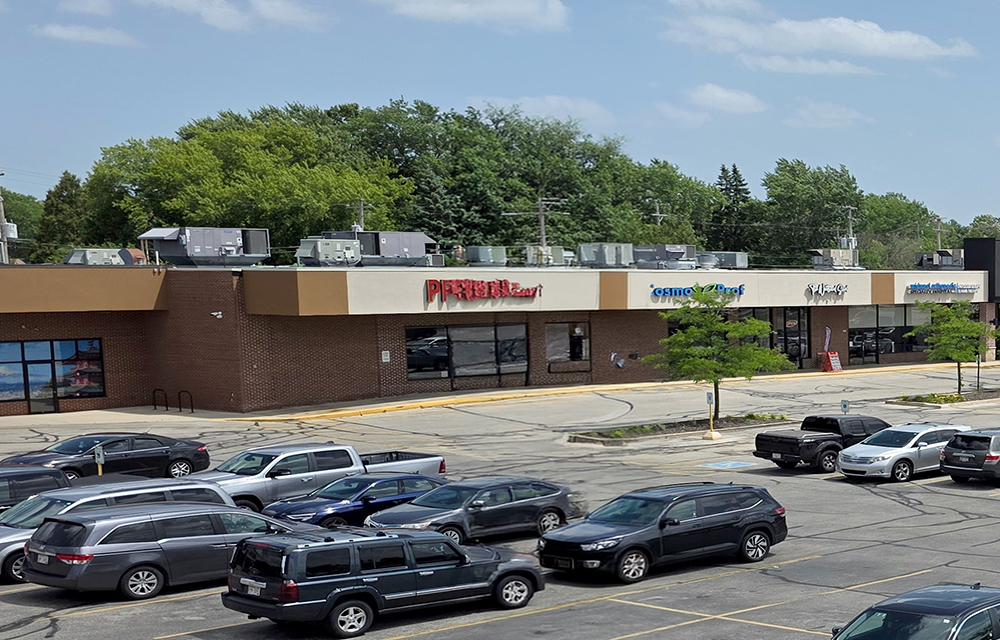
United Properties Corp. expands Wisconsin and Illinois retail presence adding 200,000 s/f
West Allis, WI United Properties Corp. completed two retail acquisitions totaling $27.4 million across Illinois and Wisconsin, adding 205,000 s/f of shopping center space to its portfolio


Quick Hits

Columns and Thought Leadership

Hunt commercial real estate question and answer: Fortune 500 wisdom - by David Hunt
Yes, there are lessons to be learned from the largest companies in America when comes to managing your real estate. But the decision to buy or lease real estate may not be one of

Positive forecast for New York’s pro-housing push? - by Philip Butler
New York’s housing crisis remains a hot button topic despite growing consensus that varied and affordable housing is desperately needed statewide. Governor Hochul has recently introduced several initiatives to overcome N.Y.’s anti-housing

A guide to finding the right NYC property management company - by Sanjay Gandhi
Being a small to midsize landlord in NYC is an increasingly demanding endeavor. From navigating complex regulations, increased compliance demands to dealing with tenant issues and remediating violations. It is wise to enlist the assistance of a partner, a professional

New York’s streets are full again, and the retail numbers prove it - by Noam Aziz
Walk down any New York block this year and you can feel it. The sidewalks are crowded, the storefronts are lit, and the energy that defines this city is back at full volume.
.gif)