



News:
Brokerage
Posted: May 10, 2022
CareMax opens new location at 1220 East New York Ave.
Brooklyn, NY CareMax, Inc. (“CareMax”) (NASDAQ: CMAX; CMAXW), a provider of value-based care to seniors, has opened a new location. As part of the company’s strategy to expand its footprint and enter new markets nationwide, the new location at 1220 East New York Ave. will provide comprehensive, community-based care in one convenient location. The nearly 30,000 seniors who live in the immediate vicinty, many of whom are both Medicare and Medicaid recipients, will have access to the services provided by CareMax-affiliated provider Medical Care of NY, PC.
CareMax is also partnering with two local organizations to address the need for senior-focused value-based care in urban settings. The Jewish Association Serving the Aging (JASA) will provide enhanced social and navigation services while the Related Companies, under a previously announced agreement, will advise CareMax in identifying locations within and near affordable senior housing communities to alleviate health care deserts.
“We are excited to support the delivery of this level of care to underserved senior communities in New York,” said Rafael Viturro, president of the Northeast market. “We know that our model helps patients improve their health, reduce the effects and incidence of chronic disease, and live healthier lives.”
“This partnership aims to increase access to both primary care and essential social services for older adults in New York City,” said Kathryn Haslanger, CEO of JASA. “We are delighted to collaborate with CareMax and its affiliated providers to address the healthcare challenges and social drivers of health that contribute to major health disparities which have been so pronounced during the pandemic.”
“We are proud to be working with CareMax and JASA on the first CareMax location in New York,” said Bryan Cho, executive vice president of Related Companies. “This new location is designed to enhance the entire community and will offer a welcoming place to receive quality healthcare, essential services, and more.”
Since 2011, CareMax has employed a “Whole Person Health” approach that takes into consideration all facets of a patient’s health. From in-house specialists to wellness activities to transportation and social services, this care is designed to treat the entirety of the patient, not just their individual medical conditions. When operating at full capacity, the Brownsville location is expected to combine primary, specialty and virtual care, transportation services, dental, optometry, social services, healthy meals, and wellness activities.
The CareMax model has proven to be highly successful in Florida and Tennessee, where it currently operates 48 centers serving 83,000 patients. When compared with fee-for-service models, per 1,000 patients, CareMax has seen a 52 percent improvement in hospital admissions and a 66 percent improvement in emergency room visits. In addition, the team of physicians working for the CareMax-affiliated practice will have a patient roster of just 600, compared to the normal primary care provider (PCP) roster of more than 1,500 patients. This will allow physicians to spend much more time with their patients.
Moreover, the CareMax model makes CareMax locations part of the communities they serve. Initiatives are designed to provide additional resources to patients, families and communities, such as outdoor food drives and celebrations working alongside larger, company-wide pursuits. Team members are mostly hired from the local community, as studies have shown that culturally sensitive, hyper-localized care produce better health outcomes.
“The CareMax model reveals the inefficiencies and ineffectiveness of a fee-for-service system,” said Carlos de Solo, CEO of CareMax. “We believe that CareMax’s proactive, data-driven approach to chronic disease management as well as our focus on the social determinants of health will improve patient outcomes in these underserved communities. CareMax and our affiliated providers look forward to serving the Brownsville community, and welcoming patients into our CareMax family.”
Tags:
Brokerage
MORE FROM Brokerage
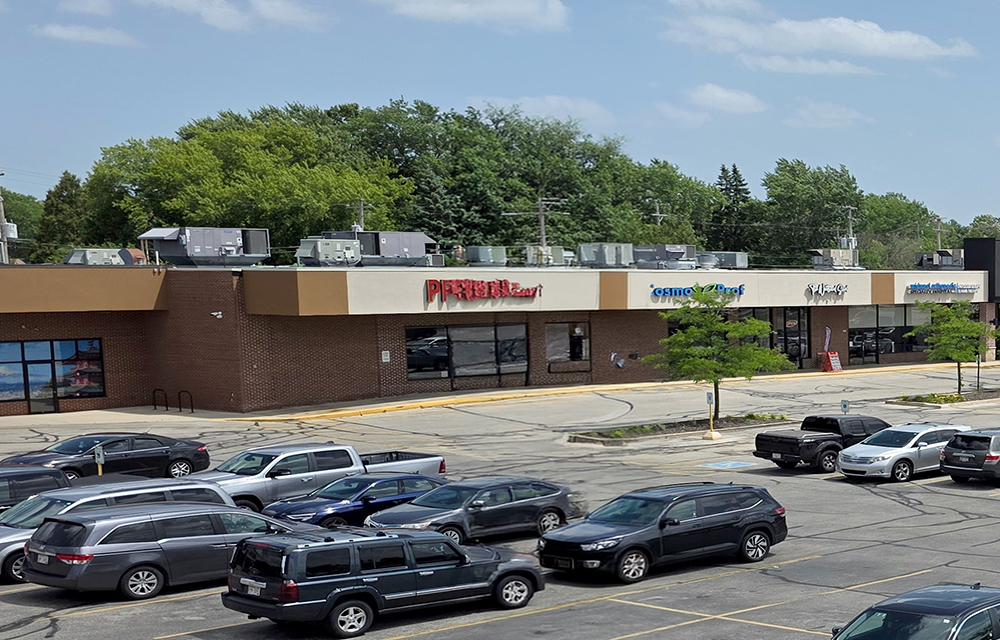
United Properties Corp. expands Wisconsin and Illinois retail presence adding 200,000 s/f
West Allis, WI United Properties Corp. completed two retail acquisitions totaling $27.4 million across Illinois and Wisconsin, adding 205,000 s/f of shopping center space to its portfolio






Quick Hits
 (2).gif)

Columns and Thought Leadership

A guide to finding the right NYC property management company - by Sanjay Gandhi
Being a small to midsize landlord in NYC is an increasingly demanding endeavor. From navigating complex regulations, increased compliance demands to dealing with tenant issues and remediating violations. It is wise to enlist the assistance of a partner, a professional

New York’s streets are full again, and the retail numbers prove it - by Noam Aziz
Walk down any New York block this year and you can feel it. The sidewalks are crowded, the storefronts are lit, and the energy that defines this city is back at full volume.

Hunt commercial real estate question and answer: Fortune 500 wisdom - by David Hunt
Yes, there are lessons to be learned from the largest companies in America when comes to managing your real estate. But the decision to buy or lease real estate may not be one of

Positive forecast for New York’s pro-housing push? - by Philip Butler
New York’s housing crisis remains a hot button topic despite growing consensus that varied and affordable housing is desperately needed statewide. Governor Hochul has recently introduced several initiatives to overcome N.Y.’s anti-housing
.gif)