



News:
Brokerage
Posted: January 22, 2019
Cahill of JLL secures 10,000 s/f for Quentis Therapeutics at the Mink Building in West Harlem
Manhattan, NY JLL completed a new transaction for Quentis Therapeutics at 1361 Amsterdam Ave., also known as the Mink Building, in the West Harlem neighborhood with Janus Property Co. The cancer immunotherapy startup firm signed a lease for 10,000 s/f of laboratory and office space.
The tenant was represented by John Cahill, senior vice president, with JLL’s Life Sciences practice group, along with Evan Margolin, vice chairman, with Savills Studley. Building owner Janus Property was represented in-house.
“Quentis will be able to expand its growing operations thanks to funds from the NYEDC,” said Cahill. “The move allows the life sciences firm to consolidate its research facilities into one state-of-the-art location in West Harlem. The location was ideal for Quentis as its new home is located near Columbia University’s Manhattanville campus and the CUNY Advanced Science Research Center.”
Quentis Therapeutics signed a lease for 10,000 square feet of research and development/ laboratory/office space and will occupy part of the fifth floor at 1361 Amsterdam Ave. The cancer immunotherapy startup is relocating to the building from the Alexandria Center for Life Sciences, 430 East 29th St., and from space it occupies at JLABS @ NYC, located at 101 Avenue of the Americas.
The biotech firm is expanding in West Harlem in part thanks to a $1 million grant from the New York Economic Development Corp. The money comes from a $10 million LifeSci NYC Expansion Space Fund established by the NYEDC to help life sciences companies expand in the city.
The five-story 1361 Amsterdam Ave., also known as the Mink Building, was constructed in 1911. The building was part of the former Yuengling Brewery complex that became a fur storage warehouse in the 1940s. The property was converted to office space after being acquired by Janus Property in 1997. The new owner has completed extensive renovations at 1361 Amsterdam Ave., with the building now featuring a new facade, new elevator, new lobby, and new windows.
Tags:
Brokerage
MORE FROM Brokerage
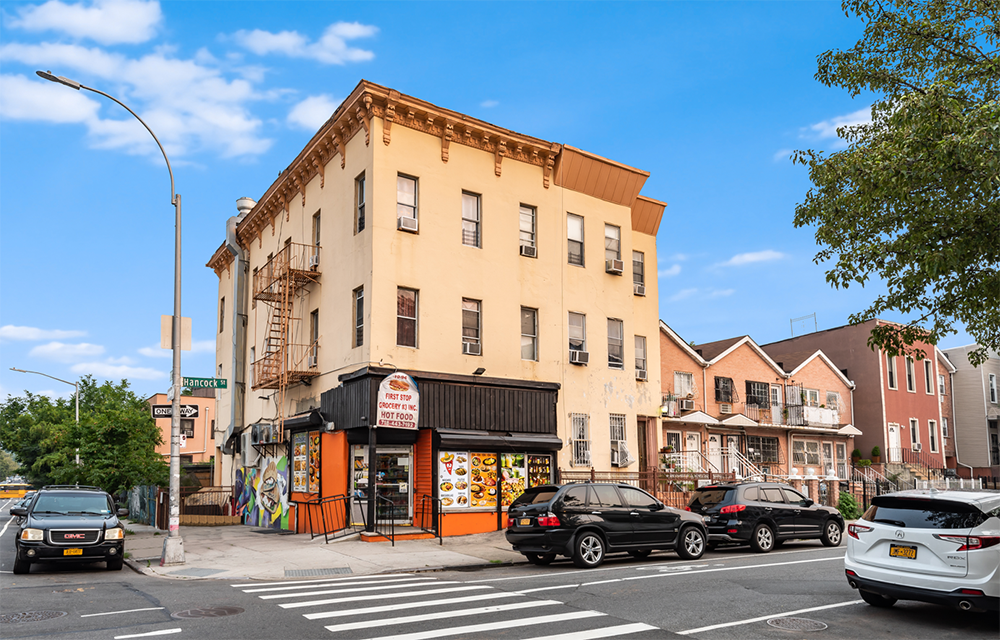
Investment Property Realty Group closes $1.75 million sale of 1094 Hancock Street in Brooklyn
Brooklyn, NY Investment Property Realty Group (IPRG), a New York-based commercial investment firm, has closed the sale of 1094 Hancock St., a mixed-use building in the Bushwick section, for $1.75 million.



Columns and Thought Leadership

Hunt CRE question and answer: Choosing a real estate agent - by David Hunt
First, we will only work with one agent exclusively. The primary reason is that we want that agent to legally represent our client’s interests. In New York State, a real estate agent has a fiduciary

Hunt commercial real estate question and answer: Fortune 500 wisdom - by David Hunt
Yes, there are lessons to be learned from the largest companies in America when comes to managing your real estate. But the decision to buy or lease real estate may not be one of

A guide to finding the right NYC property management company - by Sanjay Gandhi
Being a small to midsize landlord in NYC is an increasingly demanding endeavor. From navigating complex regulations, increased compliance demands to dealing with tenant issues and remediating violations. It is wise to enlist the assistance of a partner, a professional

New York’s streets are full again, and the retail numbers prove it - by Noam Aziz
Walk down any New York block this year and you can feel it. The sidewalks are crowded, the storefronts are lit, and the energy that defines this city is back at full volume.
.gif)