



News:
Brokerage
Posted: May 26, 2015
Buying new condominium units: Understanding more about this form of property ownership
Lately a lot of the real estate closings I have been receiving calls about are from people buying and selling condominium units in New York City. It is a unique form of property ownership and is very different from ownership of a co-op apartment. It is most easily described as being like owning a house, as opposed to a co-op, where shares are owned in a corporation. While co-ops are very rarely owned by corporations, condo units often are. They can and are purchased by many owners as investment properties. Many clients form limited liability companies to own them, which makes it easy for celebrities and high profile people who do not want their identities to be known from public property records.
The unit owners often do not live in them and instead rent them out to others. Sometimes different members of the family stay in the apartments at different times. So these newer condominium buildings are a combination of condominium units and free-market rental apartments with tenants. There are no restrictions on the amount of rent that can be charged, other than what the market will bear.
Many of the units are owned by people who live in other states or other countries. They may give their proxies to others to vote for them on issues before the board of managers. This can create a disparity between the interests of the people owning the units and those renting and living there.
Ownership of pets is a big difference between co-ops and condominiums. For example, many people buy condominiums, since they can own pets, particularly dogs. Co-ops are more restrictive about the number, size, weight and type of pets. As certain buildings have had problems, they have become increasingly restrictive. For example, when dogs start barking for hours on end and are aggressive towards neighbors, the boards ask legal counsel about enacting fines for barking and having other restrictions. Boards and unit owners try to strike a balance so that their building is a desirable place for all the occupants to live in.
Years ago, condominiums had no restrictions on alterations performed by unit owners. Alterations were only subject to New York City department of buildings rules and regulations. As certain buildings have had bad experiences with poor quality and unlicensed work resulting in damages, they have strengthened the rules on renovations to be more like those in co-op buildings. They often also require that unit owners maintain insurance and present a certificate of insurance at closing.
For the first few years, most condominium buildings are controlled by the sponsor who organized it. As the sponsor sells off units he has retained, the board of managers of the condominiums comes to be controlled by the unit owners. Often the first thing unit owners do is change management companies from the one that was used by the sponsor, to one they select. They want to distance themselves from the sponsor and its team and create a new team. This often includes selecting new legal counsel.
The next step is retaining a lawyer. The organizational documents for the building are usually boilerplate, since they were set up by the sponsor. Probably every condominium set up by that developer has the same set of organizational documents. When the board of managers is comprised entirely of unit owners, they often find that the by-laws and house rules are not as comprehensive and aggressive as what they would like and retain legal counsel to make changes.
Condominium buildings need to be careful of keeping track of where the actual owners live, since often they no longer live in the building and tenants live in the units. One building has a unit owner who owes common charges and they are uncertain where to send notice, apart from the actual unit, which may be occupied by a subtenant. Having that type of non-payment situation in more than one unit can create financial pressures in the building, since those unit owners are not carrying their weight regarding expenses and it can be difficult and expensive to pursue legal action. Sometimes the buildings can require the subtenants to pay their rent directly to the building. Buildings can also file common charge liens to protect their rights.
Understanding more about this form of property ownership is helpful when deciding about making a purchase of one.
C. Jaye Berger, Esq, is the principal of Law Offices C. Jaye Berger, New York, N.Y.
Tags:
Brokerage
MORE FROM Brokerage
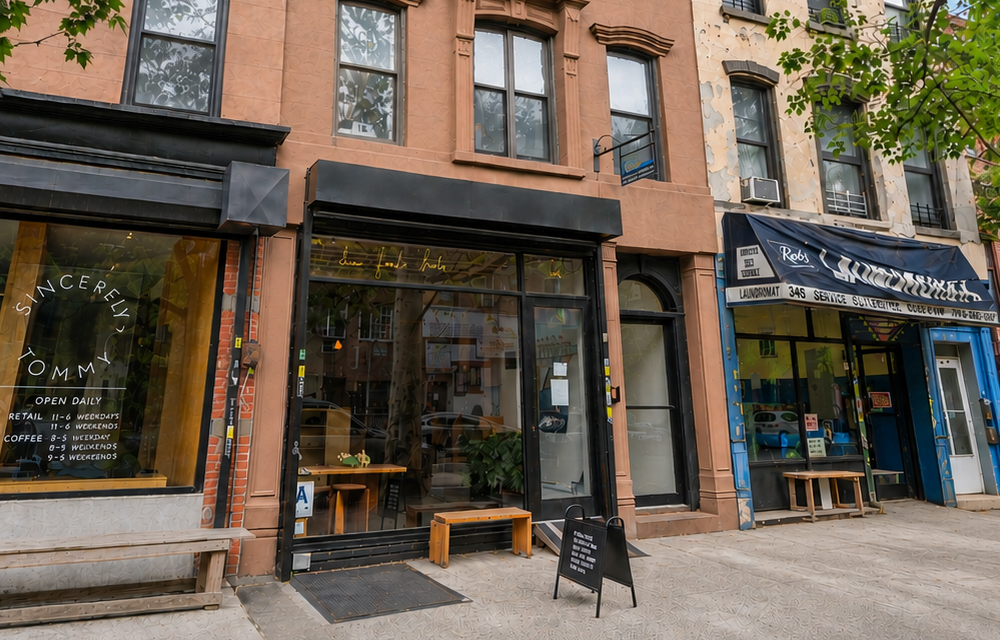
Bestreich, Reynolds, Davila, and Flaherty of Investment Property Realty Group close $1.97 million sale of 343A Tompkins Ave. in Bed-Stuy
Brooklyn, NY Investment Property Realty Group (IPRG) closed the sale of 343A Tompkins Ave., a mixed-use building located in the Bed-Stuy section of the borough, for $1.97 million.



Quick Hits

Columns and Thought Leadership

Hunt commercial real estate question and answer: Fortune 500 wisdom - by David Hunt
Yes, there are lessons to be learned from the largest companies in America when comes to managing your real estate. But the decision to buy or lease real estate may not be one of

Hunt CRE question and answer: Choosing a real estate agent - by David Hunt
First, we will only work with one agent exclusively. The primary reason is that we want that agent to legally represent our client’s interests. In New York State, a real estate agent has a fiduciary

A guide to finding the right NYC property management company - by Sanjay Gandhi
Being a small to midsize landlord in NYC is an increasingly demanding endeavor. From navigating complex regulations, increased compliance demands to dealing with tenant issues and remediating violations. It is wise to enlist the assistance of a partner, a professional

New York’s streets are full again, and the retail numbers prove it - by Noam Aziz
Walk down any New York block this year and you can feel it. The sidewalks are crowded, the storefronts are lit, and the energy that defines this city is back at full volume.
.gif)