



News:
Brokerage
Posted: March 25, 2013
Business has been good...Lets keep it that way! Vote for growth
Business has been good.
Kudos to mayor Michael Bloomberg and his predecessor, Rudolf Giuliani, for the business-friendly government New York City has experienced since 1994 that has contributed to our emergence as a world leader. But we cannot rely on our past or even current performance to keep us there; we are being threatened on every front by global competition.
In a recent study conducted by the Economist Intelligence Unit, New York City ranked first out of 120 international cities for its ability to attract capital, business, talent, and tourists. Yet as the Bloomberg era comes to a close, the concern is that our next mayor will have the vision and resolve to keep New York City competitive in an increasingly global marketplace. Twenty years ago, international competition was limited to London, Paris, and Tokyo. Since then, the playing field has grown and our competition now comes from every continent, including cities such as Beijing, Hong Kong, Shanghai, Rio de Janeiro, Zurich, and Berlin—cities that not too long ago were not even a blip on the global radar screen.
Lets keep it that way.
To keep up our game, our first priority must be to maintain a vibrant and diverse economy that provides meaningful jobs for all. Without a diverse economy, there won't be jobs for all, and without jobs, the economy won't be vibrant. Without either we will lack the strong tax base it takes to keep New York City the leading city in the world.
With a modicum of presumption, acknowledgment it's a herculean task to govern our city, and good luck wishes, here is an agenda for the next mayor of New York City to help us maintain our competitive edge:
Premium price must guarantee premium product: It is common knowledge that the cost of doing business in New York City is exceedingly high. Since we will never be able to compete on price, we have to focus on quality: safe and clean streets, good schools, healthcare, reliable mass transportation, and a skilled and educated workforce—to justify the cost of doing business here.
Diversify the economy: Even though finance comprises 13% of total private sector employment, its wages are more than three times all wages paid in Manhattan. Upset that sector and our whole economy crumbles. We need policies that encourage growth in other industries, particularly those with good paying jobs. The recent growth spurt in the technology, advertising, media, and information sector is a good start. And the Cornell Technion Campus on Roosevelt Island is an example of government at its best.
Allow students to stay after they complete their educations: This one is for the Feds, but it's incumbent on the mayor of the largest city in the US to exert power; it will help every city. Current federal immigration policy forces foreign-born students to leave upon graduation. We need to keep them here, in the US—and in New York City. Lack of skilled and educated workers is the main deficit in building business, and a major complaint among New York City business leaders. Though progress is being made in Washington DC toward correcting our immigration policy, our next mayor must turn up heat.
Build more workforce housing: New York City ranks eighteenth in the Economist competitive edge study in attracting human capital. Immigration policy is not the only issue preventing skilled and educated workers from staying in the City; lack of housing they can afford is. About 140,000 new units of housing have been built since 2003. Developers need additional incentives to build housing that is affordable to the working classes. Labor union concessions, zoning bonuses, and an expedited building department review are imperative.
Build a new Gotham: Our skyscrapers are old; our infrastructure is older. The new Midtown East Zoning Plan is intended to encourage building a new generation of technologically sophisticated skyscrapers in Midtown. It needs to be enacted now. We also need to upgrade our transportation infrastructure so people and goods can move in and out of the city efficiently. And as Hurricane Sandy made clear, our utilities infrastructure is also in sorry shape.
Return teaching to a noble profession: Please see all items above. The kinds of skilled workers necessary to grow business in New York are lacking. Opening charter schools and closing under performing public schools is only part of the solution. We need a public school system that teaches the skills necessary for its students to compete in a global marketplace.
Vote for growth.
If our new mayor doesn't support policies to encourage growth, we'll lose our competitive edge. And can a New Yorker even considering being second in anything?
James Wacht is president of Lee & Associates NYC, New York, N.Y.
Tags:
Brokerage
MORE FROM Brokerage
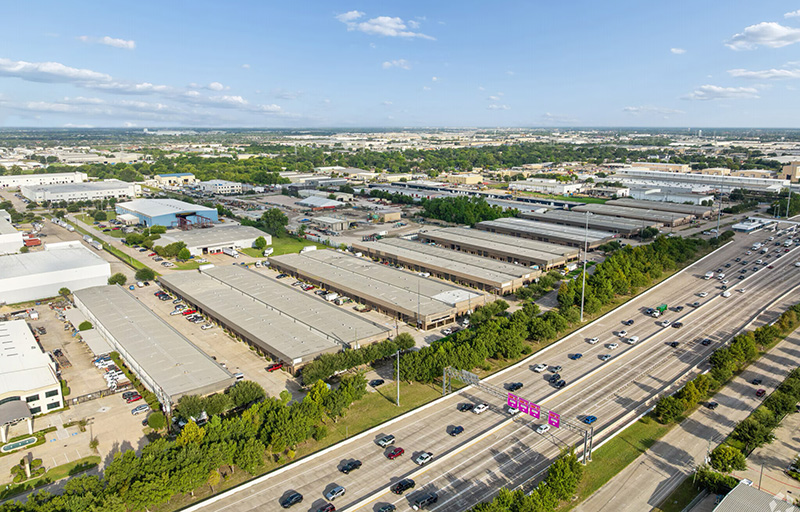
Simi Capital enters Texas with acquisition of 359,000 s/f small-bay industrial portfolio in Northwest Houston
Houston, TX Simi Capital acquired a three-property, 359,000 s/f small-bay industrial portfolio. The transaction, completed in a joint venture with Decker Capital, marks Simi




Quick Hits
 (2).gif)

Columns and Thought Leadership

A guide to finding the right NYC property management company - by Sanjay Gandhi
Being a small to midsize landlord in NYC is an increasingly demanding endeavor. From navigating complex regulations, increased compliance demands to dealing with tenant issues and remediating violations. It is wise to enlist the assistance of a partner, a professional

Hunt commercial real estate question and answer: Fortune 500 wisdom - by David Hunt
Yes, there are lessons to be learned from the largest companies in America when comes to managing your real estate. But the decision to buy or lease real estate may not be one of

New York’s streets are full again, and the retail numbers prove it - by Noam Aziz
Walk down any New York block this year and you can feel it. The sidewalks are crowded, the storefronts are lit, and the energy that defines this city is back at full volume.

Hunt CRE question and answer: Choosing a real estate agent - by David Hunt
First, we will only work with one agent exclusively. The primary reason is that we want that agent to legally represent our client’s interests. In New York State, a real estate agent has a fiduciary
.gif)