




News: Brokerage

Burton, Shapiro, Carrozzo and Sutton of Cushman & Wakefield complete $10.825 million NoLita sale

Robert Burton,
Cushman & Wakefield


Robert Shapiro,
Cushman & Wakefield


Bobby Carrozzo,
Cushman & Wakefield


Jordan Sutton,
Cushman & Wakefield


Manhattan, NY Cushman & Wakefield has arranged the sale of 51 Spring St., an 8,076 s/f mixed-use building. The final closing price is $10.825 million equating to $1,340 per s/f.

Cushman & Wakefield’s Robert Burton, Robert Shapiro, Bobby Carrozzo and Jordan Sutton led the marketing efforts on behalf of the sellers. The buyer was a partnership of Javeri Capital with DNA Development.

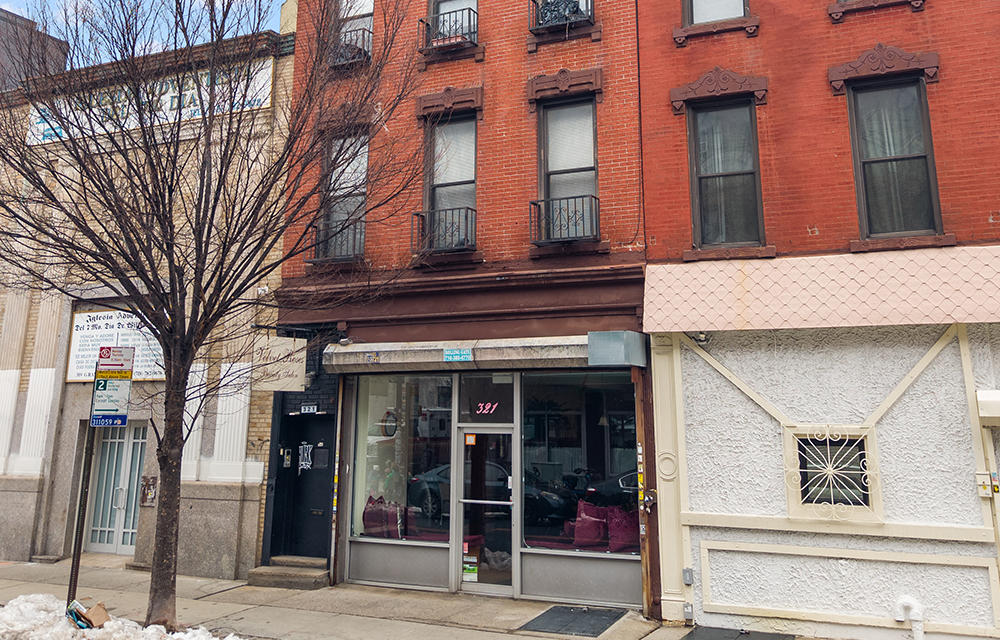
51 Spring Street - Manhattan, NY

“As a result of its central location downtown, diverse residential inventory and vibrant assortment of retail and hospitality options, NoLita is one of the most buzzed about neighborhoods in New York,” said Burton. “51 Spring St. is an excellent investment and the low free market rents of the property offers significant long-term growth potential.”

51 Spring St. is a six-story mixed-use rental building located on the northwest corner of Spring and Mulberry Sts. The property is comprised of fifteen residential apartments and two retail spaces. The residential breakdown of the property is 11 free market and four rent stabilized units. The unit mix is comprised of five studio apartments, five one-bedroom apartments, and five two-bedrooms apartments. The retail component of the space is currently leased to two restaurants through December 2021.

The property is located within the Special Little Italy District and is within walking distance to the New Museum of Contemporary Art and New York University. The building is accessible by numerous subway lines with the Spring St. Subway Station a block away, the Prince St. and the Bowery Stations a five-minute walk away, and the Broadway-Lafayette station six-minutes away.


READ ON THE GO
DIGITAL EDITIONS
Subscribe
Columns and Thought Leadership
A fresh start - by Shallini Mehra and Amit Doshi

A fresh start - by Shallini Mehra and Amit Doshi

For the past several years, the New York City multifamily housing market has been defined by disruption. The combined impact of the HSTPA rent laws and a sharply higher interest rate environment has fundamentally reduced
The death of the generic offering memorandum: What buyers expect in 2025 - by Kimberly Zar Bloorian

The death of the generic offering memorandum: What buyers expect in 2025 - by Kimberly Zar Bloorian

There was a time when an offering memorandum (OM) was pretty bare bones, some photos, a few bullet points on income, and a rent roll thrown in at the back. That used to get the job done. Not anymore. In 2025, buyers are sharper, faster, and more selective. They’re looking
Tri-state capital  migrates nationally amid  regulation pressure - by Reese Weaver

Tri-state capital migrates nationally amid regulation pressure - by Reese Weaver

New York tri-state multifamily investors are increasingly reallocating capital to less-regulated markets across the U.S. as rent control and legislative risk erode returns at home. With over 60% of New York City’s rental housing stock classified as rent-stabilized, the traditional value-add model — buying under-performing buildings,

The anticipated effect of Basel III and ISO 20022 implementation on commercial real estate - by Michael Zysman

The anticipated effect of Basel III and ISO 20022 implementation on commercial real estate - by Michael Zysman

July 1, 2025 is the deadline for US banks to begin to adopt Basel III banking standards and July 14, 2025 is the deadline for U.S. banks to adopt ISO 20022 messaging standards. Both will have a significant effect on the banking and commercial real estate (CRE) finance sectors.