



News:
Brokerage
Posted: September 22, 2008
Buffalo Niagara's economic development industry is in good shape weathering the storm
The terminology changes depending on who you are talking to. Are we experiencing an "economic slowdown?" Is our economy in the midst of a full blown "recession?" Regardless of your definition or your point of view, the undeniable fact is that the current state of the economy is indeed having an impact on the economic development industry.
Deal flow is down all across the country as economic development professionals are facing companies and investors who are far more cautious, and in many cases down right reluctant, to move forward with projects. Site location questions take on a whole new meaning as companies try to predict what the impact of our current economic slowdown will be on a given region or community. Expansions and significant investments are being put on hold while CEO's take a "wait and see" approach to the long term economic forecast.
The obvious question is how is that affecting the Buffalo Niagara region? The simple answer is we are in good shape as we weather the storm.
Consistent and sustained promotion of our assets is paying off in greater confidence in our region as a whole. The overall stability in our region's real estate, including availability, pricing and value is proving to be a tremendous benefit from an attraction standpoint. Our shared border with Canada has obviously given us an advantage over other regions of the country. When some perceived the growing strength of the Canadian dollar versus the U.S. dollar as a weakness, we turned the tables and increased Canadian investment interest by showing them how much more their dollar could now get them in our market. These are the kind of regional assets that are keeping us busy in Buffalo Niagara compared to some of our competitors across the country.
But there's more than just these assets helping us keep our collective heads above water. The effectiveness of our marketing initiatives continues to change the dial on the perception meter of Buffalo Niagara. The commitment to a more personal, one on one approach from our business development staff has helped put us in front of more pre-qualified prospects than past years in our efforts to restock our project pipeline. The vision and commitment of our economic development partners to provide readily available product for potential companies has had a significant positive impact. And to what degree has all of this helped?
We concluded our 2007-2008 fiscal year with 20 project wins (a win is a company or project that firmly commits to locate/expand in the Buffalo Niagara region). Those 20 wins represent over $70 million in investment and over 1,900 jobs created and retained. Sixteen of those wins fall under the category of "attraction" where we had to successfully compete against other regions of the company or world for that business investment. All in all, pretty good numbers in a slumping economy.
In the final analysis, there are present and future economic challenges that will impact regional marketing, business and economic development organizations throughout the U.S. Here at home however, staying true to our longstanding heritage and experience, we continue to weather the storm just fine.
Buffalo Niagara Enterprise (BNE) is a non-profit, private business development and regional marketing organization focused on providing services to companies looking to start or locate businesses in the eight counties of WNY. Services include comprehensive economic development assistance, such as demographic information, tax incentives, site identification and liaison with local business leaders and government organizations.
Thomas Kucharski is president and CEO of Buffalo Niagara Enterprise, Buffalo, N.Y.
Tags:
Brokerage
MORE FROM Brokerage

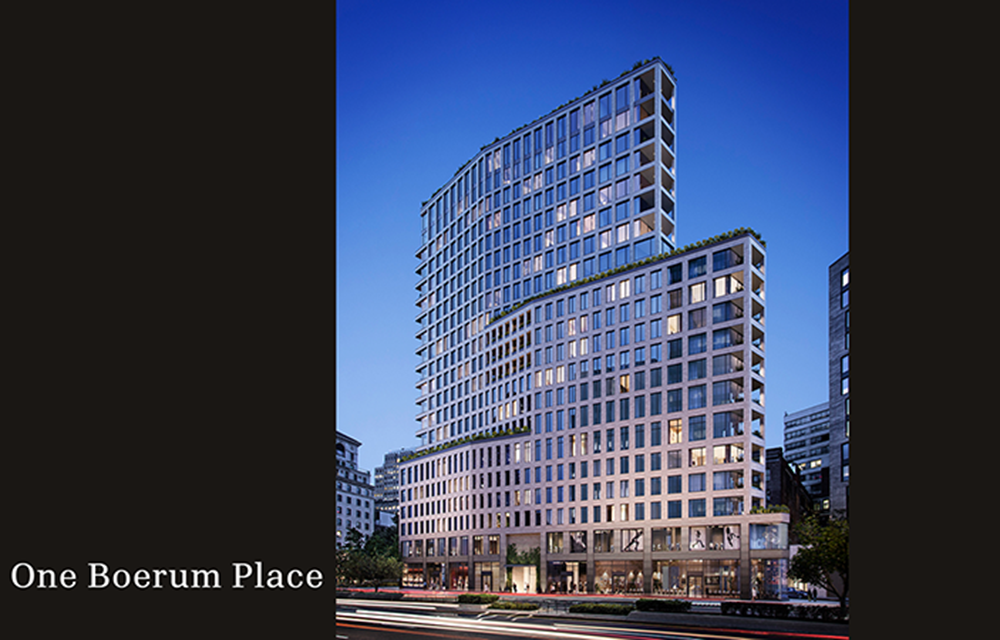
200E20TH sells out in Gramercy, penthouse A closes out sales at the CetraRuddy-designed condominium residences
Manhattan, NY 200E20TH, the CetraRuddy-designed architectural masterwork that brought a curved, contemporary sensibility to Gramercy’s Beaux-Arts streetscape, has



Quick Hits
 (2).gif)

Columns and Thought Leadership

The art of investing in real estate - by Thomas Donovan
Real estate investing is as much an art as it is a skill. No one can time the market, or the factors that drive it, perfectly. Location, zoning, size, transportation, and neighborhood density give you a baseline for

Hunt commercial real estate question and answer: Fortune 500 wisdom - by David Hunt
Yes, there are lessons to be learned from the largest companies in America when comes to managing your real estate. But the decision to buy or lease real estate may not be one of

Hunt CRE question and answer: Choosing a real estate agent - by David Hunt
First, we will only work with one agent exclusively. The primary reason is that we want that agent to legally represent our client’s interests. In New York State, a real estate agent has a fiduciary

New York’s streets are full again, and the retail numbers prove it - by Noam Aziz
Walk down any New York block this year and you can feel it. The sidewalks are crowded, the storefronts are lit, and the energy that defines this city is back at full volume.
.gif)