



News:
Brokerage
Posted: May 21, 2012
Buffalo area apartment market commentary: Activity increases in the first quarter
Multifamily sale transactions in the Buffalo metropolitan area rose to $57 million in 2011, near double the 2010 level, but still below the 2006 market high of $198 million. These volumes fall far short of the levels needed to attract institutional investors and the area is dominated by local and regional players. Any sizable investment quality units draw immediate attention. Activity is still increasing with first quarter of 2012 apartment sales totaling $25 million as the gap between buyer and seller expectations continues to narrow; the sellers are winning. Submarkets such as North Buffalo, West Seneca, and Lockport are now approaching $50,000 per unit. Investors are focused on the discount offered to replacement value and an immediate return greater than offered by banks or fixed income investments. Cap rates still far exceed mortgage interest rates producing near double digit year one cash on cash returns.
The 156 unit Linda Lane Apartments in suburban Cheektowaga sold for $4.5 million at an 8.8% cap rate. The property imposes income restrictions on potential tenants and the sale was recorded at a below average $29,000 per unit. The 1950 brick garden apartment complex rents a 425 s/f. one-bedroom apartment starting at $565 and a 650 s/f two-bedroom apartment starting at $598. Two-bedroom apartments renting for $.98 per s/f per month are typical for existing garden complexes.
Reis Inc., a New York research firm, publishes the average monthly rent for the Buffalo market as $1,182 for Class A properties and $704 for Class B/C properties; and 2011 annual rent growth as 3.34% for Class A and 2.14% for Class B/C. Although lower than the more popular coastal markets these figures are impressive for a mature market as there was no sharp decline in rent levels here during the recession as elsewhere. Even with the prospects for healthy rent growth developers have made little progress in adding new supply, privately financed new market rate developments have recently totaled no more than a few hundred per year scattered in smaller complexes, hardly making a dent in the 55,000 unit market. Traditional bank construction loan terms remain onerous.
Larger developments require subsidies and incentives. Major construction projects underway in Buffalo include Liberty Affordable Housing's renovation of the 206 unit Maryner Towers using $15.5 million ($75,000 per apartment) in aid from New York State's new Excelsior economic development program. The turn of the century historic Lafayette Hotel in the CBD will be remodeled into 115 apartments and a 34 room hotel. Typical of the financing for such a development the $46 million project utilizes the sale of tax credits through New York state's historic preservation tax credit program to raise equity capital. Additional incentives include $2 million in sales and mortgage tax breaks from the Erie County IDA plus as yet to be specified property tax breaks, and $800,000 from the Buffalo Urban Renewal Agency. The 800 to 1,000 s/f apartments will rent in the $900 to $1,000 per month range. Tenants have shown a strong interest in renting the new downtown units that have opened in the last few years; but as yet unknown is how big a premium to existing rents they are able to pay to do so.
Investor sentiment will continue to improve this year; driving the market will be strengthening rents and occupancy, and increasing prices. Pockets of opportunity exist in any given apartment market today. Large National Multifamily firms follow population growth and buyers here don't have to deal with these competitors. Local players with their valuable "on-the-ground" operations experience will find they have the neighborhood by neighborhood intelligence to identify any number of profitable investment possibilities.
Brian Heine is a licensed real estate broker in New York State
Tags:
Brokerage
MORE FROM Brokerage
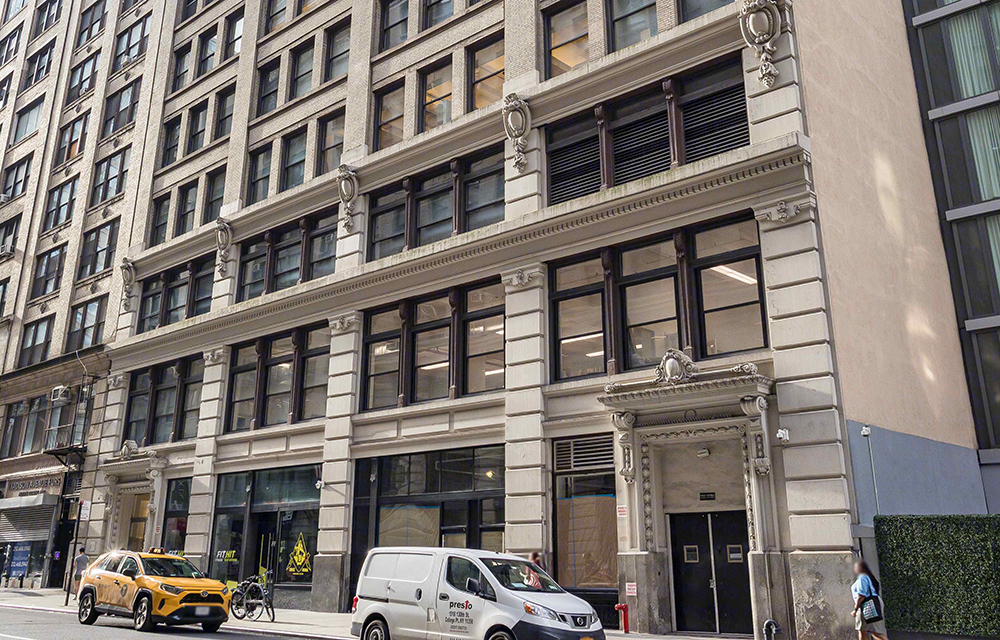
Koeppel Rosen inks 16-year 33,783 s/f lease for coworking firm Nomadworks at 122 West 27th St.
Manhattan, NY According to Koeppel Rosen LLC, leasing and management agent for the Rosen family portfolio, Nomadworks has signed a new 16-year, two-month lease totaling 33,783 s/f at 122 West





Columns and Thought Leadership

Hunt commercial real estate question and answer: Fortune 500 wisdom - by David Hunt
Yes, there are lessons to be learned from the largest companies in America when comes to managing your real estate. But the decision to buy or lease real estate may not be one of

New York’s streets are full again, and the retail numbers prove it - by Noam Aziz
Walk down any New York block this year and you can feel it. The sidewalks are crowded, the storefronts are lit, and the energy that defines this city is back at full volume.

Hunt CRE question and answer: Choosing a real estate agent - by David Hunt
First, we will only work with one agent exclusively. The primary reason is that we want that agent to legally represent our client’s interests. In New York State, a real estate agent has a fiduciary

The art of investing in real estate - by Thomas Donovan
Real estate investing is as much an art as it is a skill. No one can time the market, or the factors that drive it, perfectly. Location, zoning, size, transportation, and neighborhood density give you a baseline for
.gif)