News: Brokerage

Blair and Kearns of Cushman & Wakefield represent landlord in 6,035 s/f lease to Hogg Robinson Group
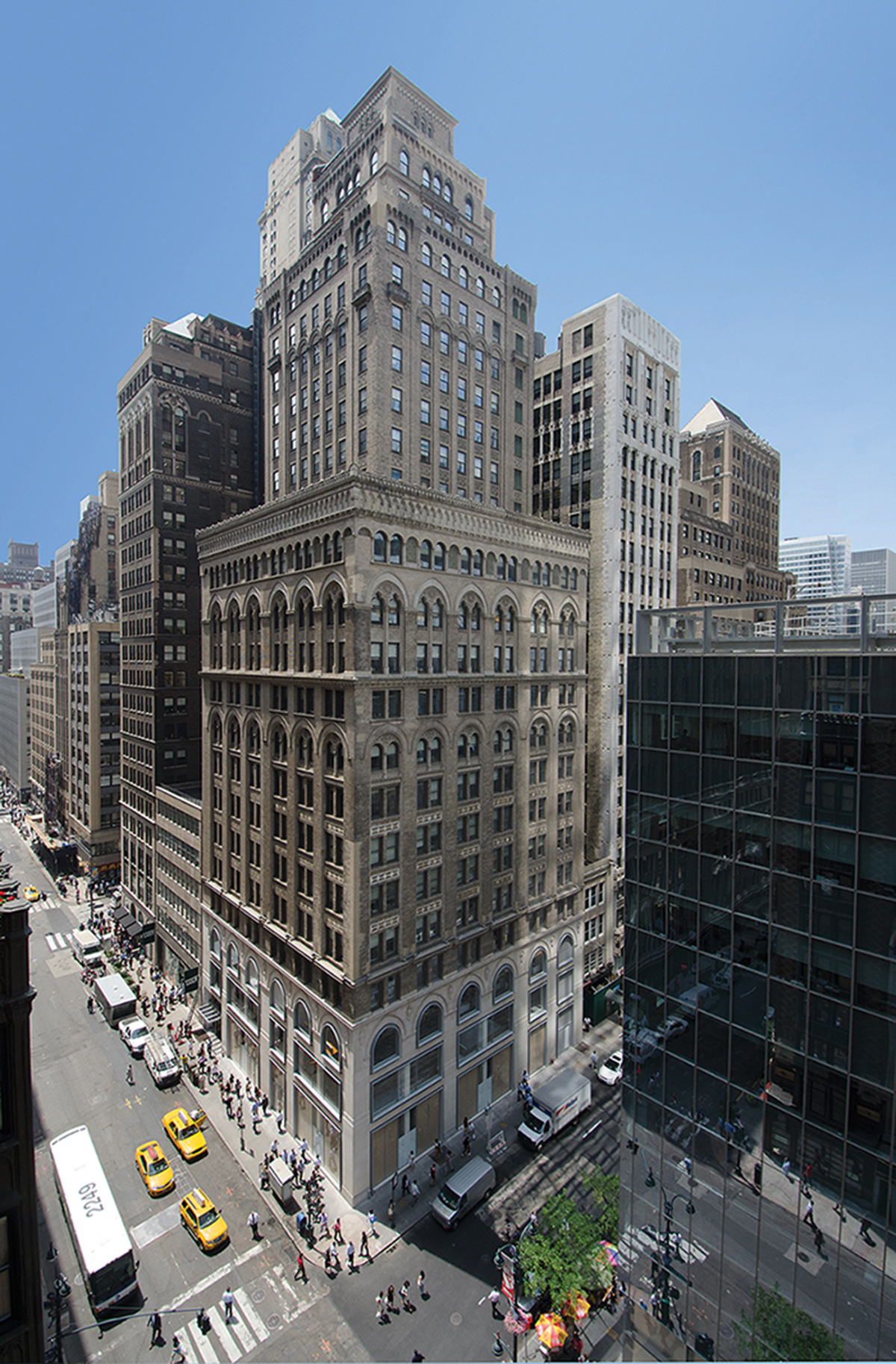
292 Madison Avenue - New York, NY 292 Madison Avenue - New York, NY
New York, NY Global corporate services provider and technology and travel management giant Hogg Robinson Group has signed a five-year lease for a 6,035 s/f full-floor space at 292 Madison Ave. Located on the 17th floor, the already built-out offices feature open layouts that accentuate the high ceilings and oversized windows, contemporary lighting, new kitchens and bathrooms and finely polished, scarified cement floors. The space was formerly occupied by e-commerce firm Borderfree, which has since expanded and relocated to the third, fourth and fifth floors of the TAMI corridor building. Representing the landlord Marciano Investment Group was the Cushman & Wakefield team of Harry Blair, executive director, and Sean Kearns, executive director.  Representing the tenant were Newmark Grubb Knight Frank’s Ross Pearlman, executive director, Ryan Brodsky, managing director, and Ryan Mandrell, Associate. “Hogg Robinson is a major international player with a significant technology division, which makes 292 Madison Avenue an excellent fit on so many levels,” said Blair. “In addition to being centrally located, this building has become a center for several TAMI tenants in recent years.” Asset manager Herald Square Properties oversees the property on behalf of landlord Marciano Investment Group. Building management is provided by CBRE. Herald Square Properties’ Gerard Nocera said, “Many of the technology-based firms here are multi-national and their offices at 292 Madison Avenue serve as U.S. or New York headquarters.” In addition to Borderfree, other TAMI tenants in the building include Raptor Trading, IDG, Exponential Interactive, Qlik and ZEFR. Between 2013 and 2014, the Marciano Investment Group, with Herald Square Properties, implemented a successful Mufson Partnership-designed pre-built program to attract technology-based, full-floor tenants. Last year, a striking façade renovation was completed, which included the restoration of Art Deco architectural sculptures above the facades. It maximized the building’s street presence and sight lines along Madison Avenue and brought a national brand to the ground level retail portion, CVS. The vision of ownership at 292 Madison Avenue has pivoted it into a fully modernized office tower for the future, while paying homage to its rich architectural history.
READ ON THE GO
DIGITAL EDITIONS
Subscribe
Columns and Thought Leadership
Behind the post: Why reels, stories, and shorts work for CRE (and how to use them) - by Kimberly Zar Bloorian

Behind the post: Why reels, stories, and shorts work for CRE (and how to use them) - by Kimberly Zar Bloorian

Let’s be real: if you’re still only posting photos of properties, you’re missing out. Reels, Stories, and Shorts are where attention lives, and in commercial real estate, attention is currency.
Strategic pause - by Shallini Mehra and Chirag Doshi

Strategic pause - by Shallini Mehra and Chirag Doshi

Many investors are in a period of strategic pause as New York City’s mayoral race approaches. A major inflection point came with the Democratic primary victory of Zohran Mamdani, a staunch tenant advocate, with a progressive housing platform which supports rent freezes for rent
AI comes to public relations, but be cautious, experts say - by Harry Zlokower

AI comes to public relations, but be cautious, experts say - by Harry Zlokower

Last month Bisnow scheduled the New York AI & Technology cocktail event on commercial real estate, moderated by Tal Kerret, president, Silverstein Properties, and including tech officers from Rudin Management, Silverstein Properties, structural engineering company Thornton Tomasetti and the founder of Overlay Capital Build,
Lasting effects of eminent domain on commercial development - by Sebastian Jablonski

Lasting effects of eminent domain on commercial development - by Sebastian Jablonski

The state has the authority to seize all or part of privately owned commercial real estate for public use by the power of eminent domain. Although the state is constitutionally required to provide just compensation to the property owner, it frequently fails to account