



News:
Brokerage
Posted: February 24, 2014
Besen Special Assets trades $2.5 million Brooklyn loan portfolio
According to Jonathan Horn, managing partner of The Besen Group NJ and Besen Special Assets, the firm arranged the closing of a portfolio of three non-performing loans, secured by multifamily assets.
With a combined unpaid principal balance of $2.454 million and a total outstanding balance of $2.989 million, all three loans were accelerated and the lender was in the process of filing the summons and complaint.
"Acting as the advisors to a private equity fund, our team sourced and executed the all-cash, off-market trade transaction in less than three weeks, securing an undisclosed private investor as the buyer," said managing director Samuel Boyd. "Another example of Besen's ability to quickly and efficiently trade loans while still achieving great returns for the seller."
The first loan, having an unpaid principal balance of $744,000, was secured by a 9,500 s/f four-story multifamily building on Prospect Place. The collateral asset, constructed in 1905, featured eight two-bedroom apartments.
The second loan held an unpaid principal balance of $690,000, and was secured by a three-story multifamily walk-up measuring 6,006 gross s/f. Built in 1907 and located on Troy Ave., the asset boasted six studios and six one-bedroom apartments.
The final loan, secured by two adjacent four-story multifamily buildings, had an unpaid principal balance of $1.02 million. The collateral assets, constructed in 1909 and measuring 13,760 gross s/f, are located on St. John's Place and feature eight one-bedroom apartments in each building.
The collateral assets, which feature a collective 36 studio, one-bedroom and two-bedroom apartments, had over 220 open class A, B and C violations.
"These three loans are a great example of the Special Assets team's ability to trade small balance commercial loans secured by all asset types and all asset classes," said Horn.
"The subject assets had over 200 building violations and we were still able to finalize an all cash deal in less than three weeks."
Tags:
Brokerage
MORE FROM Brokerage
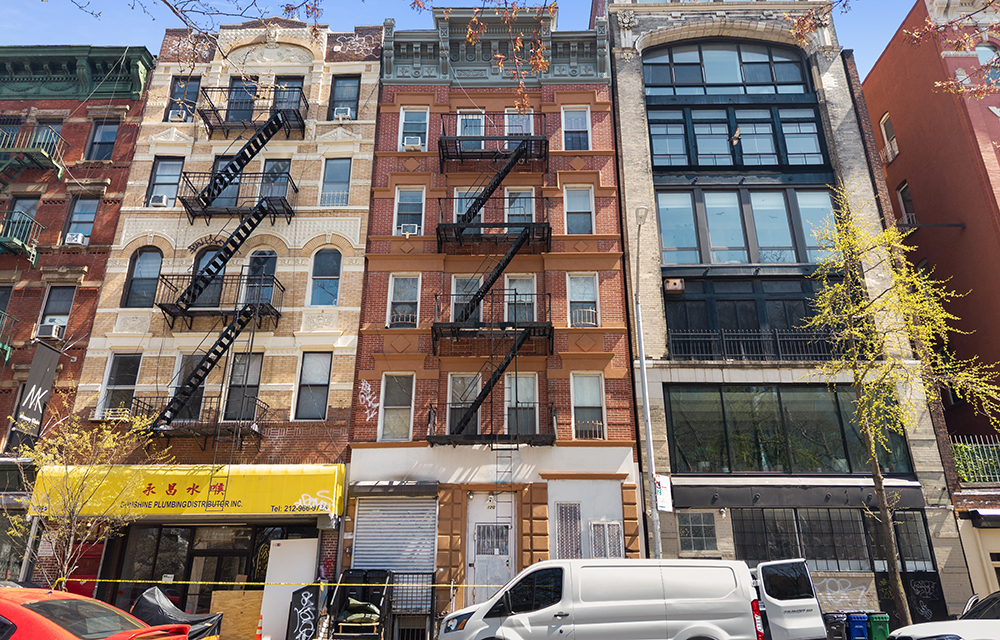
Investment Property Realty Group sells 120 Forsyth St. for $1.35 million
Manhattan, NY Investment Property Realty Group (IPRG) closed the sale of 120 Forsyth St., a mixed-use building located in the Lower East Side section of the city, for $1.35 million.





Columns and Thought Leadership

New York’s streets are full again, and the retail numbers prove it - by Noam Aziz
Walk down any New York block this year and you can feel it. The sidewalks are crowded, the storefronts are lit, and the energy that defines this city is back at full volume.

Hunt commercial real estate question and answer: Fortune 500 wisdom - by David Hunt
Yes, there are lessons to be learned from the largest companies in America when comes to managing your real estate. But the decision to buy or lease real estate may not be one of

Positive forecast for New York’s pro-housing push? - by Philip Butler
New York’s housing crisis remains a hot button topic despite growing consensus that varied and affordable housing is desperately needed statewide. Governor Hochul has recently introduced several initiatives to overcome N.Y.’s anti-housing

A guide to finding the right NYC property management company - by Sanjay Gandhi
Being a small to midsize landlord in NYC is an increasingly demanding endeavor. From navigating complex regulations, increased compliance demands to dealing with tenant issues and remediating violations. It is wise to enlist the assistance of a partner, a professional
.gif)