



News:
Brokerage
Posted: August 21, 2009
Baumstein of Rudin Mgmt. reps landlord in 25,825 s/f lease renewal
The Partnership For New York City, Inc. has renewed its 25,825 s/f office lease for 10 more years at One Battery Park Plaza, the high-rise tower owned by a joint venture of the Rudin and Rose families.
Barry Gosin and Hal Stein of Newmark Knight Frank represented the tenant in the long-term leasing transaction while Gene Baumstein of Rudin Management represented the landlord.
The Partnership, which was established by David Rockefeller in 1979, is dedicated to working with government, labor and the not-for-profit sectors to build a stronger New York, with a focus on education, infrastructure and the economy.
"After more than 15 years at One Battery Park Plaza, we have seen a turnaround in Lower Manhattan that has made it much more attractive from the perspective of our organization," said Kathryn Wylde, president and CEO of the Partnership For New York City. "Transportation and neighborhood amenities have never been better and there is a perfect mix of residential, cultural and business activities that our employees, visitors and members all appreciate."
"We're delighted that the Partnership For New York City has chosen to remain headquartered at One Battery Park Plaza for another decade, reaffirming downtown's prominence as the city's financial center," said Bill Rudin of Rudin Management Co., leasing and managing agent for the building.
Also known as 24 State St., the 35-story tower contains 750,000 s/f of prime office space. It was built by the Rudin and Rose families in 1972.
The Partnership, considered among the city's preeminent business associations, is comprised of a select group of two hundred CEOs (Partners) from New York City's top corporate, investment and entrepreneurial firms.
Rudin Management Co. is a dynamic full service real estate organization serving the interests of the Rudin Family, which owns and manages one of the largest private property portfolios in the city. Among its commercial real estate holdings are 16 office buildings containing 10 million s/f of space.
Tags:
Brokerage
MORE FROM Brokerage
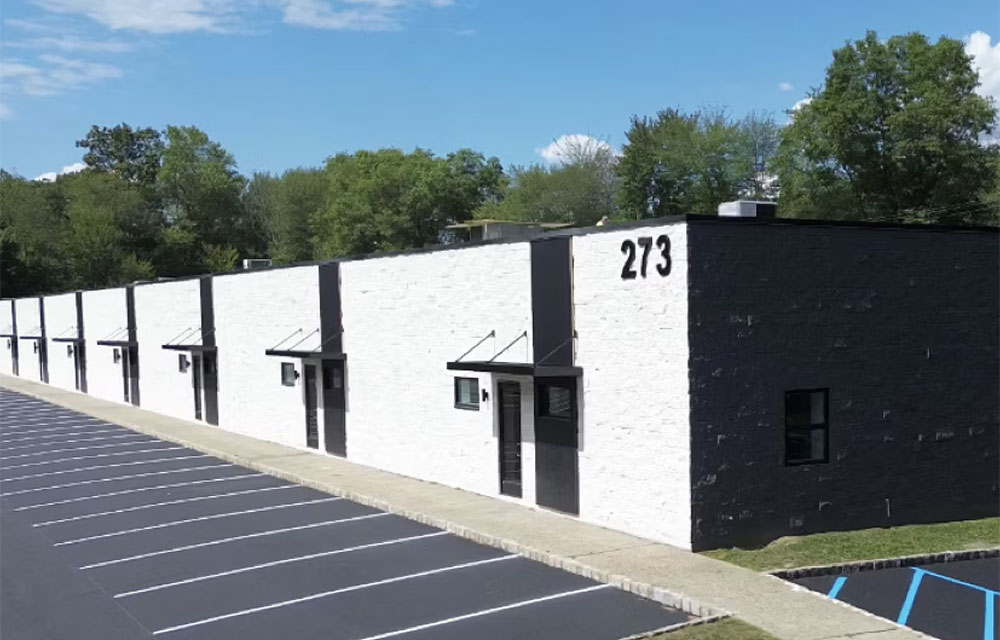
Resource Realty of Northern NJ delivers complete lease-up of 235 Franklin Rd. for Commerce Park Investors
Randolph, NJ Resource Realty of Northern New Jersey (RRNNJ) has completed the lease-up of a 10-unit small-bay industrial property at 273 Franklin Rd., marking the culmination of an investment strategy that began



 (2).gif)

Columns and Thought Leadership

New York’s streets are full again, and the retail numbers prove it - by Noam Aziz
Walk down any New York block this year and you can feel it. The sidewalks are crowded, the storefronts are lit, and the energy that defines this city is back at full volume.

Hunt commercial real estate question and answer: Fortune 500 wisdom - by David Hunt
Yes, there are lessons to be learned from the largest companies in America when comes to managing your real estate. But the decision to buy or lease real estate may not be one of

A guide to finding the right NYC property management company - by Sanjay Gandhi
Being a small to midsize landlord in NYC is an increasingly demanding endeavor. From navigating complex regulations, increased compliance demands to dealing with tenant issues and remediating violations. It is wise to enlist the assistance of a partner, a professional

Positive forecast for New York’s pro-housing push? - by Philip Butler
New York’s housing crisis remains a hot button topic despite growing consensus that varied and affordable housing is desperately needed statewide. Governor Hochul has recently introduced several initiatives to overcome N.Y.’s anti-housing
.gif)