



News:
Brokerage
Posted: April 16, 2024
Asset Class Breakdown-2024 Opportunities - by Robert Khodadadian

In the bustling streets of Manhattan, where every corner tells a tale of commerce, as a investment sales broker in Manhattan for almost 20 years I've observed a landscape marked by uncertainty yet teeming with potential. I would like to share insights into the ever-evolving trends and opportunities as they vary across asset classes.
Despite persistent hurdles, office spaces retain their relevance. According to Moody’s Analytics, the national office vacancy rate soared to 19.2% in Q3 of 2023, edging closer to historical peaks. Yet, not all office spaces face obsolescence. The flight to quality beckons, particularly for newer, more desirable Class A offices, while older, less attractive Class B and C spaces may encounter challenges. This shift presents unique opportunities, such as the potential conversion of central business districts’ office spaces into lucrative ventures like apartments or data centers.
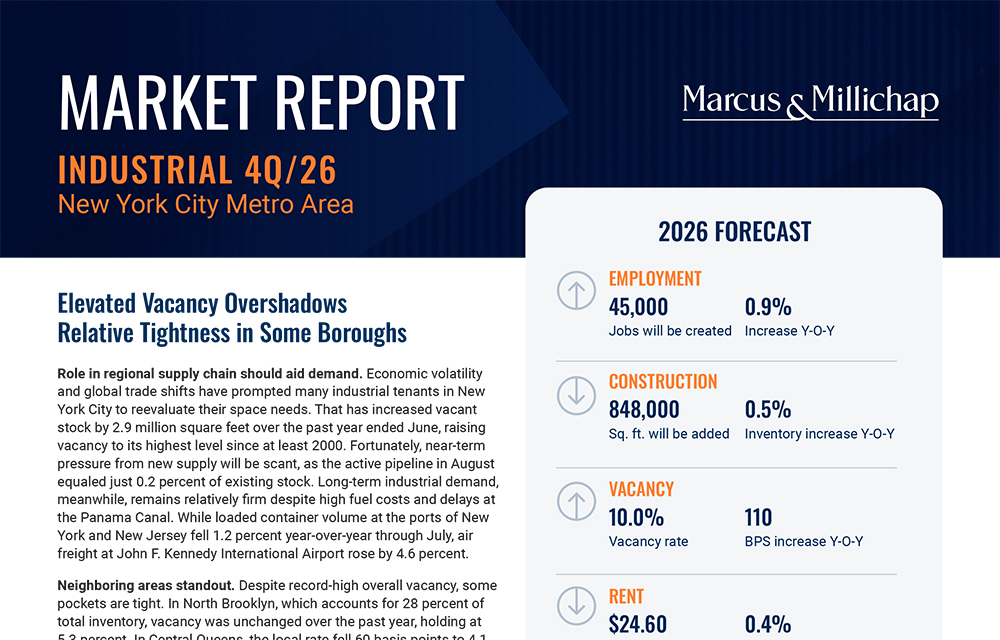
Industrial properties continue to exhibit resilience, with certain segments, such as cold-storage facilities, maintaining robust performance. Factors like re-shoring and nearshoring efforts in manufacturing contribute to this stability. However, signs of moderation emerge as post-pandemic demand dynamics evolve, potentially dampening the fervor for expansion among renters. Yet, the long-term outlook for the industrial sector remains positive, with projections indicating steady rent growth for warehouse and distribution properties.
In the realm of retail, a nuanced narrative unfolds. While Class B and C malls struggle, neighborhood shopping centers in densely populated urban and suburban locales demonstrate resilience. Despite the burgeoning dominance of e-commerce, brick-and-mortar establishments still wield considerable influence, constituting a significant portion of retail sales. As we navigate through 2024, retail is poised to emerge as a stalwart performer, sustaining steady growth and occupancy rates for neighborhood and community shopping centers.
In the multifamily sector, the narrative is one of consistency, albeit with subtle shifts. Despite a slowdown in rent growth, the vacancy rate remains stable around 5% throughout 2023. High-interest rates continue to deter prospective homebuyers, buoying demand for multifamily accommodations. However, a notable trend emerges concerning luxury apartments, where oversupply dampens occupancy rates, prompting adjustments in rents and concessions to entice tenants.
Despite the opportunities present, the commercial real estate landscape grapples with formidable challenges. Uncertainty surrounding interest rates casts a shadow over the market, compounded by rising construction costs and insurance premiums. However, amidst these challenges lie opportunities for savvy investors.
2024 beckons with prospects for those willing to seize them. Cash optimization, affordable housing initiatives and energy-efficient upgrades represent avenues for growth and innovation. As we navigate the nuanced terrain of commercial real estate, the key lies in adaptability and foresight. While the outlook may appear subdued, I believe that astute investors stand poised to capitalize on emerging opportunities, ensuring that the landscape continues to evolve and thrive.
Robert Khodadadian is a investment sales broker at Skyline Properties, New York, NY.
Tags:
Brokerage
MORE FROM Brokerage

200E20TH sells out in Gramercy, penthouse A closes out sales at the CetraRuddy-designed condominium residences
Manhattan, NY 200E20TH, the CetraRuddy-designed architectural masterwork that brought a curved, contemporary sensibility to Gramercy’s Beaux-Arts streetscape, has




Columns and Thought Leadership

Hunt CRE question and answer: Choosing a real estate agent - by David Hunt
First, we will only work with one agent exclusively. The primary reason is that we want that agent to legally represent our client’s interests. In New York State, a real estate agent has a fiduciary

Hunt commercial real estate question and answer: Fortune 500 wisdom - by David Hunt
Yes, there are lessons to be learned from the largest companies in America when comes to managing your real estate. But the decision to buy or lease real estate may not be one of

New York’s streets are full again, and the retail numbers prove it - by Noam Aziz
Walk down any New York block this year and you can feel it. The sidewalks are crowded, the storefronts are lit, and the energy that defines this city is back at full volume.

The art of investing in real estate - by Thomas Donovan
Real estate investing is as much an art as it is a skill. No one can time the market, or the factors that drive it, perfectly. Location, zoning, size, transportation, and neighborhood density give you a baseline for
.gif)