



News:
Brokerage
Posted: September 4, 2018
Ariel Property Advisors shares “Multifamily Quarter in Review: Q2 2018” - by Shimon Shkury

Ariel Property Advisors
NYREJ recently sat down with Shimon Shkury, founder and president of Ariel Property Advisors, a New York City investment real estate services and advisory company, who shared some of the highlights from Ariel Property Advisors’ “Multifamily Quarter in Review New York City: Q2 2018.”
Q: How did the multifamily market perform in the first half?
A: New York City’s multifamily market fared well in the first half of 2018, with transaction and dollar volume notching sizeable increases on a year-over-year basis. Dollar volume soared to over $5 billion amid a slew of institutional-sized deals, with Brooklyn recording the largest year-to-date deal.
From January through June, New York City saw 251 transactions comprised of 416 buildings, totaling $5.34 billion in gross consideration, an impressive 64% increase in dollar volume versus the same period a year earlier. Building volume remained relatively unchanged, while transaction volume climbed 13%.
In the first half, six transactions exceeding $100 million comprised $1.91 billion, accounting for 36% of New York City’s dollar volume. That is significantly more than the institutional activity observed during the same period a year earlier when only one transaction over $100 million was recorded. Interestingly, 62% of the institutional dollar volume in the first half took place in the outer-boroughs.
Q: What happened in the second quarter and how did multifamily prices hold up?
A: The second quarter was a mixed-bag. While dollar volume stayed stable, falling just 3%, versus the first quarter and was substantially higher compared to the year prior, one-third of the dollar volume was attributable to one transaction, the Starrett City Portfolio. Moreover, transaction volume in the second quarter dropped 22% versus the first quarter.
In addition, the interest rate environment, as well as fundamentals, has dictated higher cap rate expectations across-the-board, and therefore put pressure on pricing, which is evident in our report, specifically in Manhattan below 96th Street where cap rates went up 27 basis points. In Manhattan and Queens, pricing declined after being flat for the past year because of fundamentals. Northern Manhattan, Brooklyn and The Bronx performed better.
While pricing looked good on a year-over-year basis, the data was skewed by large transactions. Prices are holding because of fewer transactions in the market. For pricing metrics on all New York City sub-markets, see page 6 of APA’s report, available at http://arielpa.com/report/report-MFQIR-Q2-2018
Q: How did the submarkets perform?
A: On a neighborhood level, Hamilton Heights was far and away the most active area in Northern Manhattan during the second quarter, with the neighborhood registering 11 transactions that sold for $163.25 million. In Manhattan, the Upper East Side and Upper West Side led the way with $756.76 million in sales across 20 transactions in the quarter.
In Brooklyn, Flatbush also fared well, with $106.65 million in sales across 12 transactions. In The Bronx, Highbridge saw the most dollar in the quarter with $111.11 million, while Elmhurst led dollar volume in Queens, at $205.90 million.
On a sub-market level, Manhattan registered 53 transactions involving the sale of 63 buildings for a total consideration of $1.75 billion during the first half. While transaction and building volume decreased marginally versus the first half of 2017, dollar volume soared 107%. As a result of pressure on pricing, however, cap rates rose markedly year-over-year in Manhattan, increasing to 3.80% from 3.53%.
Northern Manhattan posted sizeable across-the-board gains, with all three volume metrics increasing on an annual basis. The 59 buildings in the first half were traded across 35 transactions totaling $492.35 million in gross consideration. This represents year-over-year increases of 9%, 31%, and 21% in transaction, building and dollar volume.
The Bronx saw 112 buildings trade across 53 transactions totaling $548.41 million in gross consideration. Versus the first half of 2017, transaction volume was unchanged, building volume increased 27%, and dollar volume dropped 20%. One notable development was the decline in large institutional sales in the second quarter versus the first quarter, which saw three such deals totaling $183.13 million.
Brooklyn reigned supreme in terms of dollar volume. The $2.12 billion during the first half was comprised of 83 transactions that involved 145 buildings. Compared to the first half of 2017, this represents increases of 41%, 4%, and 161% in transaction, building, and dollar volume, respectively. The sharp increase in dollar volume can be attributed to the sale of the Starrett City Portfolio, which at $904.61 million made it the largest sale year-to-date in New York City.
Queens was the least transactional submarket in the first half, registering a slight increase in transaction volume, while building and dollar volume declined. The 27 transactions involving 37 buildings for a total consideration of $424.79 million represented an 8% increase in transaction volume, and a 57% and 15% drop in building and dollar volume, respectively. The decrease in dollar volume can be attributed to the sale of a 45-property portfolio during the first half of 2017.
Q: What do you see on the horizon for the multifamily market for the remainder of the year?
A: While New York City’s multifamily market fared well in the first half of 2018, most of the second quarter saw a slowdown. Nevertheless, we still anticipate institutional transactions to go through in the second half of 2018. The outer-boroughs will continue to provide for alternative institutional investments.
We anticipate transaction volume will stay stable or soften, very similar to the first half of this year. However, we are seeing there is still a pricing gap between sellers and buyers, which is driven by interest rate hikes, anticipation for further increases in the short term, and soft fundamentals on the residential rental side.
Pricing will likely remain flat if not soften, more so in Manhattan below 96th St. than in the outer-boroughs.
Q: Where can we get a copy of this report?
A: Ariel Property Advisors’“Multifamily Quarter in Review New York City: Q2 2018” and all of our research reports are available on our website at http://arielpa.nyc/investor-relations/research-reports.
Shimon Shkury is the founder and president of Ariel Property Advisors, New York, N.Y.
Tags:
Brokerage
MORE FROM Brokerage
Investment Property Realty Group closes $1.75 million sale of 1094 Hancock Street in Brooklyn
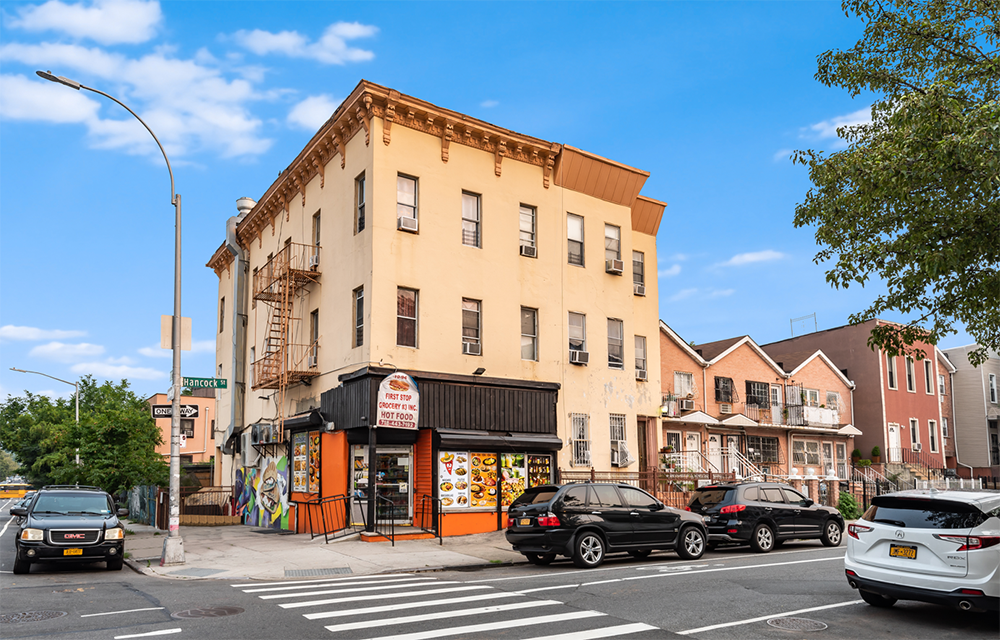
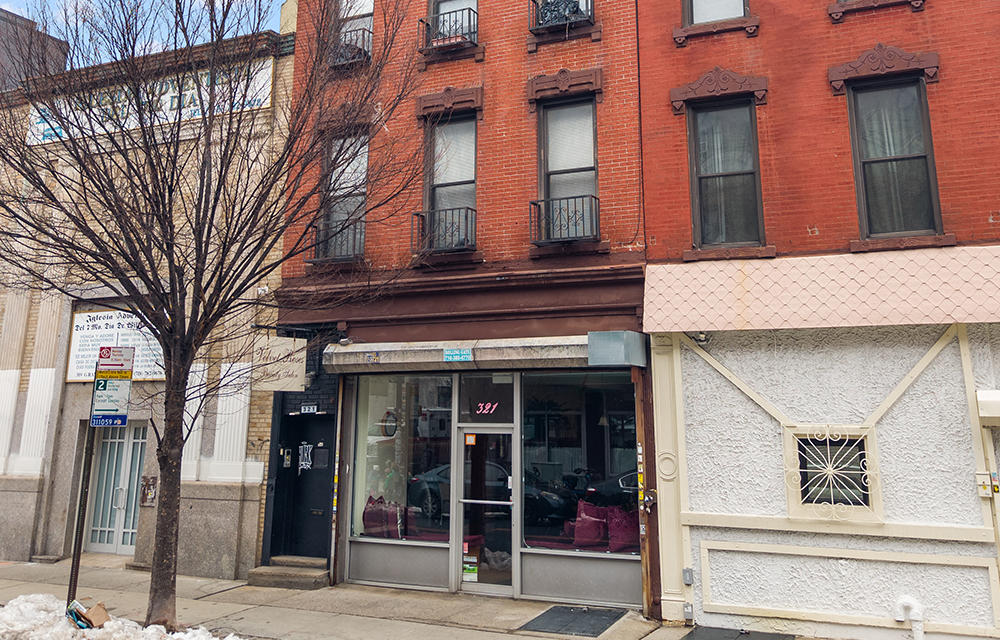
Brooklyn, NY Investment Property Realty Group (IPRG), a New York-based commercial investment firm, has closed the sale of 1094 Hancock St., a mixed-use building in the Bushwick section, for $1.75 million.


Quick Hits

Columns and Thought Leadership

Hunt commercial real estate question and answer: Fortune 500 wisdom - by David Hunt
Yes, there are lessons to be learned from the largest companies in America when comes to managing your real estate. But the decision to buy or lease real estate may not be one of

Hunt CRE question and answer: Choosing a real estate agent - by David Hunt
First, we will only work with one agent exclusively. The primary reason is that we want that agent to legally represent our client’s interests. In New York State, a real estate agent has a fiduciary

New York’s streets are full again, and the retail numbers prove it - by Noam Aziz
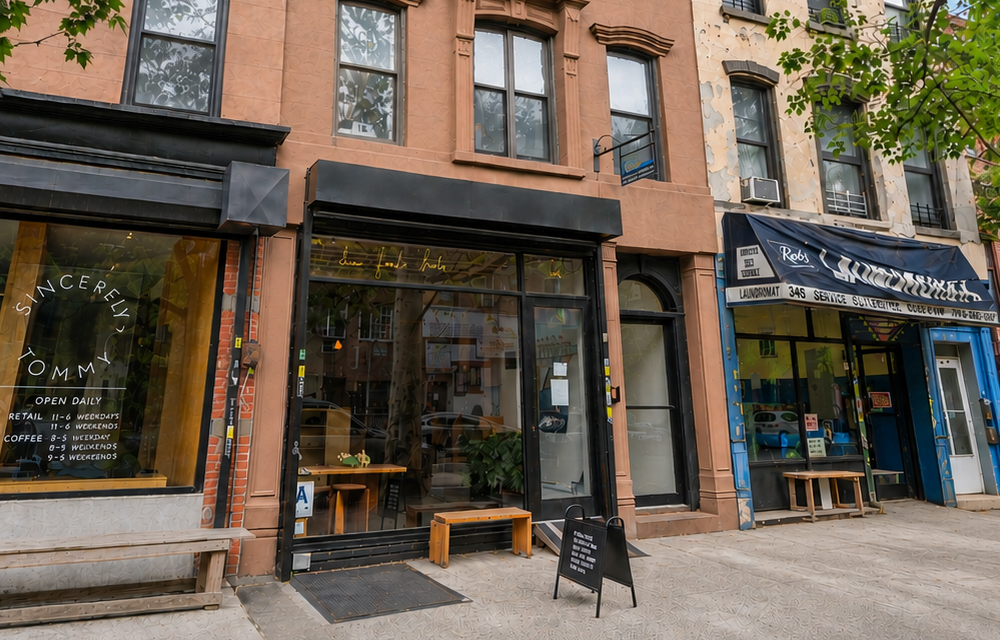
Walk down any New York block this year and you can feel it. The sidewalks are crowded, the storefronts are lit, and the energy that defines this city is back at full volume.

A guide to finding the right NYC property management company - by Sanjay Gandhi
Being a small to midsize landlord in NYC is an increasingly demanding endeavor. From navigating complex regulations, increased compliance demands to dealing with tenant issues and remediating violations. It is wise to enlist the assistance of a partner, a professional
.gif)