



News:
Brokerage
Posted: January 27, 2014
Appel and Diaz of Meridan Capital negotiate $38 million in permanent financing
Meridian Capital Group, LLC, a leading national commercial real estate finance and advisory firm, has negotiated $38 million in permanent financing for a multifamily property located on Hope St. in the Williamsburg neighborhood on behalf of 53 Hope Street, LLC.
The 10-year loan features a competitive fixed-rate of 4.28% and was provided by a life insurance company. This transaction was negotiated by Meridian managing director, Aaron Appel, and vice president, Michael Diaz, who are both based in the company's New York City headquarters.
The six-story former warehouse property was acquired in 2010. The sponsor renovated the property into a high-end multifamily property with 117 apartments and 4,300 s/f of retail space. The building features state-of-the-art amenities including a fitness center and a roof deck with stunning views of the city.
"The sponsor executed an exceptional redevelopment of 55 Hope St. into a market leading rental property," said Appel. "The lender quickly recognized this and worked aggressively to refinance the asset and provide very competitive terms."
Founded in 1991, Meridian is one of the nation's largest commercial real estate finance and advisory firms. Meridian is headquartered in New York with offices in New Jersey, Maryland, Illinois, Florida, Arizona and California. Working with a broad array of capital providers, Meridian arranges financing for transactions ranging from $1 million to more than $500 million for multifamily, co-op, office, retail, hotel, mixed-use, industrial, healthcare, student housing, self-storage and construction properties.
Tags:
Brokerage
MORE FROM Brokerage
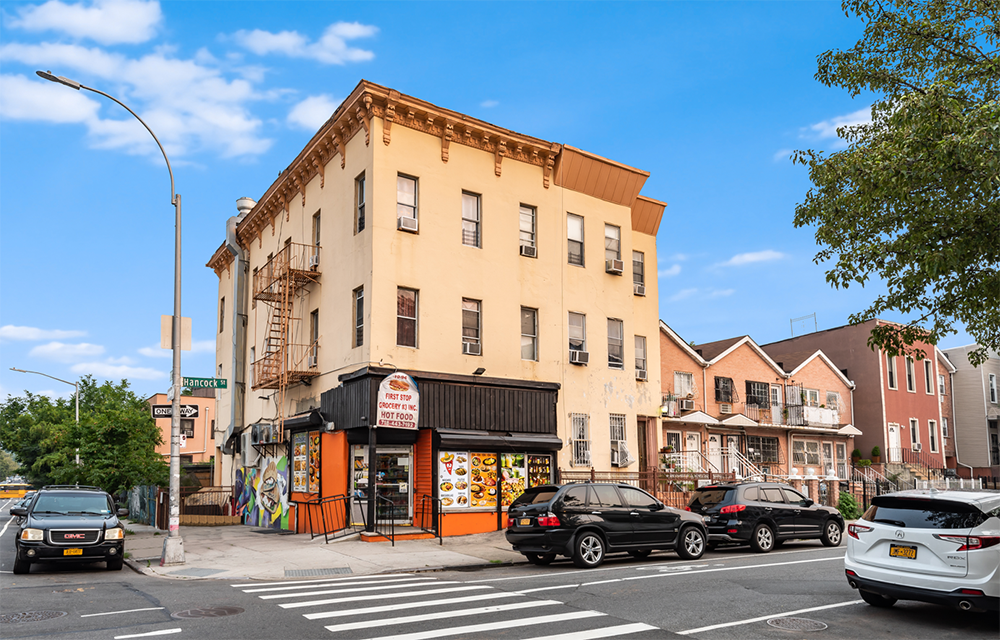
Investment Property Realty Group closes $1.75 million sale of 1094 Hancock Street in Brooklyn
Brooklyn, NY Investment Property Realty Group (IPRG), a New York-based commercial investment firm, has closed the sale of 1094 Hancock St., a mixed-use building in the Bushwick section, for $1.75 million.



Quick Hits

Columns and Thought Leadership

Hunt commercial real estate question and answer: Fortune 500 wisdom - by David Hunt
Yes, there are lessons to be learned from the largest companies in America when comes to managing your real estate. But the decision to buy or lease real estate may not be one of

A guide to finding the right NYC property management company - by Sanjay Gandhi
Being a small to midsize landlord in NYC is an increasingly demanding endeavor. From navigating complex regulations, increased compliance demands to dealing with tenant issues and remediating violations. It is wise to enlist the assistance of a partner, a professional

Hunt CRE question and answer: Choosing a real estate agent - by David Hunt
First, we will only work with one agent exclusively. The primary reason is that we want that agent to legally represent our client’s interests. In New York State, a real estate agent has a fiduciary

New York’s streets are full again, and the retail numbers prove it - by Noam Aziz
Walk down any New York block this year and you can feel it. The sidewalks are crowded, the storefronts are lit, and the energy that defines this city is back at full volume.
.gif)