



News:
Spotlight Content
Posted: November 25, 2013
Andersen of MADGI: Optimism in retail and real estate
Name: Steven Andersen
Title: Principal
Company/Firm: MADGI Montroy Andersen DeMarco Architects
Years with company/firm: 24
Years in field: 33
Years in real estate industry: 33
Telephone: (212) 481-5900
Email: [email protected]
URL: www.madgi.com
Industry/Professional Associations/Affiliations: NACOR
What are you hoping to accomplish by attending and what is different about this year's show?
As in the past, I look forward to meeting real estate and design managers for retailers expanding in the Northeast. There is a palpable optimism in the retail and real estate industries this year and I hope to develop new business opportunities to take advantage of the recovering economy and a significant increase of interest in opening new retail locations in both Manhattan and the outer boroughs, particularly Brooklyn.
In the current economic climate what kinds of deals are out there and who is the typical buyer? Consumer?
Fashion, home goods, and electronics retailers are currently actively searching for locations in both Manhattan and the outer boroughs. Typical site requirements include a prominent storefront presence, high pedestrian traffic, and space sizes ranging from 2,500 s/f to 4,000 s/f, with several retailers targeting locations of up to 6,000 s/f
Are retailers finding the types of properties that they want right now and are tenants happy with the sites available to them?
In my experience, there are still excellent locations available in New York City for the type of retail clients we are working with, such as the U.S. Polo Assn. and Camper. These type of retailers target sites with prominent storefront presences and sizes ranging from 2,500 s/f to 4,000 s/f. We have recently assisted our clients in evaluating potential store locations in Times Square, on the Upper East Side, East 34th St., lower Fifth Ave., SOHO, the World Trade Center, and Downtown Brooklyn.
In particular, Downtown Brooklyn's Fulton Mall area is attracting attention from a variety of national brands. Fulton Mall and the surrounding streets are undergoing a vigorous redevelopment and a repositioning into a more upscale shopping destination.
The recession, rising gas prices and the housing crisis has created a new trend. Generation Y'ers are now staying in the city and the baby boomers are actually returning to the city from the suburbs. How has this affected your business and NYC retail in general?
Urban retailers offer products that both accommodate small city apartment sizes and appeal to sophisticated tastes. These include home goods and appliances that are not only high quality and modern, but also smaller. The retailers also have to operate within smaller stores than available elsewhere. Both factors dictate specific store design needs. To address these requirements, we design custom shelving, cabinets, lighting, and other fixtures. For example, we recently designed display shelves with ladders that reach 10 feet high to maximize a clothing store's limited real estate. We also employ highly customized lighting to both display products and create desired ambiances in comparably small, challenging spaces. Well-designed lighting can visually amplify the space or divide it into individual areas that distinctly display different product lines, in spite of a sale floor's small dimensions.
One year after the devastation of hurricane sandy, the redevelopment of many of New York's damaged areas has shed some light on this disaster with additional plans for expansion in the locations affected by Sandy. How will this affect NY retail and your business in particular?
In the aftermath of Hurricane Sandy, MADGI has developed numerous flood mitigation solutions to protect street-level retailers and entire buildings in New York City. For example, for a new High Line/West Chelsea mixed-use development, currently under construction, we have specified movable floodgates to protect the future first floor art gallery's doors and windows. The gates, consisting of aluminum beams, are stored away and can be installed within minutes in case of a flood emergency. The pre-installed brackets and hinges are hidden within the façade and do not interfere with the storefront aesthetics. In addition, we designed waterproof "bathtub" foundations extending above FEMA's new flood plain and a sealed cellar vault that protects the building's electrical equipment. We also located boilers and an emergency generator on the roof. These solutions will protect the retail space from both flooding and the loss of utilities necessary to secure valuable artifacts and merchandise.
How did your company withstand the recession and what changes have you made to grow and succeed during the recovery of the retail market?
Our retail and restaurant/hospitality design studio has maintained a healthy volume of business throughout the recession thanks to long-term relationships with clients and MADGI's reputation in the retail market. We have won several of the most prominent new projects in the city, including the new, three-level "One World Observatory" on the 100th floor of 1 World Trade Center for Legends Hospitality. The facility will include a restaurant and a gift shop. We have also either designed or served as architect-of-record for a slew of new stores, including Camper Fifth Avenue and several U.S. Polo Assn. outlets, the on-going renovation of the landmark Top of The Rock restaurant at the Rockefeller Center, and the new CitizenM Hotel in Times Square. We are utilizing our experience in designing New York City retail facilities to expand our client base.
Tags:
Spotlight Content
MORE FROM Spotlight Content
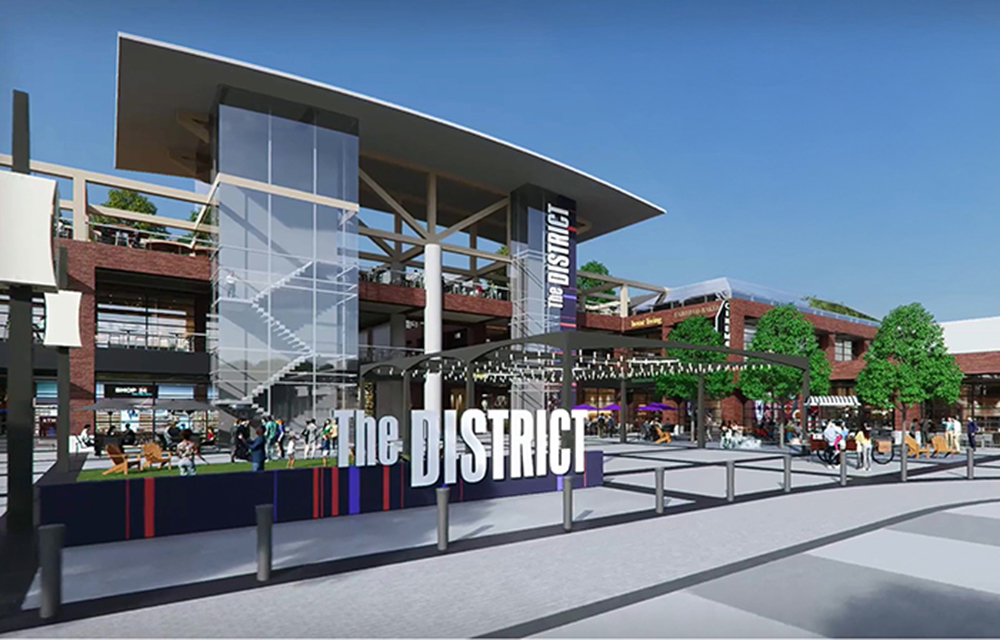
2026 Developing Long Island: The Shops on Broadway
Hicksville, NY The Shops on Broadway is transforming one of Long Island’s most recognizable retail properties into a vibrant new destination. At the heart of the redevelopment is The District, an open-air environment designed by SPECTOR Companies around dining, entertainment, gathering, and community.

.png)

Quick Hits


Columns and Thought Leadership

From vacancy to vitality: How adaptive reuse is reshaping Long Island’s CRE landscape - by Andrea Tsoukalas Curto
Adaptive reuse has become one of the most important conversations in commercial real estate today. Long Island has a large inventory of aging retail, office and industrial

CRE Guide Featured Company: Merritt Environmental Consulting Corp.
Merritt Environmental Consulting Corp. (MECC) was established in June of 2009 after being part of a larger engineering firm for almost 20 years. The focus of the company is to assist lending institutions, attorneys, real estate investors, and property owners with environmental concerns. Today, MECC has offices in New York, Florida, and Vermont and has grown into a regional consulting firm serving clients along the East Coast.

2026 Developing Queens: Long Island Board of Realtors advances commercial growth and advocacy in Queens
The Long Island Board of Realtors (LIBOR) Commercial Network continues to play a key role in advancing opportunities and strengthening the commercial real estate landscape across Queens. Through targeted programming and global outreach

Properly serving a lien law Section 59 Demand - by Bret McCabe
Many attorneys operating within the construction space are familiar with the provisions of New York Lien Law, which allow for the discharge of a Mechanic’s Lien in the event the lienor does not commence an action to enforce following the service of a “Section 59 Demand”.
September Promotion
