



News:
Brokerage
Posted: October 31, 2023
ALUR Walls relocates to JEMB Realty’s 150 Bdwy.
Manhattan, NY JEMB Realty made known that ALUR Walls will relocate its New York showroom from 120 West 45th St. in midtown to 150 Bdwy. in the Financial District. Twenty-three stories tall, 150 Bdwy. offers 276,000 s/f of office and retail space. The ALUR Walls lease is the 16th deal in the past year including new leases, expansions and renewals. The new showroom will occupy 4,015 s/f on the 15th floor of 150 Bdwy.
Built in 1924 and located on the northeast corner of Bdwy. and Liberty St., 150 Bdwy. is the headquarters of JEMB Realty, which purchased the building in 1983.
Also known as the Westinghouse Building, 150 Bdwy. is located near the World Trade Center and the Fulton St. Transportation Hub.
“ALUR Walls helps its clients create inspiring, contemporary work environments, which is also our priority for every one of our tenants,” said a spokesperson for JEMB Realty. “We are delighted to welcome ALUR and its new showroom to the growing community of creative and innovative companies at 150 Broadway.”
“We welcome you to a world where clarity meets creativity at ALUR’s New York showroom,” said a spokesperson for ALUR Walls. “Step into a world of boundless possibilities at our state-of-the-art New York showroom, where the allure of transparency takes center stage. Our new showroom is not just a space; it’s an experience that marries elegance and innovation seamlessly.”
According to the company, ALUR offers elegant, made-to-order demountable glass and solid dividing walls that are fabricated locally and provide exceptional sound control. ALUR glass walls foster collaboration through a more open office layout and allow additional natural light to enter the space. ALUR also offers Duo, a double glazed wall system, that provides enhanced acoustical privacy. ALUR is headquartered in Pine Brook, New Jersey, with showrooms in Washington, DC, and Chicago in addition to the new showroom coming to 150 Broadway.
Tags:
Brokerage
MORE FROM Brokerage
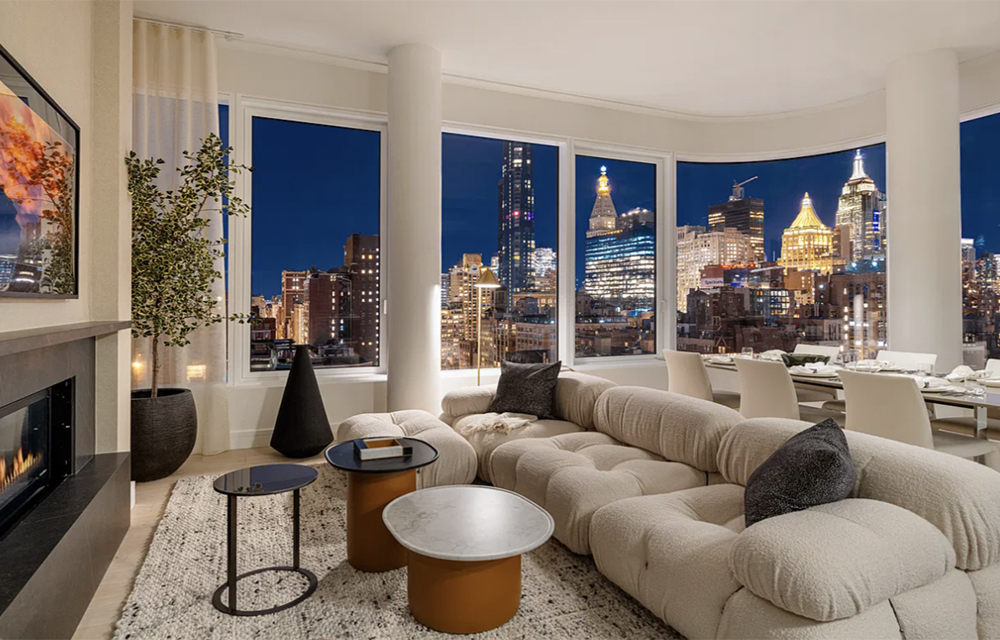
200E20TH sells out in Gramercy, penthouse A closes out sales at the CetraRuddy-designed condominium residences
Manhattan, NY 200E20TH, the CetraRuddy-designed architectural masterwork that brought a curved, contemporary sensibility to Gramercy’s Beaux-Arts streetscape, has



 (2).gif)

Columns and Thought Leadership

Hunt CRE question and answer: Choosing a real estate agent - by David Hunt
First, we will only work with one agent exclusively. The primary reason is that we want that agent to legally represent our client’s interests. In New York State, a real estate agent has a fiduciary

New York’s streets are full again, and the retail numbers prove it - by Noam Aziz
Walk down any New York block this year and you can feel it. The sidewalks are crowded, the storefronts are lit, and the energy that defines this city is back at full volume.

The art of investing in real estate - by Thomas Donovan
Real estate investing is as much an art as it is a skill. No one can time the market, or the factors that drive it, perfectly. Location, zoning, size, transportation, and neighborhood density give you a baseline for

Hunt commercial real estate question and answer: Fortune 500 wisdom - by David Hunt
Yes, there are lessons to be learned from the largest companies in America when comes to managing your real estate. But the decision to buy or lease real estate may not be one of
.gif)