



News:
Brokerage
Posted: March 25, 2013
AKRF's new hires grows firms engineering and site assessment department; Baker and Malinowski to join the firm
AKRF has hired Justin Baker, PE, as a technical director in the firm's site/civil engineering group, and Stephen Malinoswki, QEP, as a technical director in the site assessment & remediation department.
"AKRF is pleased to welcome Justin and Steve to our team as technical directors," said Ed Applebome, president of AKRF. "We are confident that the technical expertise and experience they bring, in combination with their understanding of both N.Y.C. and L.I. will allow AKRF to expand its capabilities and better serve our clients in the region."
A licensed professional engineer in N.Y., Baker has provided civil and environmental engineering services to commercial, industrial, municipal, health care/education and residential clients for more than 22 years. Prior to joining AKRF, he spent six years at Stantec Consulting Services, where he was a senior civil engineer and civil team leader.
As part of AKRF's engineering group, Baker will serve as project manager or engineering team leader on projects providing site/civil design, sewer design, and utility planning; stormwater treatment, discharge permits, regulatory compliance, and system maintenance; industrial NPDES/SPDES discharge permitting; and pollution prevention planning.
Baker is a resident of Manhasset, L.I., and is based in AKRF's N.Y.C. office.
Malinowski is a qualified environmental professional with 21 years of experience in the assessment and remediation of hazardous waste issues and environmental laboratory testing.
He comes to AKRF from CA RICH Consultants, where he was responsible for the design, implementation, and management of environmental assessment, investigation and remediation projects.
Based in the firm's Long Island office, Malinoswki will continue to work with developers, property owners and construction teams to navigate the regulatory processes associated with the NY and N.Y.C. Brownfield and 'E' designation programs administered by NYSDEC, NYCOER and NYCDEP. He also will lead project teams tasked with the completion of groundwater investigations; the formulation and administration of groundwater monitoring programs; brownfield and hazardous waste site investigations; underground storage tank studies, including hazardous soil removal, disposal, and associated soil and water issues; and soil gas/vapor intrusion surveys. Malinoswki resides in Oakdale, L.I.
Tags:
Brokerage
MORE FROM Brokerage
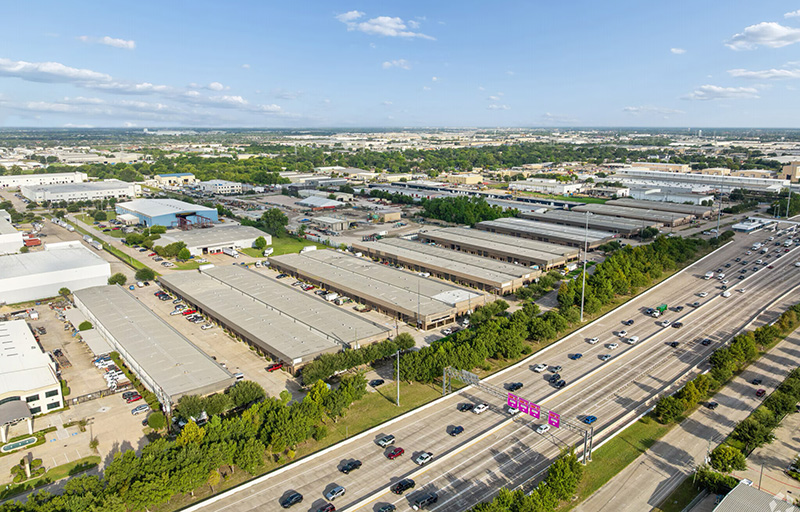
Simi Capital enters Texas with acquisition of 359,000 s/f small-bay industrial portfolio in Northwest Houston
Houston, TX Simi Capital acquired a three-property, 359,000 s/f small-bay industrial portfolio. The transaction, completed in a joint venture with Decker Capital, marks Simi


Quick Hits
 (2).gif)

Columns and Thought Leadership

Hunt CRE question and answer: Choosing a real estate agent - by David Hunt
First, we will only work with one agent exclusively. The primary reason is that we want that agent to legally represent our client’s interests. In New York State, a real estate agent has a fiduciary

A guide to finding the right NYC property management company - by Sanjay Gandhi
Being a small to midsize landlord in NYC is an increasingly demanding endeavor. From navigating complex regulations, increased compliance demands to dealing with tenant issues and remediating violations. It is wise to enlist the assistance of a partner, a professional

Hunt commercial real estate question and answer: Fortune 500 wisdom - by David Hunt
Yes, there are lessons to be learned from the largest companies in America when comes to managing your real estate. But the decision to buy or lease real estate may not be one of

New York’s streets are full again, and the retail numbers prove it - by Noam Aziz
Walk down any New York block this year and you can feel it. The sidewalks are crowded, the storefronts are lit, and the energy that defines this city is back at full volume.
.gif)