



News:
Brokerage
Posted: April 22, 2025
Accelerate Toward Local Law 97 Compliance - by Michael Rubino

Under New York City’s Local Law 97, most buildings over 25,000 s/f in area are subject to new limits on greenhouse gas (GHG) emissions as of 2024, with stricter limits expected to arrive in 2030. Regulations put into place by Local Law 97 aim to reduce GHG emissions produced by the city’s largest buildings by 40% by 2030 and 100% (or carbon neutral) by 2050.
These goals are ambitious and may pose difficulties for building owners unsure of how to sufficiently reduce their carbon footprint. Owners struggling to meet emissions benchmarks laid out by Local Law 97 should consult with sustainable design specialists, as there are a number of effective, efficient decarbonization strategies to help builders and property owners meet City goals.
The NYC Accelerator is a valuable ally to property owners charting a path to maximal energy efficiency. New York City launched the initiative, originally known as the Clean Heat Program, in 2012 as a means of helping building owners transition toward more efficient heating equipment with reduced carbon emissions. However, with the passage of the Climate Mobilization Act of 2019 (part of which encompasses Local Law 97), the Clean Heat Program transformed into the NYC Accelerator and began providing training and resources to help building owners identify energy inefficiencies in their buildings and implement the upgrades necessary to meet Local Law 97 goals.
Support services offered by the Accelerator includes free one-on-one technical assistance, a directory of local service providers and design professionals, information on relevant financial incentives, recommendations for efficient building components and technologies, and a search function to check if your property is in compliance with Local Law 97.

Financing Options
The NYC Accelerator maintains a database of grants, tax incentives, rebates, cost-share programs, and other financial resources that can help offset the costs associated with decarbonization. Many of these resources are offered through state and local agencies, such as the New York State Energy Research and Development Authority (NYSERDA) and the New York City Department of Environmental Protection (NYCDEP); others are offered by utility companies like Con Edison and National Grid.
Examples of these financial supports include NYSERDA’s Commercial & Industrial Carbon Challenge, which offers up to $10 million per project in competitive grants to non-residential property owners; National Grid’s Direct Install Program, which provides no-cost installation for high-efficiency water and energy-saving systems for eligible participants; and Con Edison’s Small Business & Nonprofit Program, which covers up to 70% of the cost of upgrades to lighting, hot water, HVAC, refrigeration, and building envelope systems.
Decarbonization Strategies and Techniques
Decarbonization comes in many forms, from reducing energy consumption to replacing outdated energy sources with alternatives.
- Thermal envelopes. Thermal envelopes are barriers that separate interior temperature and humidity conditions from those of the outside. Effective envelopes are a vital tool for maintaining consistent temperatures indoors, thereby reducing the need for heating or air conditioning. Thermal envelopes can be constructed to provide varying degrees of protection. Tighter envelopes are more adept at blocking outside air flow and reducing the risk of mold growth, but that lack of air flow may result in greater usage of energy-consuming mechanical heating and cooling systems.
- Building electrification. Much like the energy sources themselves, electric-powered mechanical systems—such as those used for heating, cooling, and ventilation—tend to offer greater efficiency and cost savings when compared to their oil- and gas-powered counterparts.
- Building management systems. Building management systems provide property owners and managers with even greater control over their building’s energy usage. These intelligent systems can control everything from a room’s temperature to its lighting levels. For example, users can program a building management system to only heat or cool during regular hours, or to automatically adjust interior lighting based on the amount of natural light already flooding in. These systems allow building owners to more acutely manage any extraneous energy usage, thereby maximizing their savings.
- Alternative energy sources. Replacing traditional energy sources like oil and natural gas with cleaner, more cost-effective alternatives, like solar can dramatically reduce the GHG emissions coming from your building or development. The NYC Accelerator offers technical assistance for building owners interested in solar energy.
Decarbonization in Practice
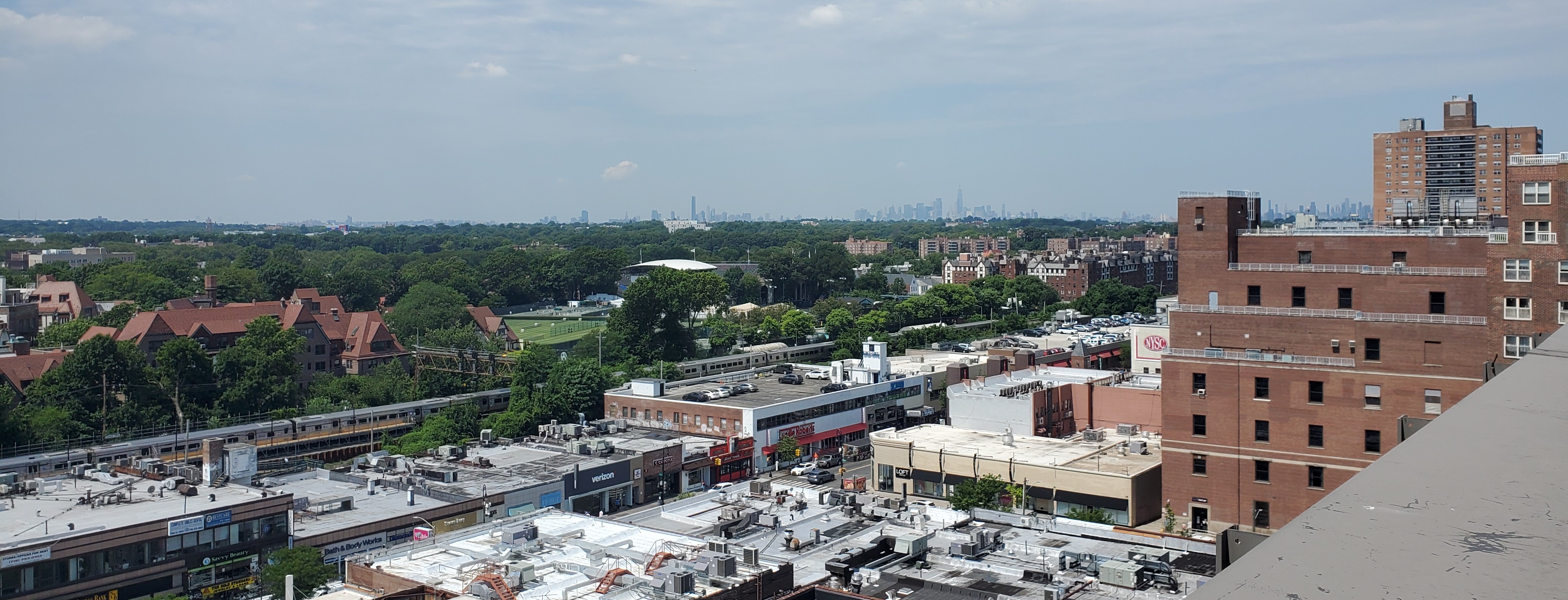
H2M architects + engineers helped the owners of a 10-story, 108,000 s/f mixed-use building meet emission standards set forth by Local Law 97. H2M’s mechanical and electrical engineers stepped in to evaluate the condition of the building and perform an independent analysis of the building’s HVAC system. Meeting Local Law 97 emission caps required an overhaul to the HVAC system, including replacement of the old boilers, chillers, air handling units, and pump motors, the installation of new variable frequency drives, and the integration of all these sustainable elements into a new building management system.
These system replacements helped reduce carbon dioxide output by hundreds of tons, with the new chiller plant alone accounting for a 25% reduction in energy waste. The energy improvements are expected to generate annual savings of roughly $80,000 (a 37% cost reduction) as well as reduce annual carbon dioxide output by about 537 tons per year. The reduced GHG emissions put the owners in compliance with the emission limits set in 2024 as well as the more stringent limits going into effect in 2030.
Consult a Professional
Whether through the NYC Accelerator or an unaffiliated consultant, it is vital for property owners to consult with energy efficiency professionals. Consultants should be capable of performing ASHRAE Level 1, 2, and 3 energy audits and Energy Star building designs under the direction of Certified Energy Manager professionals with LEED AP accreditation. The ideal consulting firm will also feature multiple disciplines under one roof, reducing the need for outside subconsultants and facilitating a greater level of planning starting from the very first stage of the project.
Sustainable, ecologically-friendly buildings are a boon to both the natural environment and the New York City residents that live in them. Improvements made in response to New York City’s bold climate goals will provide financial, ecological, and social benefits to communities throughout the City for decades to come.
Michael Rubino is the Deputy Energy Market Director, at H2M architects + engineers, Melville, NY.
Tags:
Brokerage
MORE FROM Brokerage
Manhattan office leasing tops 10 million s/f for ninth consecutive quarter, Lee & Associates NYC reports
Manhattan, NY Manhattan’s office market continued its recovery in the third quarter of 2026, recording more than 10 million s/f of leasing activity for the ninth





Quick Hits
 (2).gif)

Columns and Thought Leadership

Hunt CRE question and answer: Choosing a real estate agent - by David Hunt
First, we will only work with one agent exclusively. The primary reason is that we want that agent to legally represent our client’s interests. In New York State, a real estate agent has a fiduciary

New York’s streets are full again, and the retail numbers prove it - by Noam Aziz
Walk down any New York block this year and you can feel it. The sidewalks are crowded, the storefronts are lit, and the energy that defines this city is back at full volume.

Hunt commercial real estate question and answer: Fortune 500 wisdom - by David Hunt
Yes, there are lessons to be learned from the largest companies in America when comes to managing your real estate. But the decision to buy or lease real estate may not be one of

A guide to finding the right NYC property management company - by Sanjay Gandhi
Being a small to midsize landlord in NYC is an increasingly demanding endeavor. From navigating complex regulations, increased compliance demands to dealing with tenant issues and remediating violations. It is wise to enlist the assistance of a partner, a professional
.gif)