



News:
Brokerage
Posted: April 7, 2014
A primer on minor subdivisions in Nassau County
The Nassau County Charter defines a minor subdivision as "any proposed subdivision resulting in fewer than five lots." In most cases, a two to four lot subdivision will be considered minor unless the project involves a new public road or public improvement or there are environmental considerations that must be examined to determine the impact on the community.
As a practical matter, the major difference between minor and major subdivisions is the level of county review. Minor subdivisions are reviewed internally by Nassau County Planning Commission (Commission) staff and are not subject to the review and approval of the Nassau County Department of Health and Department of Public Works. The other major distinction is that a map filing with the county clerk is not required under Real Property Law 334-a. Applicants that receive minor subdivision approval from the commission simply record deeds in the Nassau County clerk's office within one year of approval to complete the process and to create the new lots.
Moreover, pursuant to Nassau County Charter §1610(b), the commission has jurisdiction over "all portions of the county outside of cities and villages or within a city or village and within three hundred feet of the boundary of such cities and villages." In plain English, if the property you are subdividing is wholly within the municipal boundaries of a town, then the commission has jurisdiction over the application. If the property is wholly within an incorporated village or city, then that village or city has jurisdiction. If, however, the property is also within three hundred feet of another municipal boundary, then the commission and the other municipalities have jurisdiction over the application.
All subdivisions applications in Nassau County require an extensive zoning analysis to determine the legal status of the premises, the character of the neighborhood and the parameters of development.
Andrea Tsoukalas, Esq. is a partner at Forchelli, Curto, Deegan, Schwartz, Mineo & Terrana, LLP, Uniondale, N.Y.
Tags:
Brokerage
MORE FROM Brokerage
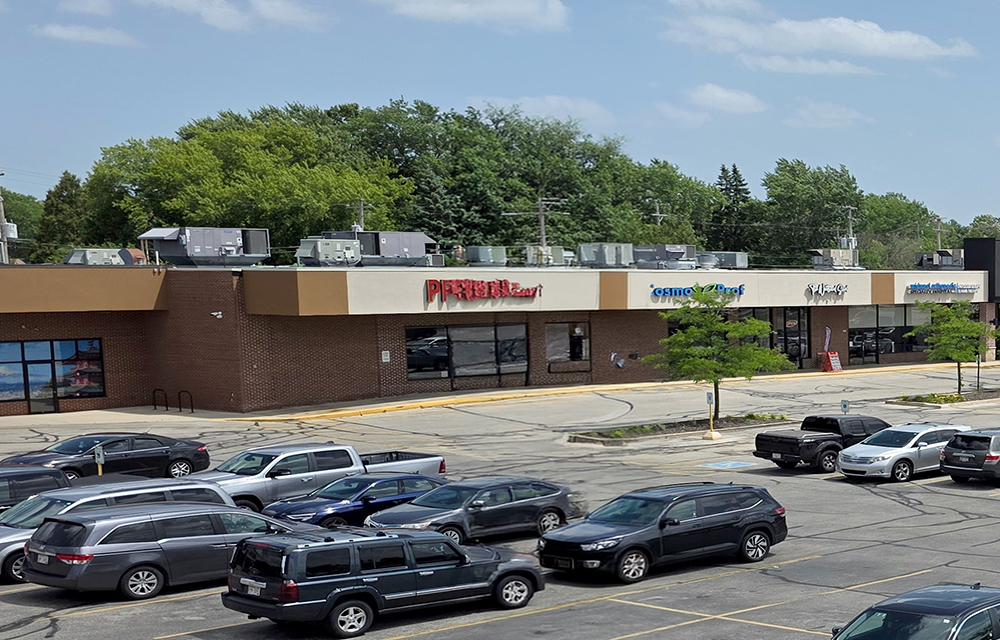
United Properties Corp. expands Wisconsin and Illinois retail presence adding 200,000 s/f
West Allis, WI United Properties Corp. completed two retail acquisitions totaling $27.4 million across Illinois and Wisconsin, adding 205,000 s/f of shopping center space to its portfolio


 (2).gif)

Columns and Thought Leadership

Hunt commercial real estate question and answer: Fortune 500 wisdom - by David Hunt
Yes, there are lessons to be learned from the largest companies in America when comes to managing your real estate. But the decision to buy or lease real estate may not be one of

Positive forecast for New York’s pro-housing push? - by Philip Butler
New York’s housing crisis remains a hot button topic despite growing consensus that varied and affordable housing is desperately needed statewide. Governor Hochul has recently introduced several initiatives to overcome N.Y.’s anti-housing

A guide to finding the right NYC property management company - by Sanjay Gandhi
Being a small to midsize landlord in NYC is an increasingly demanding endeavor. From navigating complex regulations, increased compliance demands to dealing with tenant issues and remediating violations. It is wise to enlist the assistance of a partner, a professional

New York’s streets are full again, and the retail numbers prove it - by Noam Aziz
Walk down any New York block this year and you can feel it. The sidewalks are crowded, the storefronts are lit, and the energy that defines this city is back at full volume.
.gif)