



News:
Brokerage
Posted: February 24, 2014
A lawyer discusses underpinning: Taking proactive steps early can prevent problems
There has been an explosion of new construction in New York City and elsewhere lately. Blocks of smaller buildings have been demolished to make room for much larger, taller buildings. Since space is at a premium in New York City, a lot of this work is taking place right next to adjoining smaller buildings. The "in your face" nature of such construction projects creates a lot of potential for disruption, annoyance and damage to the neighboring buildings. The New York City Building Code imposes a duty on those who excavate to protect adjoining property from damage at their own expense. They must also monitor the effects of the construction on the adjoining property. Failure to do so can result in stop work orders, violations and perhaps even in strict liability.
Under the new building code, the failure to protect adjoining property is currently viewed as some evidence of negligence. Under the old code section New York City Administrative Code §27-1031 (b)(1), the developer could be found to be strictly liability. This was based on the court of appeals interpretation of the code after much litigation in the lower courts. Under the old code, underpinning was required if excavation was 10 ft. or more below the curb level. Under the new code section §3309.4, the 10-ft. threshold has been eliminated and the need for protection is left to the discretion of the design professionals.
The court of appeals has not yet decided if §28-3309.4 is a strict liability statute or not. There is no such case before it at this time. At least one lower court has followed the same reasoning as the court of appeals used in the case it decided under the old code and ruled that there is strict liability. However, developers are well advised to take precautions to protect adjoining structures whether the damage is considered negligence or it is considered strict liability.
Developers will need to do a pre-construction survey before work commences to confirm the condition of the adjoining property. This has always been a good idea, whether it was mandated or not. Most neighboring property owners will allow access for such surveys, but sometimes court intervention is necessary. Such surveys make damage from excavation less likely to occur and both sides are on the same page as far as the condition of the property when the work commences. The need for underpinning under the new code is left up to the design professionals. Whether the standard for liability is negligence or strict liability, damages must still be proven.
When the developers have work that requires access to the adjoining property, it creates a basis for a dialogue between them. The developer wants to get something done and he needs to be able to have access to the adjoining property to do it. This allows for some negotiations to take place which can result in some helpful concessions for both sides. For example, if the developer knew that the adjoining property owner would be a happier, "less likely to complain" neighbor and would give him access more easily, he might be more likely to install monitoring equipment sooner rather than later in the project and perhaps even offer to pay some money for the access license. It could be negotiated up front. The same would be true if the developer wanted access to the adjoining property owner's roof to put up some scaffolding for his building. Thus, although some access is mandated by law, the parties can negotiate what is needed and hopefully eliminate some problems down the road.
When damage does occur, the lawsuits involving such claims are fierce. There are many parties involved, since the owners, general contractors, excavator subcontractors, architects and engineers are all potential targets. The plaintiffs can be tenants, as well as building owners and each of those parties has an expert witness. Taking some proactive steps early on in the construction process can prevent some of these situations.
C. Jaye Berger, Esq., is the principal of Law Offices C. Jaye Berger, New York, N.Y.
Tags:
Brokerage
MORE FROM Brokerage
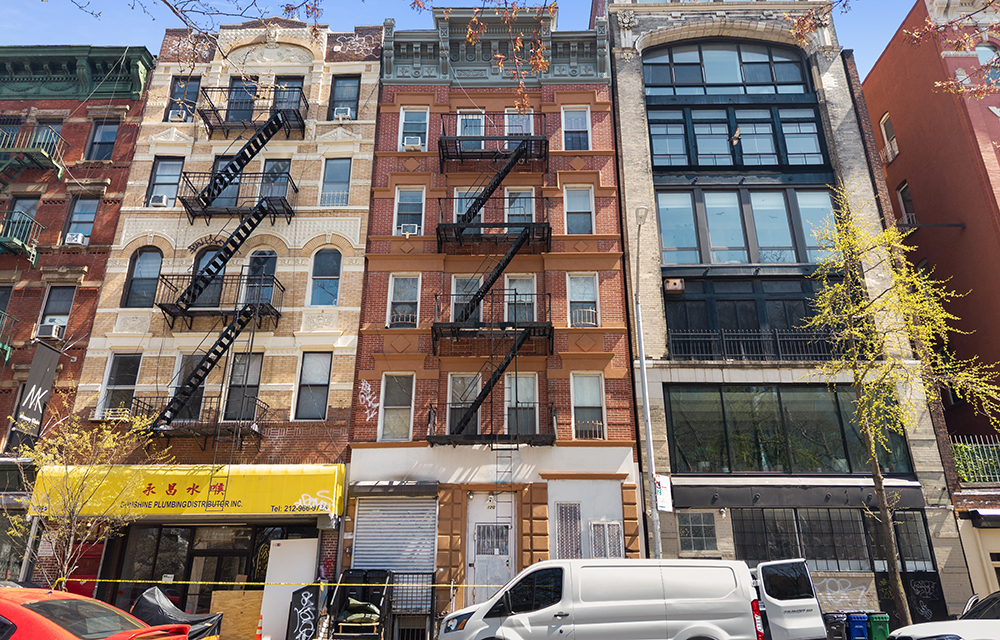
Investment Property Realty Group sells 120 Forsyth St. for $1.35 million
Manhattan, NY Investment Property Realty Group (IPRG) closed the sale of 120 Forsyth St., a mixed-use building located in the Lower East Side section of the city, for $1.35 million.



Quick Hits

Columns and Thought Leadership

Positive forecast for New York’s pro-housing push? - by Philip Butler
New York’s housing crisis remains a hot button topic despite growing consensus that varied and affordable housing is desperately needed statewide. Governor Hochul has recently introduced several initiatives to overcome N.Y.’s anti-housing

Hunt commercial real estate question and answer: Fortune 500 wisdom - by David Hunt
Yes, there are lessons to be learned from the largest companies in America when comes to managing your real estate. But the decision to buy or lease real estate may not be one of

New York’s streets are full again, and the retail numbers prove it - by Noam Aziz
Walk down any New York block this year and you can feel it. The sidewalks are crowded, the storefronts are lit, and the energy that defines this city is back at full volume.

A guide to finding the right NYC property management company - by Sanjay Gandhi
Being a small to midsize landlord in NYC is an increasingly demanding endeavor. From navigating complex regulations, increased compliance demands to dealing with tenant issues and remediating violations. It is wise to enlist the assistance of a partner, a professional
.gif)