


News:
Owners Developers & Managers
Posted: April 11, 2023
350-352-354 West 12th St. completes decarbonization project with VRF Solutions
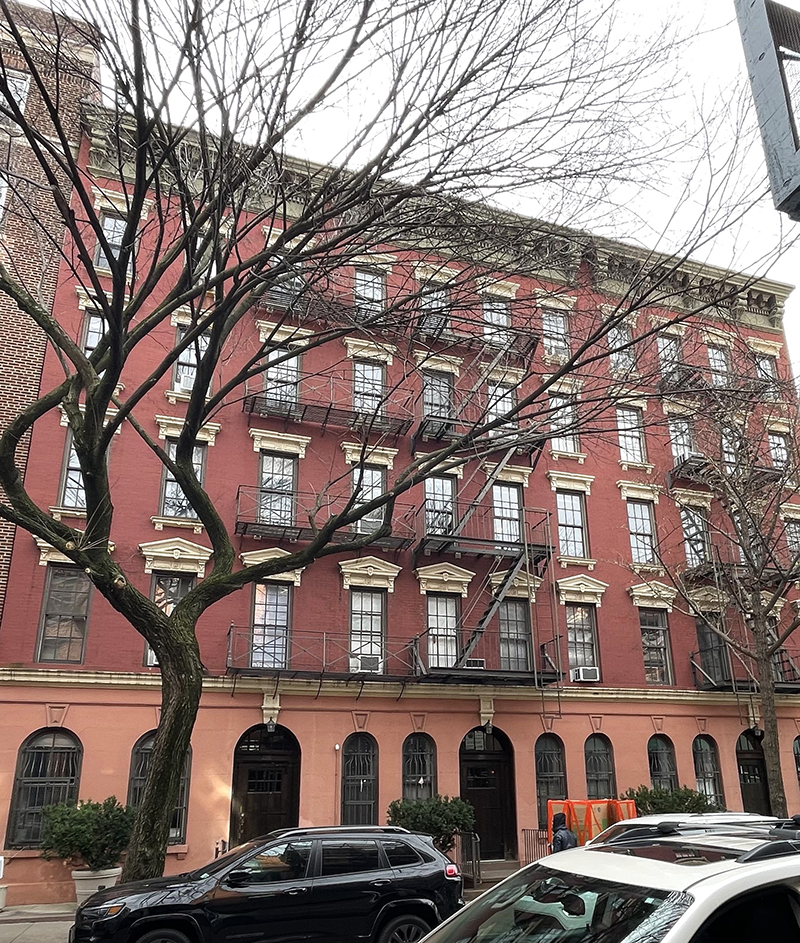
New York, NY A five-story co-op at 350-352-354 West 12th St. in the West Village has completely eliminated the carbon footprint of its three contiguous landmark buildings. Led by VRF Solutions LLC, a design-build mechanical contractor, the project entailed the installation of air source heating, air-conditioning, and hot water systems.
The new mechanical systems will effectively decarbonize the buildings, bringing them into compliance with the Climate Mobilization Act (CMA), passed in 2019. Also known as Local Law 97, it mandates the decarbonization and electrification of New York City’s fossil fuel-based building infrastructure. Starting in 2024, the city will be imposing penalties based on a building’s carbon footprint.
“These are 158-year-old, landmark buildings featuring time-honored architectural details that are lovely to look at, but not energy efficient by today’s standards,” said VRF president Tom Esposito. “With the retrofit of the heating, air-conditioning, and domestic hot water infrastructure, the buildings are not only more comfortable, but they are also able to meet critical environmental standards and help the co-op avoid significant carbon penalties from the city.”
The benefits of the work include:
• Individual temperature control for improved occupant comfort
• Improved indoor air quality (IAQ)
• Decarbonization
• Reduced operation and maintenance costs
• Increased property values
The 42-unit co-op was able to complete the work in less than a year because VRF Solutions provided a comprehensive design-build program that handled all of the project’s engineering, permit expediting, procurement, contracting, and commissioning work.
Joe Novella, chief building scientist, said, “In the time it would have taken other co-ops to conduct a preliminary study and explore how to approach a project like this, VRF delivered the finished project. Because we do all the work in-house, our ability to value-engineer and execute on our client’s decarbonization and electrification projects takes half the time and is less expensive than the conventional approach.”
MORE FROM Owners Developers & Managers

JVP Development names new sales team at 250 West 96th St.
Manhattan, NY JVP Development has appointed Team Arceon, led by Corcoran Top 25 broker Kristen Suh, as the exclusive sales and marketing team for 250 West 96th St., the 131-residence luxury condominium on the Upper West Side designed by renowned Danish designer Thomas Juul-Hansen. The official announcement comes on the heels of 250 West 96th St.




Quick Hits


Columns and Thought Leadership

NYC's Community Opportunity to Purchase Act is back - and multifamily owners should pay attention - by Ron Cohen
New York City’s Community Opportunity to Purchase Act (COPA) is back, and this latest version could have a much better chance of becoming law. The proposal would give qualified nonprofit organizations
New York City’s historic rent freeze now rests with the courts - by Ron Cohen
New York City’s first-ever two-year rent freeze is now in the hands of a state Supreme Court judge, and the decision could reset income for owners of roughly one million rent-stabilized apartments housing some 2.4 million residents.

Hunt Commercial Real Estate Q&A: Location, location, location? - by David Hunt
In working with our clients, we break down our search objectives into two categories. The first category involves the specific needs of your business such as warehouse height, amount of office space and number of loading

Don’t leave severance damages behind - by Sebastian Jablonski
When the government takes a portion of a landowner’s property, most assume just compensation stops at the value of the land taken. However, in partial takings, that is only half of the equation.