



News:
Spotlight Content
Posted: December 31, 2019
2019 Year in Review: Benjamin Sachwald, AKRF
Name: Benjamin Sachwald 
Company: AKRF
What was your most notable project, deal, or transaction in 2019?
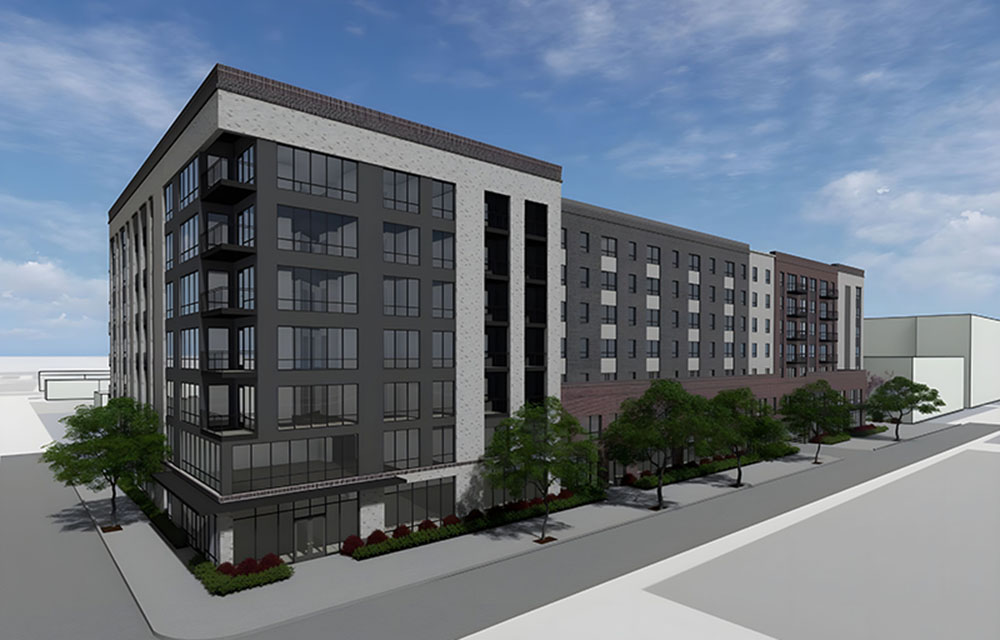
475 Clermont in Brooklyn, a residential and retail building developed by RXR Realty and designed by Aufgang Architects, was among the signature projects completed by AKRF in 2019. The planning, design, and construction of this 12-story, 363-unit building showcased the breadth of the firm’s capabilities. AKRF first led environmental analysis and documentation pursuant to City Environmental Quality Review (CEQR) guidelines for the entire block on which 475 Clermont stands, and then for the building itself provided acoustical consulting, civil engineering, and site assessment and remediation services. AKRF developed solutions to address noise and vibration from the adjacent A/C subway line.
What are your predictions for commercial real estate in 2020?
Expectations for 2020 continue much of what I’ve seen this year for our acoustics, noise, vibration, and audiovisual team, with a mix of healthcare, life sciences, and education buildings in addition to both luxury residential and affordable and supportive housing, commercial office towers, and new hospitality and music venue/performance spaces. Sustainability will remain an important driver of our work with a focus on passive house design and certifications like LEED and WELL.
What was your greatest professional accomplishment in 2019?
Numerous AKRF acoustical consulting projects reached important milestones for construction or occupancy, including but not limited to 91 Leonard St., 40 East End Ave., 810 River Ave., The XI, Moxy East Village, and the transformation of 550 Washington St. into a new office campus for Google.
Tags:
Spotlight Content
MORE FROM Spotlight Content

NYREJ's 2026 Developing Long Island Spotlight is here!
This spotlight showcases projects completed and currently under construction across Long Island as well as highlights improvements made to the region through Industrial and Economic Development Agencies and BIDs.


.png)

Quick Hits


Columns and Thought Leadership

CRE Guide Featured Company: Merritt Environmental Consulting Corp.
Merritt Environmental Consulting Corp. (MECC) was established in June of 2009 after being part of a larger engineering firm for almost 20 years. The focus of the company is to assist lending institutions, attorneys, real estate investors, and property owners with environmental concerns. Today, MECC has offices in New York, Florida, and Vermont and has grown into a regional consulting firm serving clients along the East Coast.

From vacancy to vitality: How adaptive reuse is reshaping Long Island’s CRE landscape - by Andrea Tsoukalas Curto
Adaptive reuse has become one of the most important conversations in commercial real estate today. Long Island has a large inventory of aging retail, office and industrial

2026 Developing Queens: Long Island Board of Realtors advances commercial growth and advocacy in Queens
The Long Island Board of Realtors (LIBOR) Commercial Network continues to play a key role in advancing opportunities and strengthening the commercial real estate landscape across Queens. Through targeted programming and global outreach

Properly serving a lien law Section 59 Demand - by Bret McCabe
Many attorneys operating within the construction space are familiar with the provisions of New York Lien Law, which allow for the discharge of a Mechanic’s Lien in the event the lienor does not commence an action to enforce following the service of a “Section 59 Demand”.