



News:
Brokerage
Posted: June 2, 2020
1031 exchange strategies in a COVID impacted RE market: Extended identification period - by Pamela Michaels

Recently, one of my NYC clients was on the fence about whether to initiate a 1031exchange. Her query: Would she have enough time to find replacement property in the 45-day identification period given the lockdowns and restrictions imposed in NYC due to COVID-19? The closing of her relinquished property was fast approaching–and scheduled to occur on May 8th, 2020. This client was greatly relieved and her decision to proceed settled when I informed her that the identification period had been extended for closings on or after April 1st, 2020 and before July 15, 2020 to July 15, 2020. So, in her specific exchange situation she would have several additional weeks to identify replacement property.
Other investors who identified already but whose 45-day deadline runs during this period also have an opportunity. For example, if the investor’s original 45 days ended on midnight of April 2nd, 2020 and the investor timely identified, the investor may elect to revoke the prior identification and submit a newly identified property prior to July 15th, 2020. An investor may wish to do this if the investor believes that the property originally identified is no longer suitable or a “good buy” due to COVID-19.
Note that both of the above investors must still close on all replacement property by the end of their original 180 calendar day deadline. Only if an investor’s 180-day exchange period deadline falls within the April 1st, 2020 to July 15th, 2020 period, then the exchange period is also extended to July 15th, 2020. Below is a summary of the provisions of Notice 2020-23 providing for these extensions.
This Notice provides that any person performing a time-sensitive action listed in either § 301.7508A-1(c)(1)(iv) of the Procedure and Administrative Regulations or Revenue Procedure 2018-58, 2018-50 IRB 990 (December 10th, 2018), which is due to be performed on or after April 1st, 2020, and before July 15th, 2020 (specified time-sensitive action), is an affected taxpayer. This includes the 45-day identification and 180-day exchange period deadlines in both deferred and safe-harbor reverse 1031 exchanges.
Therefore, pursuant to Notice 2020-23, if the end of an investor’s 45-day identification period or 180-day exchange period in a deferred exchange or the parallel periods in reverse exchanges under Revenue Procedure 2000-37 falls between April 1st and July 15th, the applicable period is automatically extended to July 15th, 2020.
Pamela Michaels, Esq., is senior vice president with Asset Preservation, Inc., New York, N.Y.
Tags:
Brokerage
MORE FROM Brokerage
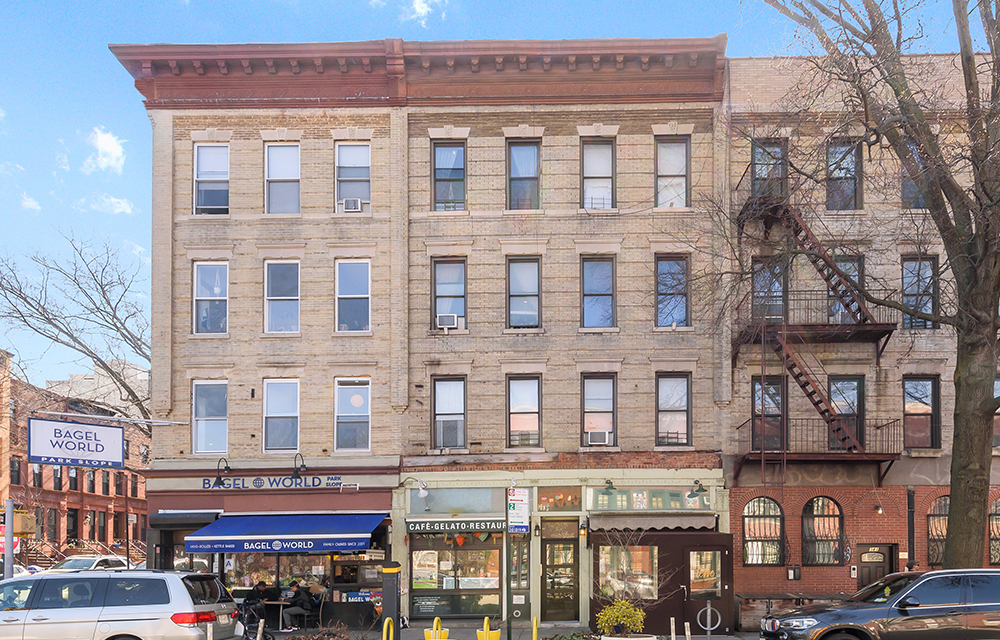
Investment Property Realty Group brokers $2.81 million sale of 341 5th Ave. in Park Slope
Brooklyn, NY Investment Property Realty Group (IPRG) closed the sale of 341 5th Ave., a mixed-use building located in Park Slope for $2.81 million. The transaction was negotiated by Derek Bestreich, Luke Sproviero,




Quick Hits
 (2).gif)

Columns and Thought Leadership

Hunt commercial real estate question and answer: Fortune 500 wisdom - by David Hunt
Yes, there are lessons to be learned from the largest companies in America when comes to managing your real estate. But the decision to buy or lease real estate may not be one of

Positive forecast for New York’s pro-housing push? - by Philip Butler
New York’s housing crisis remains a hot button topic despite growing consensus that varied and affordable housing is desperately needed statewide. Governor Hochul has recently introduced several initiatives to overcome N.Y.’s anti-housing

New York’s streets are full again, and the retail numbers prove it - by Noam Aziz
Walk down any New York block this year and you can feel it. The sidewalks are crowded, the storefronts are lit, and the energy that defines this city is back at full volume.

A guide to finding the right NYC property management company - by Sanjay Gandhi
Being a small to midsize landlord in NYC is an increasingly demanding endeavor. From navigating complex regulations, increased compliance demands to dealing with tenant issues and remediating violations. It is wise to enlist the assistance of a partner, a professional
.gif)