



News:
Brokerage
Posted: June 24, 2013
Brokerage: End of corporate titles ushers in professionalism
Real estate brokerage is currently practiced by professionals who are accountable to their clients and respectful of their license status. No longer are we in the days of "matchmaker-matchmaker make me a match" within the real estate brokerage field. Gone is the practice of simply getting a check through being in the know on a pocket listing. Today, real estate agents, those licensed by the State of New York as real estate salespersons, associate brokers and brokers, are required to adhere to laws and regulations, while offering a knowledge-based service to their clients, in order to prosper in this complex field.
Your author knows this first-hand as the owner of a New York State licensed real estate school, Lieb School. I see the School's many students develop as professionals at each of our courses. Every two years our students are required to take 22.5 hours of continuing education in courses approved by the Department of State on varying topics, from Fair Housing and Discrimination to Agency Disclosure and even Divorce Deals, just to maintain their licenses. You see, real estate agents are charged with having a working knowledge of Article 12-A of the Real Property Law and Title 19, Part 175 of the New York Code of Rules and Regulations. Moreover, real estate agents must be familiar with everything from local municipal codes to concepts only embodied in our state's case law.
Yet, our understandings are constantly changing in this profession, as is best illustrated by the April 26th, 2013 opinion letter issued by the Department of State, which determined that "brokerages may not provide corporate titles to agents for marketing or other purposes." Yes, this change did hurt when it was first read by many in the field, who had long prided themselves in having obtained these titles through hard work at their respective brokerage companies. However, when the pain subsided, more and more real estate agents came forward to state how they appreciated that the Department of State took this action. In fact, the opinion letter is a symbol of what is good in real estate brokerage today. It embodies that we, as a profession, can be trusted by the public as we are accountable to the State. We, as a profession, have clear guidance of the does and don'ts of our field. Not many people can say that with respect to their jobs. Not many can simply ask a question to the Department of State and receive an Opinion Letter that directs what is expected of them in order to keep their status and avoid sanctions. So, while it hurts to lose corporate titles, it's great to work within a field that is important enough that the issue of whether corporate titles are permissible matters. It is great that we have new advertising regulations in our field that will go into effect on January 2, 2014.
Those were the thoughts of Kenneth Haber, general counsel of Douglas Elliman, when he was questioned about the new advertising regulations and the end of corporate titles. Haber said, "The ruling certainly helps create clarity and transparency in the real estate brokerage profession." These thoughts were mirrored by Mitchell Herman, associate litigation counsel for NRT, Northeast region, who trumpeted the next chapter of brokerage by stating that "as licensed professionals with expertise, real estate agents are held to high standards."
So I say thank you to Haber and Herman for your leadership in setting the bar in our industry. Thank you for bringing us professionalism.
Andrew Lieb is managing
attorney of Lieb at Law, P.C., Center Moriches, N.Y.
Tags:
Brokerage
MORE FROM Brokerage
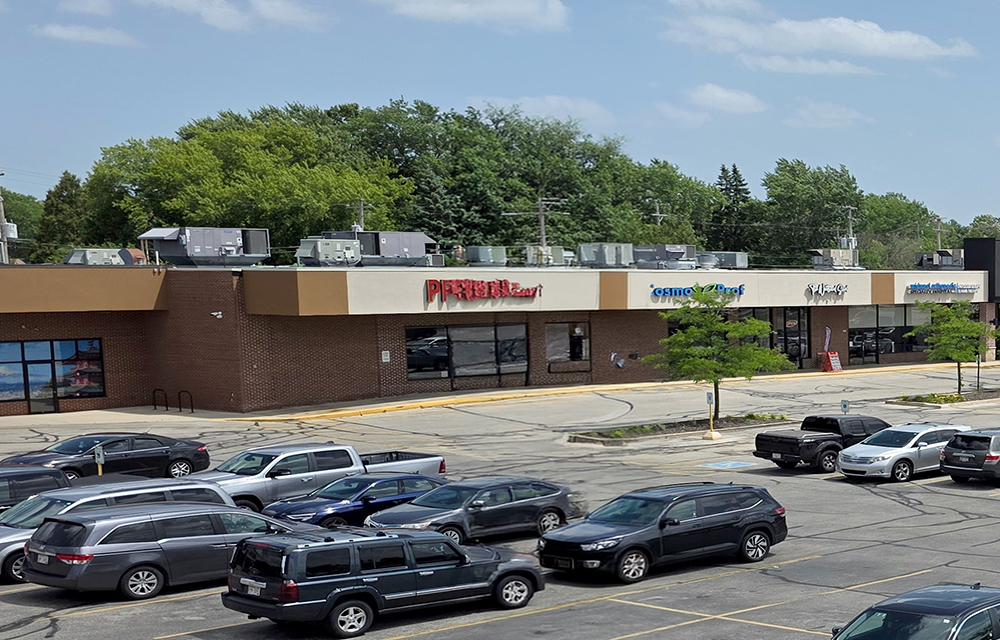
United Properties Corp. expands Wisconsin and Illinois retail presence adding 200,000 s/f
West Allis, WI United Properties Corp. completed two retail acquisitions totaling $27.4 million across Illinois and Wisconsin, adding 205,000 s/f of shopping center space to its portfolio





Quick Hits
 (2).gif)

Columns and Thought Leadership

Hunt commercial real estate question and answer: Fortune 500 wisdom - by David Hunt
Yes, there are lessons to be learned from the largest companies in America when comes to managing your real estate. But the decision to buy or lease real estate may not be one of

A guide to finding the right NYC property management company - by Sanjay Gandhi
Being a small to midsize landlord in NYC is an increasingly demanding endeavor. From navigating complex regulations, increased compliance demands to dealing with tenant issues and remediating violations. It is wise to enlist the assistance of a partner, a professional

Positive forecast for New York’s pro-housing push? - by Philip Butler
New York’s housing crisis remains a hot button topic despite growing consensus that varied and affordable housing is desperately needed statewide. Governor Hochul has recently introduced several initiatives to overcome N.Y.’s anti-housing

New York’s streets are full again, and the retail numbers prove it - by Noam Aziz
Walk down any New York block this year and you can feel it. The sidewalks are crowded, the storefronts are lit, and the energy that defines this city is back at full volume.
.gif)