



News:
Spotlight Content
Posted: January 10, 2011
Getting things done: Some New Year's resolutions to follow for the upcoming year
Architects draw drawings, right? No, we do much more than that - we get things done! Here are some New Year's resolutions:
* To do, carry out, perform, get done, create, design, carry on, manage: There are those of us who are active doers and want to get things done quickly and efficiently. We are often held up by our workers, clients and approval agencies. The things that create this bottle neck are usually the need to document, record = documentation, support, confirm, corroborate, substantiate = document; provide information, representation or communication. There seems to be an increasing amount of paperwork that is generated at all levels and an increase in indecision and confusion. In order to file an application with the city for an approval and permit, we need to prepare and submit an average of 50 forms and drawings, all of which have to be coordinated and accurate. Since the laws change daily and the client changes their mind as well, this is similar to shooting at a moving target.
* Keep tabs on, watch, watch over, keep an eye on, and observe the changes of codes, building type demand and economic conditions in the city. Cater to existing clients and get the work out. Stay actively preparing forms and documents and be sharp and attentive in the process.
* People sometimes needlessly postpone or delay doing what is planned, required or scheduled and what one should be doing: This is a serious problem today particularly since our future is so uncertain. Why not spend endless hours on YouTube (www.youtube.com/billgati) or Face book (www.facebook.com/billgati) instead of filling out forms and paper work that your consultants should be doing for you? Why hire passive people when you can hire active people? Active people want to do things quickly and efficiently and think active thoughts. Passive people wait for you to do everything so they don't have to do it. Have you ever seen a tennis, chess or golf game between an active and passive player? Who inevitably wins?
* People sometimes arouse hope, desire or curiosity without satisfying them or fail to meet the hopes or other expectations of others: The client sometimes starts out with great expectations and ends with a feeling of disappointment because of many reasons not least of which is the great cost of doing work in the city, lengthy approval process, delays in construction and not being able to visualize what the end product should look like at the planning stage. The architect also feels that at the end of every project there is an expectation of recognition and payment: these too are often absent. Due to the recession and lack of capital, we are often forced to work long hours without suitable compensation. Sometimes, clients break contracts and don't pay final payments. This causes mistrust and resentment among architects and clients.
* Don't strain yourself more than is healthy: We all seem to work too hard and develop health issues as a result. Depression, heart disease and cancer are often directly related to over-work and little or no exercise. What are we actually doing this for? The money, joy, pleasure, satisfaction a pat on the back? Be active but do not strain yourself - passive people end up leaving everything for the last moment. Pace yourself!
In Gestalt principle there is an innate tendency to perceive incomplete objects as complete and to close and fill gaps and to perceive asymmetric stimuli as symmetric. We often convince ourselves that the next project will catapult us to fame and stardom, our next client will be loyal and understanding, affectionate, reassuring and give us the attention we need. This is very optimistic. One client actually told me years ago that in paying for my services, he expresses approval of my work and he need not say anything else. I have learned one very important lesson from life recently: money can't buy you affection, reassurance and attention...this is something you have to give others in order for you to receive.
William Gati, AIA, is the president of Architecture Studio, Kew Gardens, N.Y.
Tags:
Spotlight Content
MORE FROM Spotlight Content
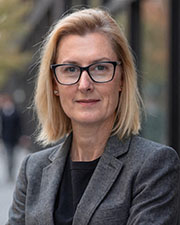
2026 Women in Commercial Real Estate: Deborah Smith, The CenterCap Group
What leadership lesson has made the greatest impact on your career? Leadership isn’t about being the smartest person in the room; it’s about creating an environment where the best ideas win.


.png)

Quick Hits
 (2).gif)

Columns and Thought Leadership

2026 Developing Queens: Long Island Board of Realtors advances commercial growth and advocacy in Queens
The Long Island Board of Realtors (LIBOR) Commercial Network continues to play a key role in advancing opportunities and strengthening the commercial real estate landscape across Queens. Through targeted programming and global outreach

CRE Guide Featured Company: Merritt Environmental Consulting Corp.
Merritt Environmental Consulting Corp. (MECC) was established in June of 2009 after being part of a larger engineering firm for almost 20 years. The focus of the company is to assist lending institutions, attorneys, real estate investors, and property owners with environmental concerns. Today, MECC has offices in New York, Florida, and Vermont and has grown into a regional consulting firm serving clients along the East Coast.

Properly serving a lien law Section 59 Demand - by Bret McCabe
Many attorneys operating within the construction space are familiar with the provisions of New York Lien Law, which allow for the discharge of a Mechanic’s Lien in the event the lienor does not commence an action to enforce following the service of a “Section 59 Demand”.

From vacancy to vitality: How adaptive reuse is reshaping Long Island’s CRE landscape - by Andrea Tsoukalas Curto
Adaptive reuse has become one of the most important conversations in commercial real estate today. Long Island has a large inventory of aging retail, office and industrial
September Promotion
