



News:
Brokerage
Posted: September 18, 2009
Where were you in '92? Upstate market has not had the peaks or valleys of more trendier markets
I'm a bit heavier, a bit grayer, and my joints creak when I get out of bed. Those things remind me, when I read the morning paper, that it isn't 1992 again.
Regulators have closed 89 banks thus far in 2009, the fastest pace since 1992, and most feel that we haven't yet met the Vegas' over-under target. In most cases, the major problem cited for failures is real estate portfolios.
So what's different now from when I was younger and less creaky? More important, where are we going?
We went through a long-term period of economic growth. Real estate values rose. Real estate lending was profitable for community banks, and an area where they could compete on price and service with larger banks.
Wall St. began creating an array of synthetic instruments whereby just about any sort of debt could be pooled and sold as securities. While commercial mortgage-backed securities were just a piece of this universe, securitized debt grew nearly 50-fold from 1980 to 2000, compared with less than a four-fold increase in bank loans. In 1998, securitized debt exceeded bank lending for the first time, and by 2007 securitized debt accounted for over 2/3 of U.S. private debt. While these securities were often highly rated, they were also complex, and investors derived a false sense of confidence in their safety.
This "shadow banking industry" operated outside of the regulatory environment imposed on banks. This market drove down mortgage pricing and aggressive underwriting provided extraordinary leverage for borrowers. Property values grew based on the available financing, rather than long-term supply and demand dynamics. Since the Wall St. firms originated and sold, they had no skin in the game. They took their fees, and moved on to the next deals. Their risk was temporary, warehousing loans until volume was large enough to syndicate and sell them as securities.
The recession has created stress on rents through higher vacancies and requests for rent concessions. Deals that were underwritten at high occupancy and thin DSC levels may be non-performing. This problem may become more severe in coming years as loans in the MBS market mature. These loans were often structured with minimal amortization. Now, with flat or lower revenues, higher interest rate spreads, and more conservative leverage, it is unlikely that the properties will support new loans to pay off the full balance of the maturing loan.
The specific impact of this is hard to predict, and analysts are all over the board. A Deutsche Bank analysis, for example, estimates declines in property values of 25-35% from their 2007 peaks, as term extensions in the securitized markets are unavailable once loans mature. Given that most MBS loans were written with 7 to 10 year terms, many will mature in the coming years.
While there is little disagreement that commercial real estate is a cyclical business, and upstate New York is not immune to the down cycles, things do not appear to be in crisis-mode. The market here is more stable.
Everyone, from lenders to developers to companies that are current or prospective tenants, are doing their homework before making new investments, but projects are still getting done. Developers and investors in upstate have done business in these markets for many years. They know the markets and conservatively manage their portfolios, and projects are rarely developed without a significant amount of pre-leasing. In a nutshell, our Upstate markets have been "slow growth" for many years now due to downsizing of large corporations and a not-so-friendly business climate created in Albany. While returns may be modest, they are predictable, and we have not had the peaks or the valleys of more trendy markets.
Anecdotal comments from M&T's customers reflect caution. In a recent survey, 90% indicated they feel the economy is about the same or moderately better than three months ago. However only 67% feel there will be, at best, moderate improvement in the commercial real estate industry over the coming six months. Fully one-third indicated they felt the industry could deteriorate. Market liquidity is a big issue, more than half felt the availability of financing would be insufficient over the next six months.
Clearly, a big piece of the financing market is gone, at least temporarily. However our loan committee still meets weekly and we are making new commitments. In addition to our portfolio lending products, we have expanded our Fannie Mae/Freddie Mac/FHA multifamily lending platform though our affiliate, M&T Realty Capital Corp., providing additional liquidity for customers. Like our customers, we live and work in upstate, and are committed to the region.
Richard Mueller is a group vice president for commercial real estate lending at M&T Bank, Buffalo, N.Y.
Tags:
Brokerage
MORE FROM Brokerage
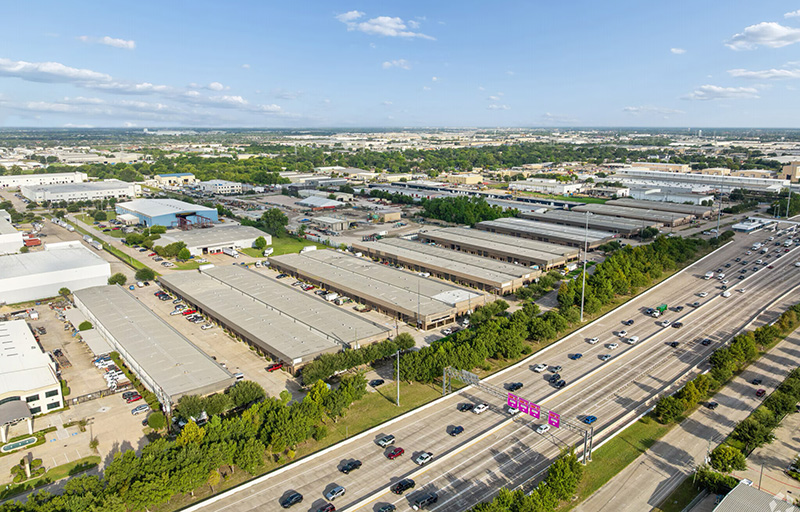
Simi Capital enters Texas with acquisition of 359,000 s/f small-bay industrial portfolio in Northwest Houston
Houston, TX Simi Capital acquired a three-property, 359,000 s/f small-bay industrial portfolio. The transaction, completed in a joint venture with Decker Capital, marks Simi


Quick Hits

Columns and Thought Leadership

A guide to finding the right NYC property management company - by Sanjay Gandhi
Being a small to midsize landlord in NYC is an increasingly demanding endeavor. From navigating complex regulations, increased compliance demands to dealing with tenant issues and remediating violations. It is wise to enlist the assistance of a partner, a professional

Hunt commercial real estate question and answer: Fortune 500 wisdom - by David Hunt
Yes, there are lessons to be learned from the largest companies in America when comes to managing your real estate. But the decision to buy or lease real estate may not be one of

Hunt CRE question and answer: Choosing a real estate agent - by David Hunt
First, we will only work with one agent exclusively. The primary reason is that we want that agent to legally represent our client’s interests. In New York State, a real estate agent has a fiduciary

New York’s streets are full again, and the retail numbers prove it - by Noam Aziz
Walk down any New York block this year and you can feel it. The sidewalks are crowded, the storefronts are lit, and the energy that defines this city is back at full volume.
.gif)