



News:
Brokerage
Posted: February 20, 2009
Where Wall St. encounters Elm St.: Financial models do not rent out apartments
The investors, analysts and portfolio managers of Wall St. use data reports and financial models to make assessments about the viability of multifamily investments.
But multifamily real estate investment isn't about the value of bricks and mortar, the journal entries, or the financial analysis. Using cash flow models, understanding net present value, or calculating internal rate of return doesn't make investments profitable. Financial statements cannot predict the future nor do they contribute to value; financial statements only tell the story of the past.
Elm St. is where the feet of multifamily investment meets the street; where the tenant lives, the frontline staff works, and the real engine of results resides.
Multifamily real estate investment is about people. the people who live in the property, the people who manage it, the people who maintain it, and the people who own it. Each has their own needs, concerns, desires and emotions. None of which can be found in the numerical entry of a financial model. Financial modeling cannot predict how people will behave or perform.
The most important people to a profitable real estate investment are the ones who pay the bills, the tenants. Unless someone is willing to occupy the space and pay the rent all the rest is meaningless. Without tenants real estate is worthless. The tenant is our customer, and we need to remember that we are here for them, not the other way around. All of our policies and procedures must be designed around the service concept, "the customer is king." While we fulfill one of the most basic needs, shelter, our investment is much more to our customer. Beyond safety and security are tastes and desires, amenities, and service. It's not just someplace to live, but the entire experience of living. A 15 minute chat in the clubhouse will tell you more about the economy, rental market, competition, staff and attitudes than any model, chart or market report. We need to listen to our customers. Google has become the champion by listening to theirs. Detroit and the car industry crashed because they didn't.
Our front line staff is the most important interface with our customer. We expect staff to run everything perfectly: seven days a week, 24 hours a day, 365 days a year. And if people were perfect maybe they would. Typically though, front line staff is younger, inexperienced, barely trained and not well paid. Yet we expect them to run our multi-million dollar assets to perfection. These people need our support and appreciation. They get hit with the problems first hand. They are screamed at by irate tenants, deal with rude and obnoxious people, attend to endless details and problems. And often, barely asked their opinion, no less thanked. Unless we properly support, train and care for our front line staff, the apartments won't get rented, the work orders won't get written, and the accounting won't get done. The financial models won't compute and the investment will suffer.
Last is the owner, who often has toughest pill to swallow. Investors want their returns. Auditors want their reports. Lenders want their payments. Everybody wants something. When you're the guy putting up millions of dollars and taking the risk it's easy to feel you should come first. But losing sight of the customer will ultimately be our undoing. Wall St. collapses with huge foreclosure numbers. 401Ks are now 201Ks. The customer has spoken, they won't pay the bill.
Capitalism works fine, we have just stopped focusing on what's good for our customers. Those who do will be rewarded in these tough times with stability and affluence. Those who rely on financial models and lose sight of the customer will perish.
Jesse Holland is president of Sunrise Management and Consulting, Latham, N.Y.
Tags:
Brokerage
MORE FROM Brokerage
Investment Property Realty Group’s Team Friedman closes five Bronx sales totaling $5.3 million
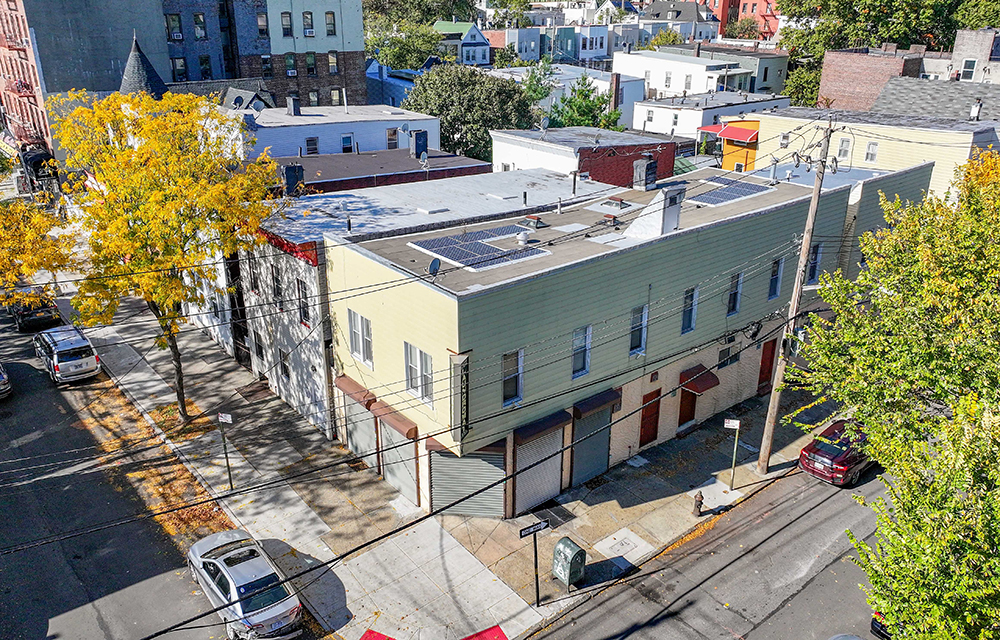
Bronx, NY Investment Property Realty Group’s (IPRG) Team Friedman closed five sales totaling $5.3 million in the month of September. • 1707 Melville St. sold for $1.35 million. Located in Van Nest, the property




Quick Hits
 (2).gif)

Columns and Thought Leadership

Hunt commercial real estate question and answer: Fortune 500 wisdom - by David Hunt
Yes, there are lessons to be learned from the largest companies in America when comes to managing your real estate. But the decision to buy or lease real estate may not be one of

Positive forecast for New York’s pro-housing push? - by Philip Butler
New York’s housing crisis remains a hot button topic despite growing consensus that varied and affordable housing is desperately needed statewide. Governor Hochul has recently introduced several initiatives to overcome N.Y.’s anti-housing

New York’s streets are full again, and the retail numbers prove it - by Noam Aziz
Walk down any New York block this year and you can feel it. The sidewalks are crowded, the storefronts are lit, and the energy that defines this city is back at full volume.

A guide to finding the right NYC property management company - by Sanjay Gandhi
Being a small to midsize landlord in NYC is an increasingly demanding endeavor. From navigating complex regulations, increased compliance demands to dealing with tenant issues and remediating violations. It is wise to enlist the assistance of a partner, a professional
.gif)