



News:
Brokerage
Posted: December 4, 2009
What are the benefits of engaging in a widespread weatherization program for my property?
Weather forecasters predict a colder and more snow-filled winter this season for the northeast as a result of the mild summer and coming El Niño. This is bad news for multi-unit property owners as heat loss due to poor insulation, cracks, crevices, etc. leads to energy waste and higher utility bills.
Heat loss is a condition known in the energy conservation business as "air infiltration"—the uncontrolled leakage of air in or out of a building. That is not to suggest that ideal buildings are so closed as to become "air tight"— such air would become stagnant, smell bad and could induce the growth of mold or fungi. Buildings need inside air to mix with outside air and that process is called the "air exchange." In fact, building codes require the air exchange to occur on an hourly basis and buildings are rated on how well the air exchange functions.
Given that the causes of air infiltration are easy to establish, what can property owners do to prevent air infiltration during colder months while maintaining a healthy and functioning air exchange? Quality Conservation Services, Inc. (QCS) has developed the GreenSmart Energy Reduction Program® to help property owners and managers curb energy use through passive, cost-effective weatherization measures. The program's comprehensive, free energy reduction needs analysis starts with the most obvious spots, windows and doors. Sealing the gaps in these areas reduces infiltration while improving energy efficiency. The program analysis then looks at unusual areas where air infiltration can take place such as baseboards, moldings, sill plates, electrical outlets, holes, pipes and wall assemblies. These are all areas which can have significant air infiltration.
When considering how to address air infiltration issues, property owners may be tempted to take a piecemeal approach by fixing problems as they are identified or as a tenant vacates. The drawback to this type of approach is the difficulty in identifying and addressing air infiltration in the more unusual areas. Piecemeal is also disruptive to building operations and can be more costly in the long-run.
Another problem for property owners is a full weatherization program tends to be labor-intensive including caulking, weather stripping, patching and sealing, fixing pipe penetrations and many other measures. To understand the scale needed to perform comprehensive weatherization, below are examples of what is involved in the GreenSmart Energy Reduction Program®:
* A typical two-bedroom unit, requires 190 linear ft. of caulking and 40 linear ft. of weather strip.
* For a standard 100-unit building, more than 50,000 linear ft. of caulking and over 10,000 linear ft. of weather strip is needed.
Despite its challenges, the benefits to owners can be significant. For a 100-unit building, a comprehensive weatherization program will reduce air infiltration by upwards of 15%. On average, this translates into annual recurring energy savings of $100 per unit while reducing the carbon footprint by 200,000 pounds of greenhouse gas emissions.
What's more, the program is a win-win for both owners and tenants. Owners can realize an immediate and significant cost savings. According to the Department of Energy, every $1 invested in weatherization returns $2.10 in energy-related benefits and those savings could be further magnified given the expected colder temperatures this winter.
For their part, tenants receive more comfortable living spaces with fewer drafts and much more. Thorough weatherization programs ultimately create a more controlled environment, reducing odor and noise pollution while increasing barriers to harmful pathogens, allergens and pests. Furthermore, as every owner knows, happy tenants mean fewer maintenance calls and potentially lower costs.
Winter is fast approaching and, quite possibly, will be particularly cold this season. Air infiltration will be a significant issue and owners would do well to consider the benefits of a comprehensive winterization program that addresses the obvious problem areas windows and doors, as well as the less noticeable ones, baseboards, moldings, sill plates, etc. By engaging a widespread winterization building program, owners will realize significant financial benefits from lower heating costs and reduced maintenance calls and tenant complaints as well as personal pride in being part of the solution for global greenhouse gas emissions.
Tony Montesion is director, strategic planning & development at Quality Conservation Services, Inc., Oak Ridge, N.J.
Tags:
Brokerage
MORE FROM Brokerage

REALM, DelShah Capital and A.M. Properties acquire 377,000 s/f CitySpire office condominium
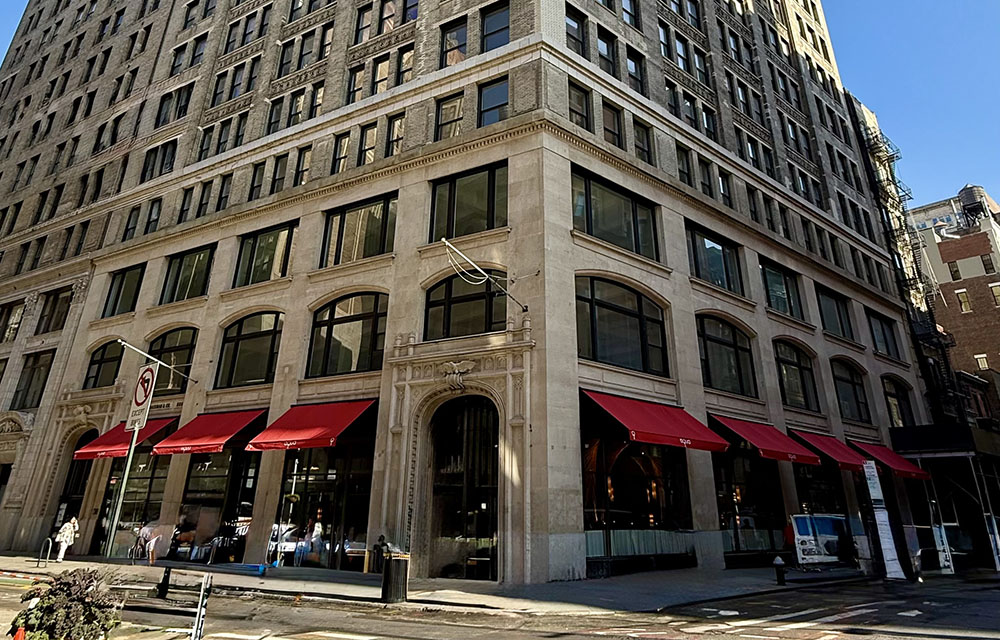
Manhattan, NY REALM, in partnership with DelShah Capital and A.M. Properties, acquired CitySpire, a 377,000 s/f office condominium comprising 24 floors within the 70-story tower at 156 W 56th St. in Midtown. Adjacent to Central Park with transit access and amenities, CitySpire is a Class A office asset located in one of the city’s most sought-after office corridors.





Quick Hits


Columns and Thought Leadership

The anticipated effect of Basel III and ISO 20022 implementation on commercial real estate - by Michael Zysman
July 1, 2025 is the deadline for US banks to begin to adopt Basel III banking standards and July 14, 2025 is the deadline for U.S. banks to adopt ISO 20022 messaging standards. Both will have a significant effect on the banking and commercial real estate (CRE) finance sectors.

Tri-state capital migrates nationally amid regulation pressure - by Reese Weaver
New York tri-state multifamily investors are increasingly reallocating capital to less-regulated markets across the U.S. as rent control and legislative risk erode returns at home. With over 60% of New York City’s rental housing stock classified as rent-stabilized, the traditional value-add model — buying under-performing buildings,

The death of the generic offering memorandum: What buyers expect in 2025 - by Kimberly Zar Bloorian
There was a time when an offering memorandum (OM) was pretty bare bones, some photos, a few bullet points on income, and a rent roll thrown in at the back. That used to get the job done. Not anymore. In 2025, buyers are sharper, faster, and more selective. They’re looking

A fresh start - by Shallini Mehra and Amit Doshi
For the past several years, the New York City multifamily housing market has been defined by disruption. The combined impact of the HSTPA rent laws and a sharply higher interest rate environment has fundamentally reduced