



News:
Brokerage
Posted: August 12, 2013
Weiss joins Colliers International as executive director
Colliers International has continued the expansion of its New York operations with the addition of Philip Weiss as an executive director. Throughout his 34-year career, Weiss has been responsible for completing more than 20 million s/f of commercial real estate transactions, with a focus on corporate clients, predominantly in the New York/Tri-State region.
Prior to joining Colliers International, Weiss held senior positions with Cushman & Wakefield and CB Richard Ellis, dating back to Insignia/ESG. Weiss began his professional career as a project architect with Skidmore Owings & Merrill, and then proceeded to work for numerous New York-based commercial real estate companies including the Peter Friedman Ltd., Merrill Lynch Commercial Real Estate, the Lansco Corporation and his own commercial real estate companies.
"Philip combines deft research and analysis, with sophisticated deal-making instincts and extensive project management and construction advisory experience," said Joseph Harbert, President of Colliers International's Eastern Region. "This unique combination of skills and experiences helps him serve his clients at the highest level of professional excellence, and dovetails perfectly with Colliers' team-based approach."
Weiss is two-time recipient of the REBNY Hart Rice Award for Most Ingenious Deal of the Year, for arranging the purchase and relocation of the US headquarters of the Bertelsmann companies to 1540 Broadway, a 1 million s/f building, and coordinating the sale of the 450,000 s/f Hudson Hotel to Ian Schrager Hotels with a corresponding 200,000 s/f lease for Thirteen/WNET broadcast/office facilities at 450 West 33rd Street.
Among other notable transactions throughout his career, Weiss secured a 415,000 s/f lease for the relocation of The Depository Trust & Clearing Corporation's corporate offices to Newport Office Center VI, Jersey City; and arranged a 145,000 s/f lease for the relocation of the Leviton Manufacturing Company's world headquarters to Melville, NY.
Among many other transactions, Weiss also secured a 113,000 s/f lease for the Metropolitan Transportation Authority at 333 West 34th Street, and arranged Sidley Austin Brown & Wood's lease for its 360,000 s/f New York headquarters at 767 Seventh Avenue.
With Colliers International, Weiss will focus on agency representation and new business development for corporate clientele throughout the New York/Tri-State region.
Tags:
Brokerage
MORE FROM Brokerage
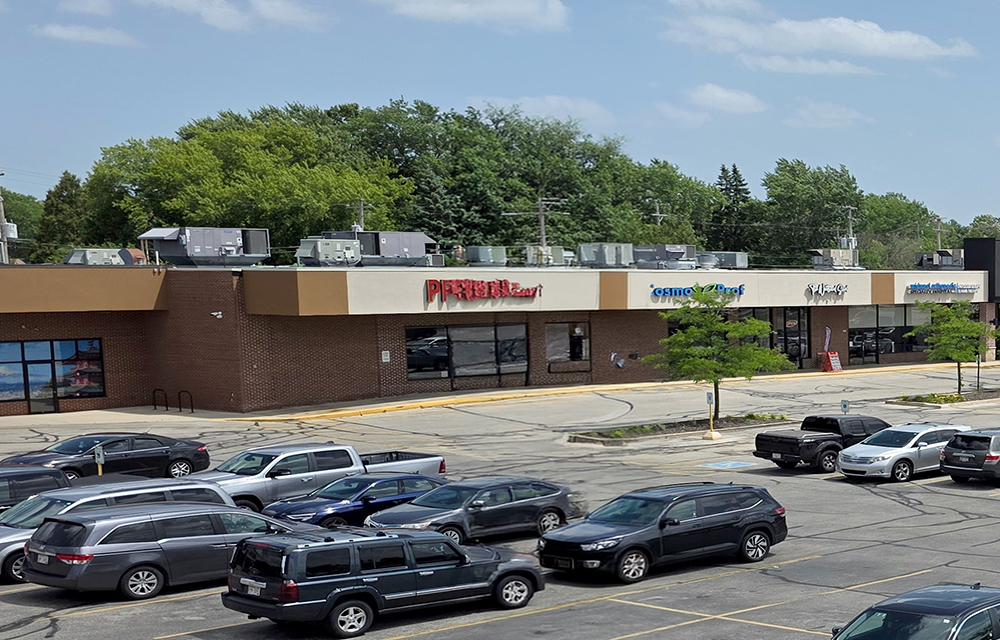
United Properties Corp. expands Wisconsin and Illinois retail presence adding 200,000 s/f
West Allis, WI United Properties Corp. completed two retail acquisitions totaling $27.4 million across Illinois and Wisconsin, adding 205,000 s/f of shopping center space to its portfolio




Quick Hits

Columns and Thought Leadership

New York’s streets are full again, and the retail numbers prove it - by Noam Aziz
Walk down any New York block this year and you can feel it. The sidewalks are crowded, the storefronts are lit, and the energy that defines this city is back at full volume.

Hunt commercial real estate question and answer: Fortune 500 wisdom - by David Hunt
Yes, there are lessons to be learned from the largest companies in America when comes to managing your real estate. But the decision to buy or lease real estate may not be one of

Positive forecast for New York’s pro-housing push? - by Philip Butler
New York’s housing crisis remains a hot button topic despite growing consensus that varied and affordable housing is desperately needed statewide. Governor Hochul has recently introduced several initiatives to overcome N.Y.’s anti-housing

A guide to finding the right NYC property management company - by Sanjay Gandhi
Being a small to midsize landlord in NYC is an increasingly demanding endeavor. From navigating complex regulations, increased compliance demands to dealing with tenant issues and remediating violations. It is wise to enlist the assistance of a partner, a professional
.gif)