



News:
Spotlight Content
Posted: February 13, 2012
VHB assists NRMHA in revitalization of the 240-unit Hartley Houses; Renamed Heritage Homes; First Phase is underway
Planners from VHB's White Plains office assisted the New Rochelle Municipal Housing Authority (NRMHA) to guide the revitalization of the Hartley Houses, a public housing complex constructed in the late 1940s. Hartley Houses consists of five towers containing a total of 240 apartments. Despite efforts by the city and the NRMHA, the project had become a locus of criminal activity. The buildings have also become costly and difficult to maintain over time, and the small units no longer reflect contemporary housing standards. The project's current superblock configuration had isolated its residents from the community and disrupted the fabric of the surrounding neighborhood.
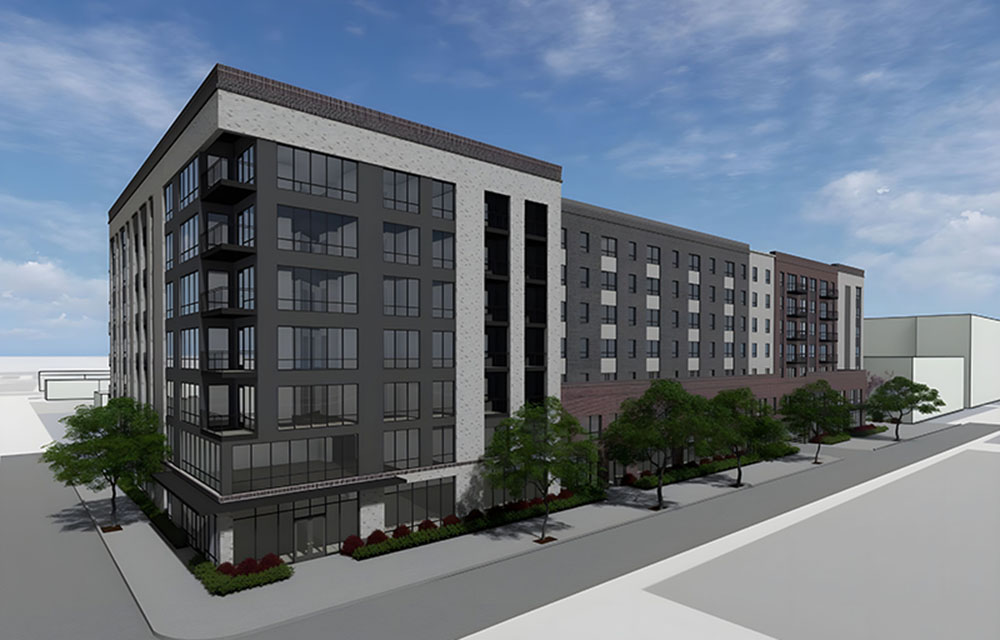
VHB planners consulted on the design of a redevelopment plan intended to rectify these deficiencies and foster neighborhood revitalization. The plan involves creation of a new street grid, removal of the five towers and their replacement with low rise townhouses. Critical planning factors include minimizing off-site relocation, balancing open space and affordable housing resources, and improving neighborhood compatibility.
Project implementation required expansion and amendment of an Urban Renewal Area Plan, zoning amendments, and modifications to the city's Comprehensive Plan. VHB prepared a blight study for the neighborhood; identified a zoning strategy to facilitate the proposed project; drafted zoning, Urban Renewal and Comprehensive Plan amendments; and led the project through the development approval and environmental review processes under both NEPA and SEQRA regulations.
In late 2011, Hartley Houses was renamed Heritage Homes and construction on the first phase of development has begun. The new Heritage Homes will provide 230 townhomes to replace outdated public housing.
Tags:
Spotlight Content
MORE FROM Spotlight Content

The commercial classroom: Capital gains taxes - by Edward Smith
Generally, when you sell the home you live in and any commercial property you own, it may be subject to capital gains taxes. Always, before you take a listing, advise your client to speak to their accountant about



.png)

Quick Hits
 (2).gif)

Columns and Thought Leadership

2026 Developing Queens: Long Island Board of Realtors advances commercial growth and advocacy in Queens
The Long Island Board of Realtors (LIBOR) Commercial Network continues to play a key role in advancing opportunities and strengthening the commercial real estate landscape across Queens. Through targeted programming and global outreach

From vacancy to vitality: How adaptive reuse is reshaping Long Island’s CRE landscape - by Andrea Tsoukalas Curto
Adaptive reuse has become one of the most important conversations in commercial real estate today. Long Island has a large inventory of aging retail, office and industrial

2026 Developing Long Island: ERG Commercial Real Estate launches its new Retail Leasing division
North Hempstead, NY ERG Retail Leasing is the dedicated leasing division of ERG Commercial Real Estate, an established full-service commercial real estate brokerage for over 35 years.

CRE Guide Featured Company: Merritt Environmental Consulting Corp.
Merritt Environmental Consulting Corp. (MECC) was established in June of 2009 after being part of a larger engineering firm for almost 20 years. The focus of the company is to assist lending institutions, attorneys, real estate investors, and property owners with environmental concerns. Today, MECC has offices in New York, Florida, and Vermont and has grown into a regional consulting firm serving clients along the East Coast.