



News:
Brokerage
Posted: September 22, 2015
Vegh of Westwood brokers $35 million for 12-building Central Harlem portfolio
 Steven Vegh, Westwood Realty Associates
Manhattan, NY Novel Property Ventures, a new joint venture between Bennet Berger and Andrew Miller, closed on a 12-building portfolio in Central Harlem for $35 million. The properties located at located at 222 St. Nicholas Ave., 2268 and 2500 Frederick Douglass Blvd., 262 West 115th St. and eight buildings 234-262 West 122nd St., consist of 132 residential units,three commercial spaces and combined total of 130,000 s/f.
Central Harlem has seen a tremendous up-kick in rents and gentrification, specifically below W. 125th St. and on the Frederick Douglas Blvd. corridor. A majority of the portfolio is located on W. 122nd which are adjacent a new eight-story, 41-unit new construction project, developed by Sutton Management and down the block from Gorjian new condo development, 220 St. Nicholas Ave.
Steven Vegh, president of Westwood Realty Associates, was the sole broker on this off market transaction.
 222 St. Nicholas Avenue, Central Harlem - Manhattan, NY
The seller, N.J.-based Treetop Development purchased the buildings in August 2013 for $22 million and has significantly improved the common areas and many of the units, while still leaving plenty of upside for the new owners. “This portfolio is the perfect example of how picking the neighborhoods, identifying underutilized properties, effective management and recognizing right time to buy and sell can pay tremendous dividends,” said Mermelstein.
“New York City is full of neighborhoods on the brink of rebirth,” said Treetop’s Mandel. “We’re consistently monitoring markets and are reinvesting the profits from these sales into new apartment buildings in these untapped locations. We bring our trademark approach to investment and renovation to these properties, increasing our portfolio of homes affordable to working middle-class families, young professional singles and couples and students.”
The deal comes on the heels of the sale of a 50-unit walk up apartment building located at 17 West 125th St. in central Harlem which Treetop Development sold to Thor Equities for $30.6 million last week. Treetop purchased the building in 2013 for $13.6 million. Vegh also served as broker .
Tags:
Brokerage
MORE FROM Brokerage
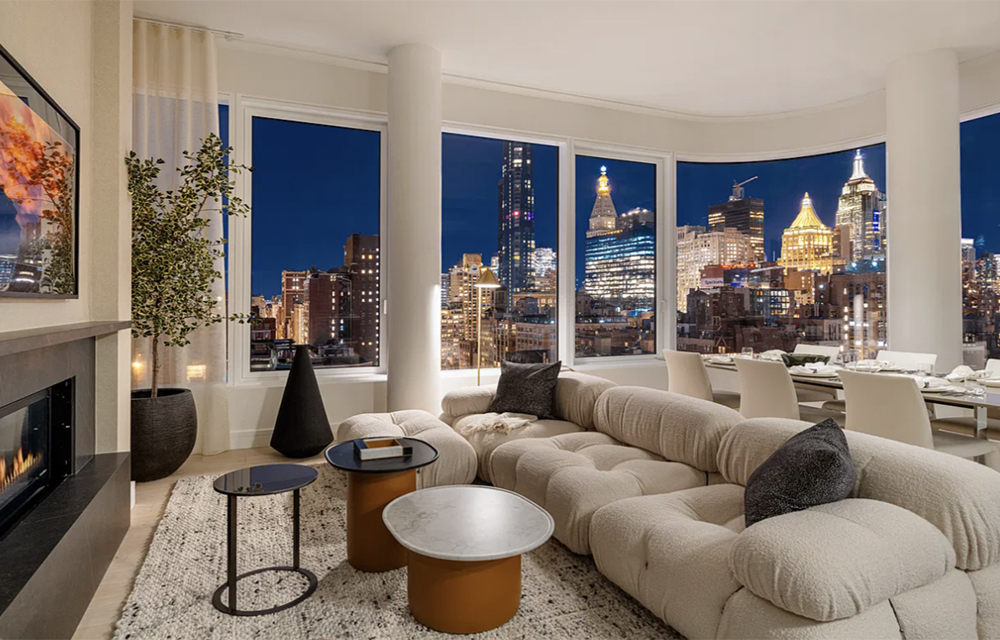
200E20TH sells out in Gramercy, penthouse A closes out sales at the CetraRuddy-designed condominium residences
Manhattan, NY 200E20TH, the CetraRuddy-designed architectural masterwork that brought a curved, contemporary sensibility to Gramercy’s Beaux-Arts streetscape, has



Quick Hits

Columns and Thought Leadership

New York’s streets are full again, and the retail numbers prove it - by Noam Aziz
Walk down any New York block this year and you can feel it. The sidewalks are crowded, the storefronts are lit, and the energy that defines this city is back at full volume.

Hunt commercial real estate question and answer: Fortune 500 wisdom - by David Hunt
Yes, there are lessons to be learned from the largest companies in America when comes to managing your real estate. But the decision to buy or lease real estate may not be one of

Hunt CRE question and answer: Choosing a real estate agent - by David Hunt
First, we will only work with one agent exclusively. The primary reason is that we want that agent to legally represent our client’s interests. In New York State, a real estate agent has a fiduciary

The art of investing in real estate - by Thomas Donovan
Real estate investing is as much an art as it is a skill. No one can time the market, or the factors that drive it, perfectly. Location, zoning, size, transportation, and neighborhood density give you a baseline for
.gif)