



News:
Brokerage
Posted: September 21, 2007
Tishman Technologies' Bowman address ongoing challenges for technology
Ronald Bowman, executive vice president, Tishman Technologies, conveyed his expertise on Business Continuity Planning and Disaster Recovery at a recent Wall Street Technology Association seminar: "Next Generation Data Center Challenges and Solutions."
His topic was: "Outside Plant Considerations for Multi-Market Data Center Site Selection," and he addressed the factors companies must consider in the face of hurricanes, power interruptions, torrential downpours, and ongoing threats of terrorism. Tishman Technologies is a national leader in providing specialized expertise in all facets of strategic planning, site selection, construction, and commissioning of Data Centers and Mission Critical Facilities. Some of its clients include Reuters, Merrill Lynch, Morgan Stanley, and Bank of New York. Bowman described how the Business Continuity Planning/Disaster Recovery(BCP/DR) landscape has changed over the past two years. Fast-moving technology has dramatically changed the approach. He also spoke about how to build scalable and flexible BCP/DR models and how to right-size a backup-data center and not over or under-spend, adding commentary on why relocating data backup centers to rural areas is not necessarily a good idea.
Bowman, said, "The challenges of right-sizing a data center and locating it within relevant distance to meaningful power and fiber optics is well known and frequently discussed. Developing a composite 'Acts of God' and human intervention data base—and a leveling matrix with a synchronous and asynchronous distance to a primary data center—are critical. When associated with a Total Cost of Ownership (TCO), these components develop meaning and can be weighed in the process."
Bowman took the seminar through his own personal history.
"Before 1993 and the first World Trade Center event, many Business Continuity consultants sold fear," Bowman told the group. "There were not many events to point to that involved time and money. But since 1993, and later 9/11, all of that has changed. Now there is a pronounced relationship between downtime and dollars."
To illustrate his point, Bowman said that the U.S. economy backed up $4.1 trillion in in-flight trades in the 46 minutes after the first plane hit the Trade Center. Open trades had to be settled orally or manually during that critical period."
Tags:
Brokerage
MORE FROM Brokerage
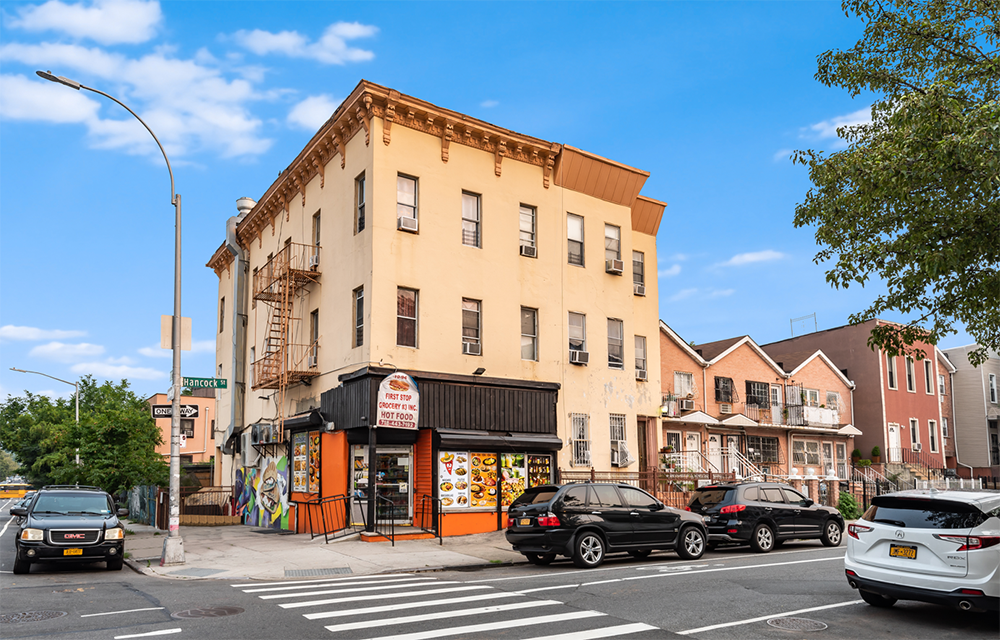
Investment Property Realty Group closes $1.75 million sale of 1094 Hancock Street in Brooklyn
Brooklyn, NY Investment Property Realty Group (IPRG), a New York-based commercial investment firm, has closed the sale of 1094 Hancock St., a mixed-use building in the Bushwick section, for $1.75 million.



Quick Hits

Columns and Thought Leadership

A guide to finding the right NYC property management company - by Sanjay Gandhi
Being a small to midsize landlord in NYC is an increasingly demanding endeavor. From navigating complex regulations, increased compliance demands to dealing with tenant issues and remediating violations. It is wise to enlist the assistance of a partner, a professional

Hunt commercial real estate question and answer: Fortune 500 wisdom - by David Hunt
Yes, there are lessons to be learned from the largest companies in America when comes to managing your real estate. But the decision to buy or lease real estate may not be one of

New York’s streets are full again, and the retail numbers prove it - by Noam Aziz
Walk down any New York block this year and you can feel it. The sidewalks are crowded, the storefronts are lit, and the energy that defines this city is back at full volume.

Hunt CRE question and answer: Choosing a real estate agent - by David Hunt
First, we will only work with one agent exclusively. The primary reason is that we want that agent to legally represent our client’s interests. In New York State, a real estate agent has a fiduciary
.gif)