



News:
Brokerage
Posted: July 26, 2009
The Pollyanna principle: Focus on the optimistic
In the second week of July, Goldman Sachs reported stunning second-quarter earnings, stocks posted significant gains and the S&P 500 rose 2.5%. Concurrently, Reuters published a list outlining expansions for nearly 140 national retail brands, from off-price and discounters to luxury lines.
These are unprecedented times with a roller-coaster economy that has, understandably, challenged the spirit of even the hardiest survivors. Clearly, New York represents one of the nation's more stable economies, but we are not impervious to the national downturn. Last September's Wall St. downturn had a serious impact on our local economy, from residential real estate to retail, and especially in the luxury sectors.
But by all accounts, we are getting stronger. The signs in most commercial real estate sectors are encouraging. Retail deals continue to be made, with stores opening, expanding and relocating throughout the city. Whether we are being bolstered by a strong tourist base or holding on thanks to our own "shopaholic" New York culture, there has been plenty of retail activity here since the second quarter.
While we have lost some New York icons such as Fortunoff's and Payard Patisserie & Bistro, not to mention important brands like Circuit City, we have also seen the debut and expansion of dozens of retail businesses. In recent months, Lounge has opened its outpost on Ladies Mile, DDCLAB has expanded the brand to a third Soho store at 7 Mercer St., Lee Harkness Shirt has tucked itself into 14 Prince St. and Abercrombie & Fitch's Hollister Store, has surfed into a four-level, 40,000 s/f emporium on Broadway and Houston.
Madison Ave., which reported a somewhat misleading vacancy of 10.5%, is swiftly being re-leased. Already Maison Lalique, Armani Collezioni, Chrome Hearts, Frette Luxe and Buckhouse have claimed new outposts. On Fifth Ave., Swarovski is taking the Sergio Rossi store, Gant has expanded and Tommy Hilfiger and Joseph Edwards have new stores.
Rents have declined in nearly every Manhattan shopping district, with the exception of Meatpacking, where rents have actually increased. An anomaly like this is a testament to how savvy businesses are willing to pay more for the right locations. In Nolita, where there have been double digit declines in rent, new stores are opening almost as quickly as the old ones are closing.
Rents vary by neighborhood or district and there have also been double digit declines on specific corridors on the East Side, Downtown and Upper Manhattan. Rents are down more than 20% in Flatiron on Fifth Ave. between 14th St. and 23rd St. Along Broadway between 72nd and 86th Sts., rents have also declined 20%, but the new building going up on the southwest corner of Broadway and 72nd St., is reporting record rents for the area, with national anchor tenants Bank of America and Trader Joe's. Moreover, rents are up all along East 57th St., Times Sq. and Midtown, in general.
Formerly impenetrable markets are offering plenty of business opportunities. The momentary weakness in the market has allowed retailers to snatch up prime locations that were either unavailable or unaffordable barely a year ago. Forever 21 is moving into the former Virgin Megastore space in Times Sq. and Nordstrom Rack, which is opening 10 new stores nationwide, is reportedly taking over Virgin's Union Sq. space.
The activity is irrefutable and we're working harder than ever for each and every deal. That said, the times may not be ideal but we are already doing better in New York. Ironically, I often get accused of being too optimistic, but to quote a 19th century teenage heroine, "When you look for the bad, expecting it, you will find it." I am inclined to look for the good - and I usually find it.
Faith Hope Consolo is the chairman, retail leasing, marketing and sales division at Prudential Douglas Elliman, New York, N.Y.
Tags:
Brokerage
MORE FROM Brokerage
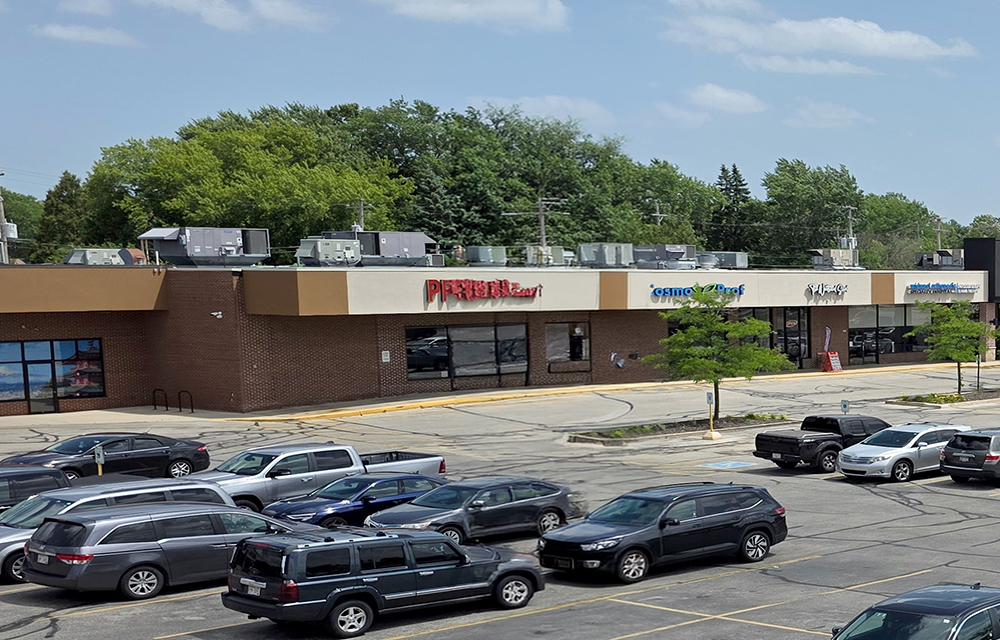
United Properties Corp. expands Wisconsin and Illinois retail presence adding 200,000 s/f
West Allis, WI United Properties Corp. completed two retail acquisitions totaling $27.4 million across Illinois and Wisconsin, adding 205,000 s/f of shopping center space to its portfolio


Quick Hits
 (2).gif)

Columns and Thought Leadership

A guide to finding the right NYC property management company - by Sanjay Gandhi
Being a small to midsize landlord in NYC is an increasingly demanding endeavor. From navigating complex regulations, increased compliance demands to dealing with tenant issues and remediating violations. It is wise to enlist the assistance of a partner, a professional

New York’s streets are full again, and the retail numbers prove it - by Noam Aziz
Walk down any New York block this year and you can feel it. The sidewalks are crowded, the storefronts are lit, and the energy that defines this city is back at full volume.

Hunt commercial real estate question and answer: Fortune 500 wisdom - by David Hunt
Yes, there are lessons to be learned from the largest companies in America when comes to managing your real estate. But the decision to buy or lease real estate may not be one of

Positive forecast for New York’s pro-housing push? - by Philip Butler
New York’s housing crisis remains a hot button topic despite growing consensus that varied and affordable housing is desperately needed statewide. Governor Hochul has recently introduced several initiatives to overcome N.Y.’s anti-housing
.gif)