


 (2).gif)
News:
Finance
Posted: May 11, 2009
Take caution when considering a foreclosed home as a future investment property
In today's market, many investors are finding that foreclosed homes make sense as an investment. The cost of these homes is so depreciated that the renovation and future sale or rental more than covers the outlay. Caution must be taken when purchasing these homes for investment purposes.
Owner occupied purchasers have the ability to purchase a market value rider at the time of closing. This rider actually increases the title insurance to the market value of the property at the time a loss is discovered.
In the case of distressed properties, the purchase price of the house is very low, funds are put in by the purchaser/investor for the improvements and then the house is either sold at fair market value or rented. As investors are not entitled to purchase the market value rider at the time of closing, the funds they spend in order to improve the property are not protected by their title policy. As such, special attention must be given to make sure that no "clouds on title" exist.
To make matters even more difficult, in an effort to move the properties along after foreclosure, certain banks are offering to pay for the purchaser's title insurance if the purchaser uses "their" title company. As much as we love our childhood fairy tales, my experience has always been you really don't get anything for nothing! These offers in general contain clauses for "insurable" title in lieu of "marketable title."
The difference can be monumental. This difference has been discussed ad nausea amongst title insurers, but the difference can be made quite simple. Either we insure you can be there "insurable title" or we insure that you can easily sell the property without question as to title "marketable title." An investor of course will need "marketable title."
To give you a few concrete examples of what is currently out there, we just had a case where the client decided not to use the bank's offer of paying their title insurance. As soon as the attorney for the bank realized that they had to deal with another title company, they quickly offered to give the new title company an undertaking to do a strict foreclosure to cut off the 2nd mortgagee to the action, who by the way had not been served. They did not disclose this small fact until they knew they had to deal with another company. What was wrong with this picture? For those not savvy to strict foreclosures, the 2nd mortgagee has the right to purchase the property at the strict foreclosure. You got it. The investor purchases the property, put's a lot of money into the renovation, the 2nd mortgagee purchases the property on the strict foreclosure and the title company reimburses the investor for the original purchase price. The investor has lost all his renovation funds.
As another example, the description of the property was missing a course and the bank never foreclosed the right of way to get to the premises. The investor would have purchased a deed with a bad description and no way to get there.
Bottom line, caution should always be taken to use a thorough, unaffiliated company especially when an investor is involved.
Nan Gill is the president of Gill Abstract, Goshen, N.Y. and New York, N.Y.
Tags:
Finance
MORE FROM Finance
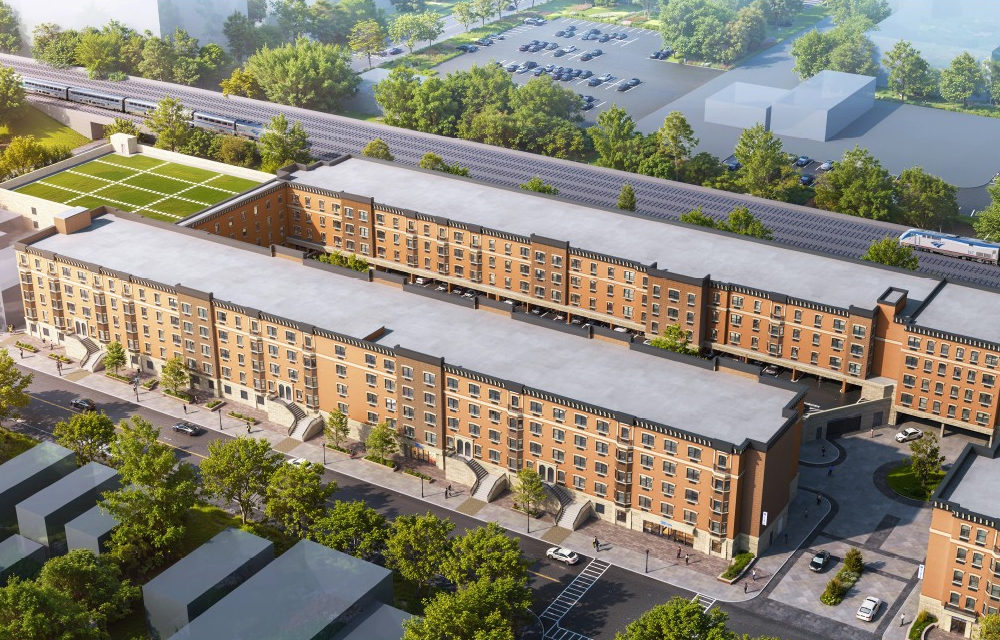
SCALE Lending issues $67.5 million construction loan for Meridia Rahway Brownstones Phase II
Rahway, NJ SCALE Lending has finalized a $67.5 million construction loan for Capodagli Property Company (Capodagli) for the development of Meridia Rahway Brownstones Phase II, a five-story multifamily building.


 (2).gif)

.jpg)

