



News:
Brokerage
Posted: February 25, 2025
Swig of Swig Equities guest panelist at Brown University Real Estate Group
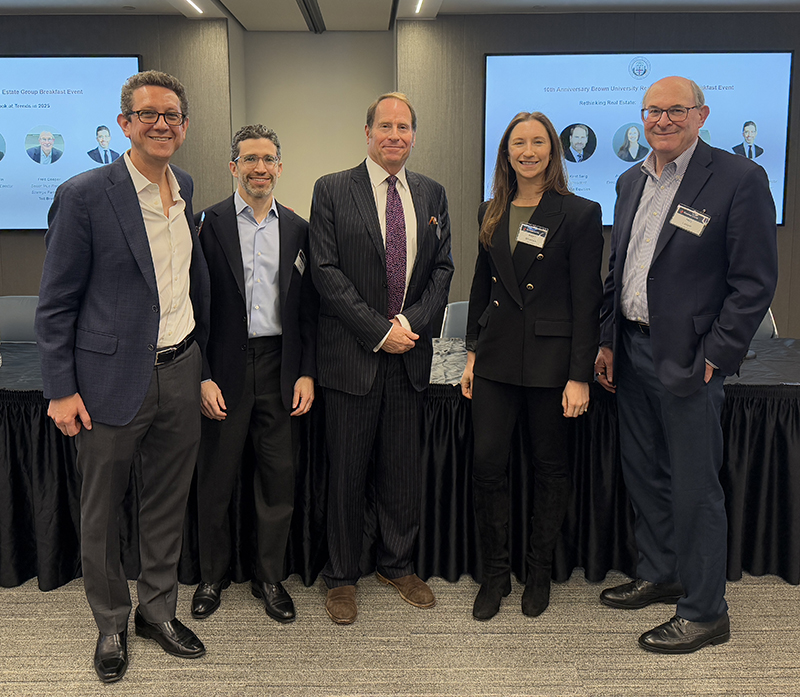
Manhattan, NY Kent Swig, president of Swig Equities was a featured guest panelist at the tenth anniversary of the Brown University Real Estate Group. The event was held in New York City, on January 29.
“It was a great honor to participate in this 2025 Brown University Real Estate Group event. As a Brown alum, and one who has been a real estate professional for decades in both New York and nationwide, it was a great pleasure to join fellow Brown alumni in a timely and relevant discussion of today’s real estate market nationwide and in the New York market,” said Swig.
The panel discussion titled: “Rethinking Real Estate: A Look At Trends in 2025,” presented both the challenges and potential faced today in an uncertain real estate market. The panel discussion noted that developers, lenders and borrowers are all seeking to find the right opportunities in a market which is in multiple ways recovering from high vacancies, oversupply in the commercial office sector, high interest rates, and recent inflationary times.
The panelists included Nicholas Hecker, executive managing director and chief investment officer of Sculptor Real Estate; Fred Cooper, senior vice president – strategic partnerships, Toll Brothers; Avery Silverstein, executive managing director, Newmark and moderator Daniel Berman of Kramer Levin.
“The audience of several hundred guests, hosted by the noted New York law firm Kramer, Levin. Naftalis, & Frankel LLP also shared the views and insights of my fellow alumni panelists,” said Swig.
The Brown University Real Estate Group was formed a decade ago to provide a forum for Brown alumni real estate and related professionals, to exchange ideas and also offer their views and insights into the national and global real estate and development markets.
Tags:
Brokerage
MORE FROM Brokerage

Residential real estate consultancy and brokerage firm Nancy Packes, Inc. rebrands as NPI
Manhattan, NY The NYC-based premier residential real estate consultancy and brokerage firm, Nancy Packes Inc., has rebranded as NPI. Helmed by Seth Rosner, most recently the firm’s managing partner and now president, the company has been intricately involved in hundreds of Tri-State new developments and conversions, spearheading the full project life cycle, from assessment/pre-dev.






Quick Hits

Columns and Thought Leadership

A guide to finding the right NYC property management company - by Sanjay Gandhi
Being a small to midsize landlord in NYC is an increasingly demanding endeavor. From navigating complex regulations, increased compliance demands to dealing with tenant issues and remediating violations. It is wise to enlist the assistance of a partner, a professional

Hunt commercial real estate question and answer: Fortune 500 wisdom - by David Hunt
Yes, there are lessons to be learned from the largest companies in America when comes to managing your real estate. But the decision to buy or lease real estate may not be one of

New York’s streets are full again, and the retail numbers prove it - by Noam Aziz
Walk down any New York block this year and you can feel it. The sidewalks are crowded, the storefronts are lit, and the energy that defines this city is back at full volume.

Hunt CRE question and answer: Choosing a real estate agent - by David Hunt
First, we will only work with one agent exclusively. The primary reason is that we want that agent to legally represent our client’s interests. In New York State, a real estate agent has a fiduciary
.gif)