



News:
Long Island
Posted: July 27, 2010
Steps toward mastering the relationship business
As a broker or agent, you may only get paid by the transaction... As an attorney or consultant, you may only account for your billable hours. But this isn't the full measure of your worth: You're not selling real estate and you're not in the real estate business.
Quite frankly, your worth is better measured by the quality (secondarily, quantity) of your database. Your client/customer/contact relationship manager (CRM), e.g. Outlook, Act!, Top Producer, etc., is the only technology you may use: It helps you to collect contact information, keep track of your meetings, and provide reports. Ironically, the more you are in front of your CRM, the less you are making use of your CRM!
You are in the relationship business. Your job is to be in front of people. Unfortunately, the more comfortable you are with people, the more social (and less productive) it can become. For those of us who are more introverted, our social indifference may come off as arrogance or ignorance.
Fortunately, people skills are just that: They can be learned, practiced, improved, and even mastered. You need not be fake, yet you need not be yourself: You can master the role, perfect the performance.
There are three steps toward mastering your relationship business: The first is the basic habit of keeping your CRM up-to-date. Remember all the business cards that have been collecting on your desk or in your drawer? They must be computerized. It's the tedium of modern business. From there, all the bells and whistles of your CRM can keep you on track.
The second is to undergo conscious people skills training. Again, for some, being gregarious comes naturally. For others, people are a pain. Regardless, people skills training is more than reading books like Dale Carnegie's 'How to Win Friends and Influence People' (a classic I highly recommend) or attending seminars like Carnegie's courses.
People skills training must be practical: it needs to be practiced. Who are your role models? Who embody the relationship-building characteristics you admire? More than the specific actions, can you role play his or her attitude and feeling?
The third step is to turn the superficial, "small talk" of people skills into true, empathic, relationship building. Scheduling two networking conversations every week is the easy part; your CRM can remind you to do that. More importantly is the point of all these conversations:
What do you want to gain from your networking meetings? What are your networking goals? What do you think your interlocutors' (conversation partners') networking goals are? Of course, we all want to walk away from direct referrals. Are there folks in our database (or Linkedin Connections) who can bring them closer to direct business? My book, 365 Marketing Thumb-rules, reminds us to "give referrals to them first, without the expectation of getting."
By focusing on relationships, more than transactions, you will turn your one-hit wonders into repeat business. By repeating these three steps, you will position yourself a giver, an expert networker, and a resource to others. The final step to this process is to ask for referrals.
More than direct business, ask to be introduced to specific referral sources (by title or by name). I suggest browsing through their Linkedin Connections-ask to be introduced to specific people. You can ask with impunity because you have practiced your people skills, nurtured the relationship, and given first. Soon, it will become second nature.
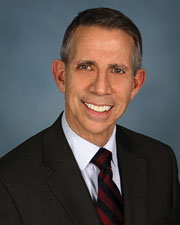
Vikram Rajan is a practice marketing advisor with CoGrow, Freeport, N.Y.
Tags:
Long Island
MORE FROM Long Island

Suffolk County IDA supports expansion of A&Z Pharmaceuticals
Hauppauge, NY The Suffolk County Industrial Development Agency (IDA) has granted preliminary approval of a financial incentive package that will assist a manufacturer in expanding its business by manufacturing more prescription (Rx) pharmaceuticals in addition to its existing over-the-counter




 (2).gif)