



News:
Brokerage
Posted: May 16, 2023
Shawmut Design and Construction launches Mental Health & Wellness Leadership Group during safety week
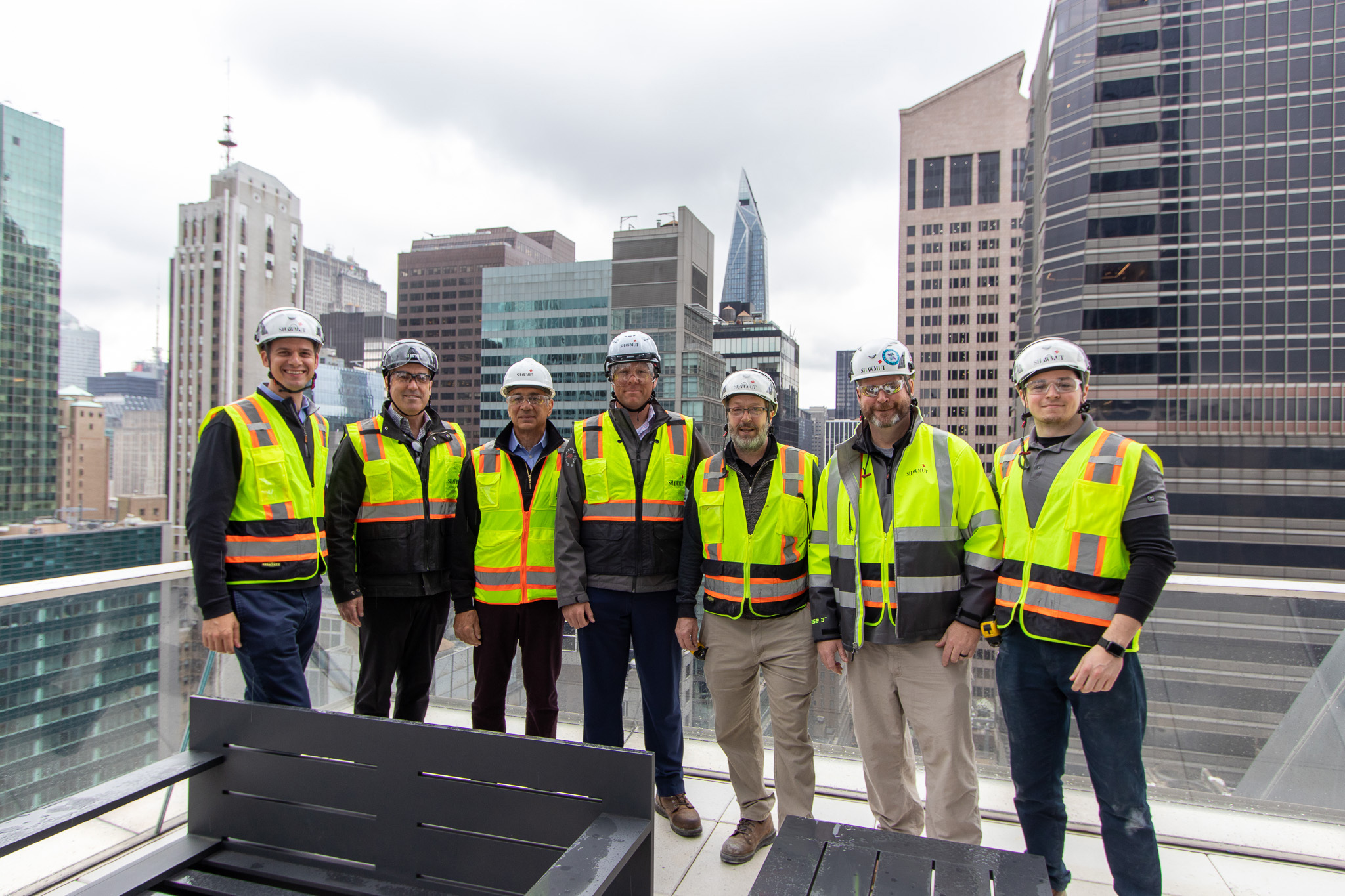
Chief Safety Officer Shaun Carvalho, Superintendent Fergal Doyle, Director of Safety John Kennedy, Assistant Superintendent Liam Toro
Shawmut Design and Construction, a leading $1.3 billion national construction management firm, hosted its 14th annual Safety Week, focusing on physical and mental health, safety, and well-being. The week consisted of 731 events and training sessions held across 133 locations, including Shawmut’s jobsites and 11 offices around the country.
The week kicked off with the launch of Shawmut’s Mental Health & Wellness Leadership Group, which already consists of more than 50 people, across functions, dedicated to identifying programs, initiatives, and paths to address the mental health crisis in the industry. Shawmut also introduced an online suicide awareness training that’s available to all employees.
Shawmut’s commitment to sending everyone home both safely and improved was reflected in the events and trainings throughout the week—from substance use disorder and certified mental health first aid trainings, to talks on resiliency and suicide prevention, to fall protection and fire safety trainings. This awareness is critical as more construction workers die each year from suicide and overdose than every other workplace-related fatality combined.
“There are 60,000 people on our jobsites each year, with all different backgrounds, perspectives, and life stressors that form their experiences on-site each day. It’s our job to provide them with both physical and mental health resources, along with support and empathy, so they feel physically and psychologically safe,” said Shaun Carvalho, chief safety officer, Shawmut. “I am proud of everyone’s engagement in our Safety Weeks events and trainings this year, leaning into some uncomfortable topics that will make us stronger and better as we work to address the mental health crisis the construction industry continues to face.”
Safety is a top-down and bottom-up business imperative that’s embedded into Shawmut’s culture and core values. As a 100% employee-owned company, this drives buy-in and engagement from each and every employee. It also drives results—Shawmut has seen a 78% decrease in lost workday incident rates since 2018.
Tags:
Brokerage
MORE FROM Brokerage
Marcus & Millichap releases fourth-quarter 2026 NYC industrial market report
Manhattan, NY Marcus & Millichap has published its fourth-quarter 2026 New York City Industrial Market Report. “New York City’s industrial market is showing a clear






Columns and Thought Leadership

Hunt commercial real estate question and answer: Fortune 500 wisdom - by David Hunt
Yes, there are lessons to be learned from the largest companies in America when comes to managing your real estate. But the decision to buy or lease real estate may not be one of

Hunt CRE question and answer: Choosing a real estate agent - by David Hunt
First, we will only work with one agent exclusively. The primary reason is that we want that agent to legally represent our client’s interests. In New York State, a real estate agent has a fiduciary

The art of investing in real estate - by Thomas Donovan
Real estate investing is as much an art as it is a skill. No one can time the market, or the factors that drive it, perfectly. Location, zoning, size, transportation, and neighborhood density give you a baseline for

New York’s streets are full again, and the retail numbers prove it - by Noam Aziz
Walk down any New York block this year and you can feel it. The sidewalks are crowded, the storefronts are lit, and the energy that defines this city is back at full volume.
.gif)