



News:
Brokerage
Posted: March 19, 2019
Sciara of Nelson & Pope honored by LIBN as one of the Top 40 under 40 Professionals

Nelson & Pope
Melville, NY According to Nelson & Pope (N&P), Michael Sciara, RA, a partner in their Architectural Division, has been named one of Long Island Business News top 40 under 40 Professionals.
Sciara is an executive (and N&P’s youngest partner) with over 20 years of experience in the design, planning and implementation of projects for private and public sector clients. His portfolio includes many large-scale commercial, retail, mixed-use, healthcare, educational and hospitality space.
Sciara is an alumnus of New York Institute of Technology receiving both his Bachelor and Master of Architecture degrees.
“Mike is well deserving of this award” said Eric McFerran, PE, managing partner at N&P. “Not only is he a prominent architect, but also a great leader who provides invaluable guidance to his colleagues and staff.”
Sciara got his start interning at an architectural firm while still in high school. Through the years he participated in leadership and mentorship opportunities and as such has been promoted to roles that allowed him to manage projects as well as lead and inspire young professionals. During his career he has sought to improve the quality of the field, advocate for greater mentorship opportunities and give-back to the local community by participating with charitable and non-profit organizations. One organization that stands out is his teams’ participation in Canstruction Long Island. Canstruction is a design/build competition that has participating teams build huge structures entirely made out of canned food which gets donated to local food banks before Thanksgiving. N&P’s structure this year collected close to 5,000 cans which yielded 2,700 meals to help the feed the hungry and abolish hunger on Long Island. Sciara also sits on the board of New Ground, a local non-profit organization that seeks to end homelessness on Long Island and supports Veterans through education and job assistance training.
Tags:
Brokerage
MORE FROM Brokerage
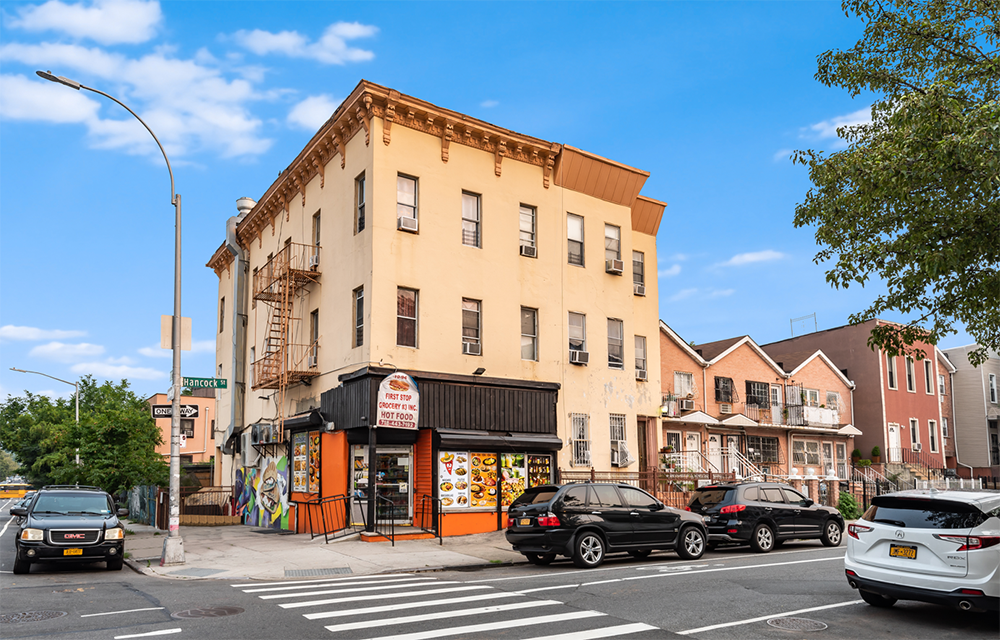
Investment Property Realty Group closes $1.75 million sale of 1094 Hancock Street in Brooklyn
Brooklyn, NY Investment Property Realty Group (IPRG), a New York-based commercial investment firm, has closed the sale of 1094 Hancock St., a mixed-use building in the Bushwick section, for $1.75 million.




Columns and Thought Leadership

Hunt CRE question and answer: Choosing a real estate agent - by David Hunt
First, we will only work with one agent exclusively. The primary reason is that we want that agent to legally represent our client’s interests. In New York State, a real estate agent has a fiduciary

Hunt commercial real estate question and answer: Fortune 500 wisdom - by David Hunt
Yes, there are lessons to be learned from the largest companies in America when comes to managing your real estate. But the decision to buy or lease real estate may not be one of

A guide to finding the right NYC property management company - by Sanjay Gandhi
Being a small to midsize landlord in NYC is an increasingly demanding endeavor. From navigating complex regulations, increased compliance demands to dealing with tenant issues and remediating violations. It is wise to enlist the assistance of a partner, a professional

New York’s streets are full again, and the retail numbers prove it - by Noam Aziz
Walk down any New York block this year and you can feel it. The sidewalks are crowded, the storefronts are lit, and the energy that defines this city is back at full volume.
.gif)