



News:
Brokerage
Posted: September 30, 2025
Sadis & Goldberg LLP signs 21,000 s/f expansion lease at The Feil Organization’s 551 Fifth Ave.
Manhattan, NY The Feil Organization has signed a 21,000 s/f, 15-year expansion and extension across the entire seventh floor at 551 Fifth Ave. with Sadis & Goldberg LLP, a leading financial and corporate law firm. The firm currently occupies the partial 16th and 21st floors, totaling 15,000 s/f.
“Our long-standing relationship with Sadis & Goldberg is a testament to the enduring appeal and adaptability of 551 Fifth Ave.,” said Andrew Wiener, head of commercial leasing at the Feil Organization. “Their recommitment underscores their confidence in 551 Fifth Ave., and our ability to provide brand-new, customized space demonstrates our commitment to supporting their continued growth and success.”
“The new lease provides Sadis with approximately 50% more office space, symbolizing our long-term investment in our growth and continued larger presence in the marketplace,” said Yehuda Braunstein, partner at Sadis & Goldberg LLP. “We are in a growth mode and are very excited to be able to welcome more lateral partners and associates who seek long-term career stability and thrive in a team oriented culture. This expansion reflects our continued confidence in the building, its prime location and Feil’s ability to deliver a modern workspace that supports both our practice and long-term growth.”
In May, the Feil Organization signed a 21,000 s/f lease with the National Women’s Soccer League, which will make 551 Fifth Ave. its new headquarters. With these deals, the building is now over 90% leased.
551 Fifth Ave., also known as the Fred F. French building, is a Class-A office skyscraper in Midtown Manhattan. Completed in 1927, the building is a New York City designated landmark and was added to the National Register of Historic Places in 2004. The iconic Art Deco design by Sloan & Robertson was restored in the early 1990s. 551 Fifth Ave. is located near Grand Central Terminal and the new Long Island Rail Road connection at Grand Central Madison, as well as some of the city’s best hotels, restaurants and retail stores.
Feil was represented in-house by Wiener, Kevin Driscoll and Henry Korzec. Andrew Goldberg, Zach Weill and Anthony Manginelli represented Sadis & Goldberg, LLP.
Tags:
Brokerage
MORE FROM Brokerage
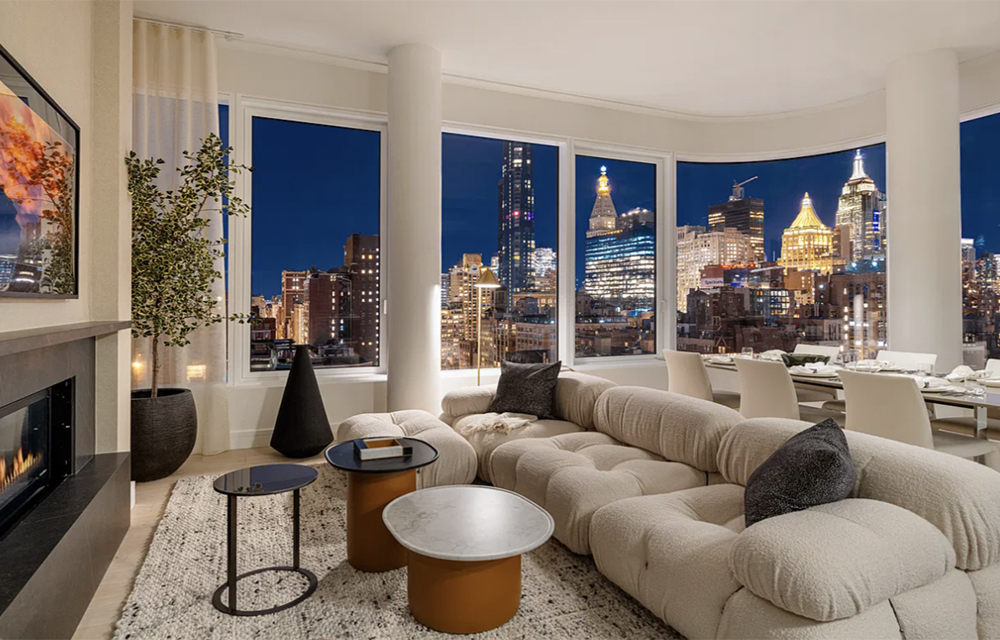
200E20TH sells out in Gramercy, penthouse A closes out sales at the CetraRuddy-designed condominium residences
Manhattan, NY 200E20TH, the CetraRuddy-designed architectural masterwork that brought a curved, contemporary sensibility to Gramercy’s Beaux-Arts streetscape, has





Quick Hits

Columns and Thought Leadership

New York’s streets are full again, and the retail numbers prove it - by Noam Aziz
Walk down any New York block this year and you can feel it. The sidewalks are crowded, the storefronts are lit, and the energy that defines this city is back at full volume.

Hunt commercial real estate question and answer: Fortune 500 wisdom - by David Hunt
Yes, there are lessons to be learned from the largest companies in America when comes to managing your real estate. But the decision to buy or lease real estate may not be one of

Hunt CRE question and answer: Choosing a real estate agent - by David Hunt
First, we will only work with one agent exclusively. The primary reason is that we want that agent to legally represent our client’s interests. In New York State, a real estate agent has a fiduciary

The art of investing in real estate - by Thomas Donovan
Real estate investing is as much an art as it is a skill. No one can time the market, or the factors that drive it, perfectly. Location, zoning, size, transportation, and neighborhood density give you a baseline for
.gif)