



News:
Brokerage
Posted: July 3, 2018
Rosina Food Products completes $22.7 million expansion project
Cheektowaga & West Seneca, NY According to governor Andrew Cuomo, Rosina Food Products, Inc. has completed a multi-million-dollar expansion its operations. The $22.7 million project includes a new customer focus center, the addition of new manufacturing lines, updated machinery and renovations at the facility where Rosina frozen foods are produced.
“Rosina Food Products has been an integral part of New York’s food manufacturing sector for generations,” governor Cuomo said. “This major expansion project has already created dozens of new jobs and we look forward to the company’s continued growth and success in Western New York.”
The expansion project, which began in 2014, allows the company to increase its pasta production capacity by 10 million pounds annually and increase packaging capacity of protein items by 5 million pounds, while maintaining the highest level of food safety and quality. Additionally, facility and equipment upgrades at both plants resulted in Rosina obtaining British Retail Consortium certification, a global food safety initiative, which greatly increased its ability to remain competitive and retain current and future larger-scale customers.
Rosina’s investment adds 50 new jobs to a major employer in Erie County. Rosina’s production facilities, which originally opened in 1963, currently employ more than 400 workers at its two locations. Rosina manufactures Italian specialty frozen foods including pre-cooked meatballs, Italian sausages, filled pasta, eggplant items, entrees, and pizza toppings.
The new $2.4 million Customer Focus Center includes a research and development kitchen and production kitchen, state-of-the-art conference facilities and office space. The 10,000-square foot building allows Rosina to showcase its capabilities for customers and allows them to collaborate with their culinary, marketing and data insights team to develop new products specifically for their needs.
New York supported the expansion project in two phases, including a $1.5 million grant and another $4 million grant through Empire State Development. The grants supported construction, renovations and the purchase of machinery and equipment. The company’s investment is key to retaining hundreds of existing jobs and attracting news jobs, including 50 already in place in Western New York.
Russell Corigliano, Rosina Food Products, Inc. president and CEO said, “This is an exciting day for Rosina Food Products, Inc. as we continue our journey in developing and delivering on trend authentic, wholesome and delicious specialty Italian food products for the trade. By housing our R&D, Culinary, Marketing and Data insights team along with our supply and logistics team under one roof, we increase speed and deliver on our objective of exceeding our customers’ expectations. We look forward to inviting our customers to our new facility and sharing with them what the Rosina Difference is all about. “
Empire State Development president, CEO and commissioner Howard Zemsky said, “Rosina’s multi-million-dollar expansion positions the company to be more globally competitive and is further proof that companies are choosing to stay and grow in Western New York, building on the region’s strengths in advanced manufacturing and food processing and creating jobs and opportunity.”
Tags:
Brokerage
MORE FROM Brokerage
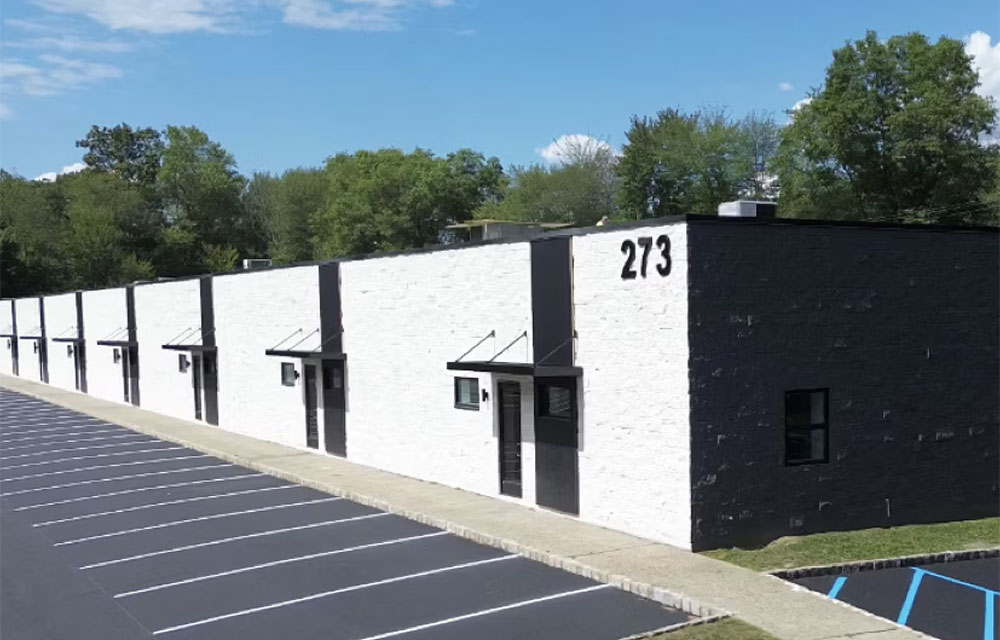
Resource Realty of Northern NJ delivers complete lease-up of 235 Franklin Rd. for Commerce Park Investors
Randolph, NJ Resource Realty of Northern New Jersey (RRNNJ) has completed the lease-up of a 10-unit small-bay industrial property at 273 Franklin Rd., marking the culmination of an investment strategy that began




 (2).gif)

Columns and Thought Leadership

A guide to finding the right NYC property management company - by Sanjay Gandhi
Being a small to midsize landlord in NYC is an increasingly demanding endeavor. From navigating complex regulations, increased compliance demands to dealing with tenant issues and remediating violations. It is wise to enlist the assistance of a partner, a professional

Positive forecast for New York’s pro-housing push? - by Philip Butler
New York’s housing crisis remains a hot button topic despite growing consensus that varied and affordable housing is desperately needed statewide. Governor Hochul has recently introduced several initiatives to overcome N.Y.’s anti-housing

New York’s streets are full again, and the retail numbers prove it - by Noam Aziz
Walk down any New York block this year and you can feel it. The sidewalks are crowded, the storefronts are lit, and the energy that defines this city is back at full volume.

Hunt commercial real estate question and answer: Fortune 500 wisdom - by David Hunt
Yes, there are lessons to be learned from the largest companies in America when comes to managing your real estate. But the decision to buy or lease real estate may not be one of
.gif)