



News:
Brokerage
Posted: March 10, 2008
Results of a landlord's failure to complete timely upgrades
On Oct. 10, 2003 a landlord and tenant entered into a lease requiring the landlord to construct the building that the tenant was to occupy under the lease. The landlord was required to obtain a certificate of occupancy as soon as reasonably possible but not later than the "delivery of possession date" of May 1, 2004. The landlord missed the certificate of occupancy date by 15 months, obtaining it on Aug. 16, 2005. The landlord also failed to complete all work pursuant to the lease until a year later, in the summer of 2006.
Unable to resolve which of the parties was responsible for the delay (the lease also required the tenant to independently perform various aspects of construction), and whether and to what extent the tenant was entitled to a financial accommodation for the extensive delay, the parties proceeded to trial in the Westchester County Supreme Court (Comm'l. Division) before the hon. Alan Scheinkman.
While the lease contained a prevailing party attorneys' fees provision, the lease was largely silent as to any other damages to which the tenant might be entitled to for the landlord's breach. The only provision in this regard was a limitation on the collection of any judgment obtained by reason of the landlord's breach to the landlord's interest in the subject property.
The landlord brought an unsuccessful summary judgment motion urging that the tenant's remedy was limited to termination of the lease for the landlord's failure to meet the May 1, 2004 delivery date, e.g. that money damages could not be pursued. Fatal to the landlord's argument, however, was the fact that the lease did not provide any such limitation of remedy. The Appellate Division, Second Dept. affirmed the Commercial Division's denial of the landlord's motion for summary judgment, ruling that the tenant was entitled to proceed to trial to establish which of the parties was responsible for the delay. Raymond Hannigan, Esq. of Herrick, Feinstein, LLP represented the prevailing tenant on the landlord's unsuccessful appeal.
Grauer of Cuddy & Feder, LLP conducted the trial of this action before judge Scheinkman during the spring of 2007. In a 24-page decision dated Aug. 9, 2007, judge Scheinkman awarded the tenant $300,000 for lost profits for the two-year delay, and additional out-of-pocket delay damages of $19,748, with interest on both sums. In addition, the court scheduled a hearing to determine the amount of attorneys' fees to which the prevailing party (the tenant) was entitled. On the eve of this hearing the dispute was settled with a payment to the tenant of almost $750,000.
From a landlord's perspective, this case teaches two lessons:
1. Lease provisions that exclude lost profits and delay damages are significant for a landlord's protection. These provisions should not be bargained away lightly (or omitted in the drafting of a lease for a landlord) and, at the bare minimum, a tenant's potential damages for lost profits or delay should be capped. In the alternative, depending on the circumstances, the wisest course may be to allow a tenant to terminate the lease after "X" months of the date by which a landlord is required to complete its independent construction obligations, thereby excluding money damages altogether.
2. Prevailing party attorneys' fee provisions should be avoided by a landlord unless the landlord is willing to assume the risk that, upon a finding that it breached its lease, it might be "hit" with a sizable reimbursement of a tenant's attorneys' fees, in addition, of course, to picking up its own attorneys' fees. There too a "cap," based on this case, would also be well advised!
Joshua Grauer, Esq. is a partner, and Thomas Cunnane, Jr., Esq., is the chairman of the litigation group at Cuddy & Feder LLP., White Plains, N.Y.
Tags:
Brokerage
MORE FROM Brokerage
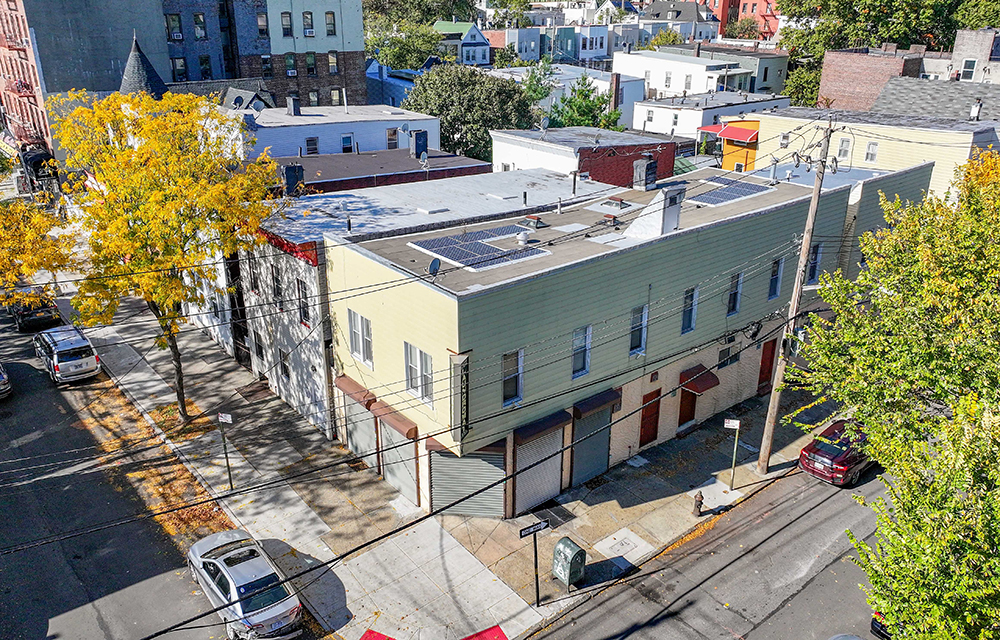
Investment Property Realty Group’s Team Friedman closes five Bronx sales totaling $5.3 million
Bronx, NY Investment Property Realty Group’s (IPRG) Team Friedman closed five sales totaling $5.3 million in the month of September. • 1707 Melville St. sold for $1.35 million. Located in Van Nest, the property




Quick Hits
 (2).gif)

Columns and Thought Leadership

New York’s streets are full again, and the retail numbers prove it - by Noam Aziz
Walk down any New York block this year and you can feel it. The sidewalks are crowded, the storefronts are lit, and the energy that defines this city is back at full volume.

Hunt commercial real estate question and answer: Fortune 500 wisdom - by David Hunt
Yes, there are lessons to be learned from the largest companies in America when comes to managing your real estate. But the decision to buy or lease real estate may not be one of

A guide to finding the right NYC property management company - by Sanjay Gandhi
Being a small to midsize landlord in NYC is an increasingly demanding endeavor. From navigating complex regulations, increased compliance demands to dealing with tenant issues and remediating violations. It is wise to enlist the assistance of a partner, a professional

Positive forecast for New York’s pro-housing push? - by Philip Butler
New York’s housing crisis remains a hot button topic despite growing consensus that varied and affordable housing is desperately needed statewide. Governor Hochul has recently introduced several initiatives to overcome N.Y.’s anti-housing
.gif)