


 (2).gif)
News:
Finance
Posted: June 9, 2026
Redevelopment of former Lincoln Correctional facility commences
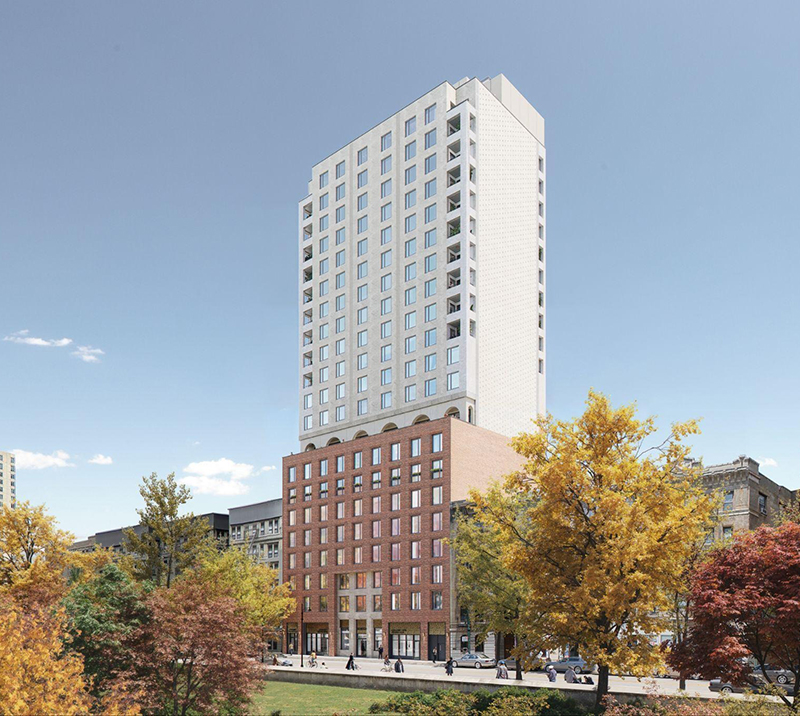 Manhattan, NY LDG Group LLC, Infinite Horizons, L+M Development Partners, and Urbane Development Group closed on over $97 million in financing for the redevelopment of the former Lincoln Correctional facility in Harlem.
With a variety of partners spanning both the public and private sectors, including Empire State Development (ESD), the New York State Homes and Community Renewal (HCR), the New York State Legislature, the New York City Department of Housing Preservation and Development (HPD), the New York City Council, the New York State Energy Research and Development Authority (NYSERDA), and M&T Bank, the project exemplifies the efficacy of public-private partnerships in providing innovative solutions to achieve affordable, thriving, and sustainable developments.
Project financing includes construction loans through M&T Bank and funding through the HCR Affordable Homeownership Opportunity Program, HPD Open Door Program, and the New York State Community Resiliency, Economic Sustainability, and Technology Program secured in partnership with the NYS Assembly and NYS Senate. In addition, the project received a funding award from the NYSERDA Buildings of Excellence competition, which recognizes projects that lead the way in energy efficiency and carbon reduction.
Governor Kathy Hochul announced the selection of Lemor Development Group, Infinite Horizons, L+M Development Partners, and Urbane Development Group (a 65% Minority-Owned Business Enterprise development team) as the winning proposal to redevelop the former Lincoln site in 2023.
Comprising 148,000 s/f, the new building will create 105 new affordable cooperative units for households earning between 40% and 100% of the Area Median Income (AMI), providing unprecedented homeownership opportunities for individuals and families in the neighborhood. Residents of the development will benefit from multiple indoor and outdoor residential amenity spaces throughout the development, including a community room, children’s playroom, co-working lounge, and terraces with views overlooking Central Park.
Additionally, the new building will include 6,000 s/f of community facility space on the ground floor that will provide a mix of community-centric programming focused on arts, education, and culture.
At 22 stories, the project will be the tallest 100% affordable homeownership development in New York City to meet Passive House certification. The highly sustainable, all-electric building will contain an array of energy-efficiency and resiliency features to maximize long-term benefits for future owners and residents. In addition, the project’s location directly across from Central Park and close proximity to public transit and neighborhood amenities will further establish the new development as a hub for affordable housing and community uses in the neighborhood.
Hochul said, “The transformation of the former Lincoln Correctional Facility into affordable homeownership opportunities reflects our commitment to creating more housing, expanding pathways to economic mobility, and investing in communities across New York State. This project will turn a long-vacant site in Harlem into permanently affordable homes for working households while delivering community space, sustainable design and new opportunities for generations of New Yorkers. By repurposing underutilized State property, we are helping more New Yorkers build equity and thrive in the communities of their choice.”
Empire State Development president, CEO and commissioner Hope Knight said, “The transformation of the former Lincoln Correctional Facility reflects New York State’s commitment to reimagining underutilized sites as anchors for housing, opportunity and community growth. This project will deliver affordable homeownership in the heart of Harlem, support a 65 percent Minority-Owned Business Enterprise development team, and create a sustainable, mixed-use building that will serve residents and the surrounding community for generations.”
New York State Homes and Community Renewal commissioner RuthAnne Visnauskas said, “This milestone brings us another step closer to turning the former Lincoln Correctional Facility into more than 100 affordable homeownership opportunities in the Harlem community, helping people build equity and achieve long-term stability. Under governor Hochul’s leadership, we are repurposing underutilized state property, expanding homeownership and making it more affordable to live and thrive in New York. This project is an example of our commitment to innovative housing solutions that result in long-term benefits for families and communities.”
Deputy mayor for Housing and Planning Leila Bozorg said, “It’s great to see the redevelopment of the Lincoln Correctional Facility move forward – delivering affordable homeownership, good jobs, and new community space to Harlem. Congratulations to the project teams on this closing, and I look forward to seeing the transformation of this facility come to fruition.”
Commissioner of the New York City Department of Housing Preservation and Development Dina Levy said, “This building will be a symbol of hope. By turning a correctional facility into 105 new affordable homeownership units, this development represents a brighter future ahead for Harlem. For a community that has long lacked access to affordable homeownership, this is overdue. We’re proud to work with our City and State partners to bring this transformative project to life.”
State senator Cordell Cleare said, “On behalf of my community, I welcome another milestone in this project which will provide permanently affordable co-op housing that is targeted to the actual incomes of the people I represent. The longstanding residents of Harlem deserve this, and I daresay this affordability model should prevail all over our neighborhoods.”
New York State assemblymember Eddie Gibbs said, “Today’s announcement of funding for the Lincoln Correctional redevelopment shows the power of the people. A few months ago, not a single unit was going to be made available for people making under 80% of the Area Median Income. Now, 30% of units are set aside for households earning 40% and 60% of the Area Median Income, giving East Harlem residents a real chance at purchasing property right off Central Park. Thank you to all of the community members who joined press conferences, made calls and showed up at public hearings to make your voices heard. This win is for the community and by the community, and I’m proud to be your elected representative in this fight.”
New York City councilmember Yusef Salaam said, “Today’s closing on the redevelopment of the former Lincoln Correctional Facility marks a transformative moment for Harlem and for the future of affordable homeownership in New York City. This site stood vacant across from one of our city’s greatest public assets, and now it will become 105 affordable cooperative homes for working families, creating long-term housing stability and generational opportunity. This project reflects what is possible when public and private partners come together with a shared commitment to equity and community investment. Beyond creating affordable homes, this development will deliver meaningful community space, cultural programming and family-centered amenities that strengthen the fabric of Harlem. I commend Empire State Development, the development team and all of the community stakeholders who helped move this important project forward. I look forward to seeing this vision come to life for Harlem residents.”
Ken Morrison, managing member and principal at LDG Group LLC, said: “Harlem is my home, and it is a privilege to work with the development team on a project located just steps from where my parents were raised. This development demonstrates what is possible when government, elected officials, and private partners come together with creativity and purpose. It shows how thoughtful urban and economic development can create real, sustainable homeownership opportunities for the community that has long called this neighborhood home,”
Randall Powell, co-founder and chief executive officer at Infinite Horizons, said: “The redevelopment of the former Lincoln Correctional Facility demonstrates the power of collaboration and innovation in addressing the complex challenges facing the affordable housing industry. We are so grateful to L+M Development Partners, Urbane, and LDG Group LLC for their meaningful partnership. We also like to thank all the community leaders at the state and local levels who worked with us to bring this project to life. We are confident that the revitalization of this former correctional facility, once complete, will be a major success in delivering beautiful homes that residents can truly take pride in.”
Elaine Braithwaite, managing director at L+M Development Partners, said: “Transformational projects like this one do not happen without close collaboration between the public and private sectors, and we are grateful to all our partners for their support to reach today’s exciting milestone. Our team is thrilled to move this project forward and provide generations of Harlem families with unparalleled affordable homeownership opportunities. Once complete, this project will see the site of a long vacant correctional facility reimagined as a community hub offering arts, educational, and cultural programming, affordable housing, and world-class views overlooking Central Park.”
James Johnson-Piett, principal and CEO of Urbane, said: “The redevelopment of the former Lincoln Correctional Facility takes a place built to take freedom and turns it into an engine of generational wealth — 105 permanently affordable co-op homes priced to reach the lower-income Harlem families most often locked out of the wealth real estate creates in the very neighborhoods they built. With Artistic Noise and other community partners anchoring the ground floor, the restorative justice ethos runs from cornerstone to rooftop. We are grateful to our partners at the state, the city, the Harlem community, and our development partners for proving that affordable housing can do more than shelter — it can repair, and establish a new standard for mixed-income development and a real pathway to economic mobility and wealth creation.”
MORE FROM Finance
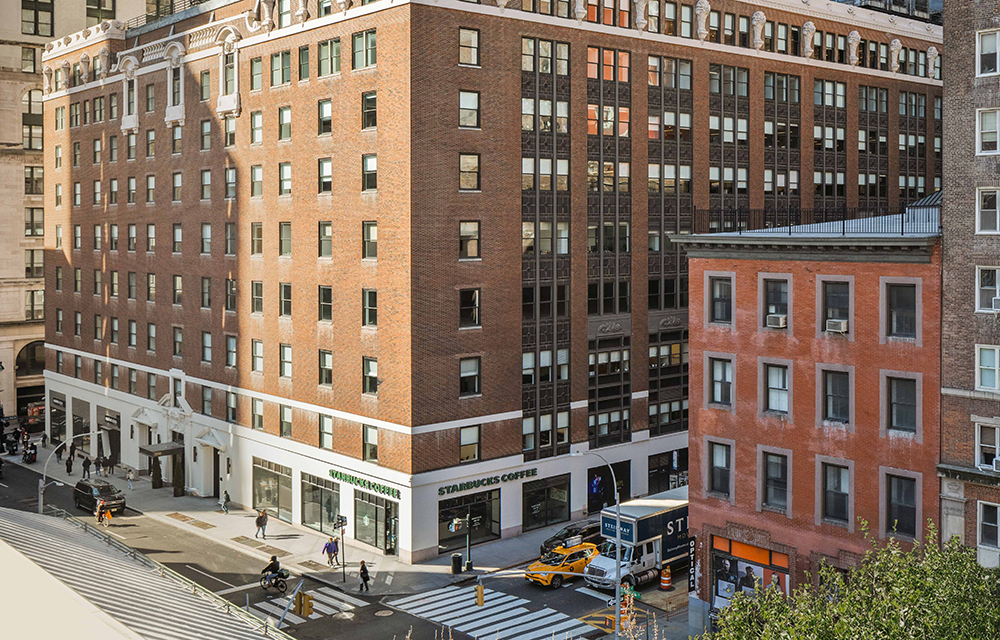
George Comfort & Sons completes $386 million refinance of 200 Madison Ave.
Manhattan, NY George Comfort & Sons, and its partners Loeb Partners Realty and Jamestown, completed a $386 million refinancing of 200 Madison Ave., its 750,000 s/f Grand Central district office

 (2).gif)

Quick Hits
.jpg)

