



News:
Brokerage
Posted: September 22, 2008
Recession or adjustment in upstate real estate values? The “mortgage crisis†is overblown
Real estate values have been negatively affected by the recent “mortgage crisis” in the upstate New York. However, much of this has been media driven. As an example, mortgage foreclosure rates which are substantially on the rise on a percentage basis, is not the purported catastrophe as reported since far less than 1% are foreclosed upon. I talked with the economist for the National Association of Realtors earlier this year. He summarized the national outlook as an adjustment of supply and demand with some markets in Florida, Nevada and California having the largest adjustments. He further stated that most of upstate New York was facing a small adjustment; nothing out of the ordinary. So far during 2008 the residential and non residential markets in upstate have held up well. Besides relatively low supply, the weak U.S. dollar has affected real estate positively even in upstate New York. As an example, in Rochester within the last year a large block of the Eastman Kodak industrial facility was purchased by a Buffalo investor. Within nine months the property was sold to Canadian investors for approximately 50% more than the original purchase price. On my street within the last month a house had three full price offers within one day. These are not an isolated case.
The media has an agenda to sell its stories. Of course, the premise of much of the media is to sell “bad news.” Unfortunately, the consumers of media “eat it up” like drug addicts and media gives their customer base what they want. They want to sell their product and bad news does sell. Also, as a political independent I try to look at politics in an objective non bias manner. It is obvious that the majority of the media has vilified President Bush and tainted the republicans far more than deserved. As an example the approval ratings of President Bush are higher than the now democratically controlled congress. Most of the media at least subconsciously is pushing an anti-republican agenda. If this wasn’t bad enough, a large minority of the media consciously puts out politically bias reporting. I recently talked with a veteran television news anchor in a large upstate city. He stated media bias is significant and is driven at least in part by the journalism schools in the U.S. He considered it a major problem. Some of the politicians and media are declaring that the current “mortgage crisis” is the worst since the Great Depression. I wasn’t around during that time. However, early in my career which began in 1973 there was a low usury ceiling on home mortgages in New York state of around 7.5% which was later increased to 8.5%. Just before it was lifted in 1979, the usury ceiling created a mortgage crisis in New York state. When the bank’s cost of money was high they would literally shut the tap off in regards to residential mortgage funds. This was a substantial problem in 1974 and other parts of the mid 1970s. In 1980 and part of 1981 both residential and commercial mortgage rates were at an all-time high approaching 16-18%. In the late 1980s there was the so-called savings and loan crisis in which many lenders were dissolved and/or taken over by the Resolute Trust Corporation. The current FNMA and Freddie Mac bailout is serious but a vast majority of their mortgage portfolio which is in the trillions of dollars are solid loans and even some of the weaker loans will remain on the books.
In summary, the country’s “mortgage crisis” is overblown. Certainly, in upstate New York this so-called crisis is only a blip on the radar screen. Values in upstate New York have held up well. The moral of the story is don’t believe everything you read except this article.
John Rynne, MAI, SRA, is president and owner of Rynne, Murphy & Associates, Inc., Rochester, N.Y.
Tags:
Brokerage
MORE FROM Brokerage
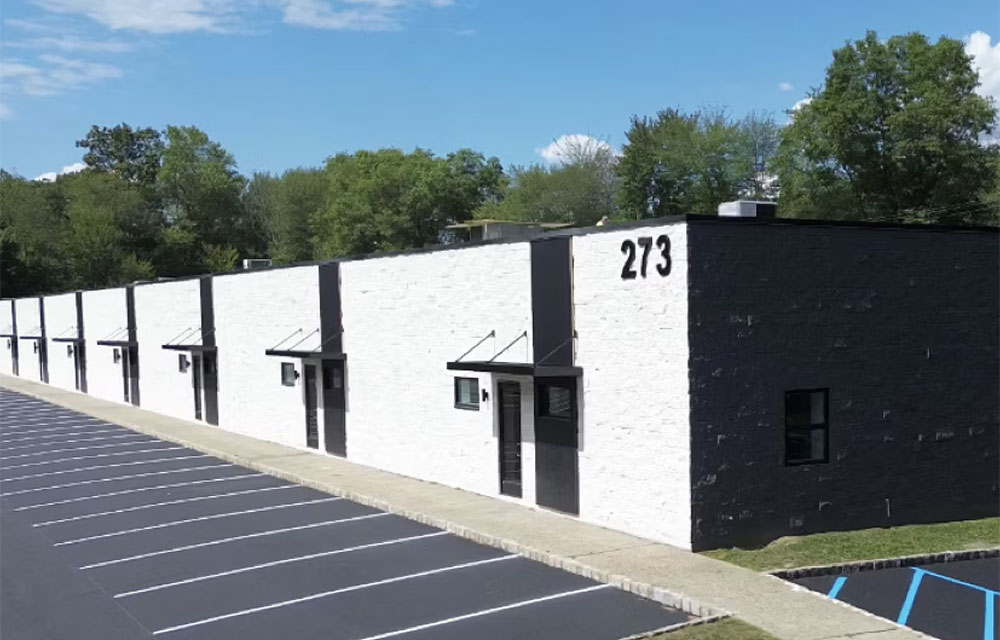
Resource Realty of Northern NJ delivers complete lease-up of 235 Franklin Rd. for Commerce Park Investors
Randolph, NJ Resource Realty of Northern New Jersey (RRNNJ) has completed the lease-up of a 10-unit small-bay industrial property at 273 Franklin Rd., marking the culmination of an investment strategy that began



 (2).gif)

Columns and Thought Leadership

A guide to finding the right NYC property management company - by Sanjay Gandhi
Being a small to midsize landlord in NYC is an increasingly demanding endeavor. From navigating complex regulations, increased compliance demands to dealing with tenant issues and remediating violations. It is wise to enlist the assistance of a partner, a professional

Positive forecast for New York’s pro-housing push? - by Philip Butler
New York’s housing crisis remains a hot button topic despite growing consensus that varied and affordable housing is desperately needed statewide. Governor Hochul has recently introduced several initiatives to overcome N.Y.’s anti-housing

Hunt commercial real estate question and answer: Fortune 500 wisdom - by David Hunt
Yes, there are lessons to be learned from the largest companies in America when comes to managing your real estate. But the decision to buy or lease real estate may not be one of

New York’s streets are full again, and the retail numbers prove it - by Noam Aziz
Walk down any New York block this year and you can feel it. The sidewalks are crowded, the storefronts are lit, and the energy that defines this city is back at full volume.
.gif)