



News:
Brokerage
Posted: June 24, 2013
Q&A with Sklaar at Fine and Raw - retail/manufacturing
independent commercial broker in N.Y.C. met up with former Morgan Stanley financial analyst Daniel Sklaar at his coffee shop and chocolate factory Fine and Raw, 288 Seigel St. in Brooklyn's Bushwick section to talk retailing real estate.
Fine and Raw makes artisanal chocolate using personally selected, sourced, sustainable ingredients - selling in Dean and Deluca, Health Nuts and Whole Foods. As a small retailer they faced hurdles critical to continued success - including a place where they can be found.
Q: You're in Bushwich behind a coffee bar making chocolate. What story are you telling?
A: For me coffee is a $2.49 admission price to a socially interactive meeting place. With some billions of cups of coffee sold annually, retailing is the story happing when it sells.
Q: Your store has retail space and manufacturing - retail rents for manufacturing space, that's an expensive business model.
A: It is. I think of it as vocabulary. Since the beginning of time coffee and chocolate have gone together. Fine and Raw is raw - as in minimal interferences, minimal distance between nature and the palette and, fine - as in evolved. We wanted to express both visual and vertical integration into our retailing image strategy so this really works well for us.
Q: You are selling chocolate and coffee.
A: I'm a retailer selling the experience of chocolate, fine coffee is the introduction. There is a counter between the customer and the barista - the counter is an open space that starts a conversation. You can't miss the chocolate manufacturing in the back or the free samples on the counter. In retail the first experience leads to repeating sales. Most people come here for the coffee and return having bought our chocolates elsewhere. In this store we sell coffee, the chocolate sells itself. But, I love the connection chocolate makes for others. In retailing people like the product if they love the experience.
Q: Did Morgan Stanley help you become a retailer?
A: Well yes. Spreadsheets became another form of meditation where you go deep into scenarios of risk defining business in its most empirical terms. At Morgan we defined retailing by "the what is analysis" my boss said its all day-by-day. Retail environments are most successful as merchants pair it down to their key message, their thrive message delivered day-by-day. "Mantra-Morgan."
Our message is if you want great coffee it's here. If you want a fast coffee, that is next door. If you want great chocolate, it's here. For a $2.49 admission you can hang here learn about chocolate, coffee, see local art, meet friends - you can have an experience. Our day-to-day, is: Great coffee makes great connections. Morgan did help me become a better retailer - I drank a lot of coffee there.
Q: How did you feel about spending real money on opening your first store front?
A: My investors have watched me for five years, there is a shared trust.
There are only a few ways to get noticed as a start-up: 1.) Shelf space and 2.) Location. We tried for years to grow with shelf space alone, it worked - to a point. As luck would have it the NYT did an article where we and 5 other entrepreneurs were featured. They found us from the sidewalk by then we had the credibility of our existing customers. They found us same way you found us, you walked in.
People like to walk into a new adventure. We didn't know that until we opened. When we did open those first few customers were our world, then our world began to unfold.
Q: What is retailing to you?
A: Its chemistry - chocolate is chemistry too - a location and an opportunity. When put together well retailing is a place where people want to arrive. Retailing is creating a destination between the merchant's passion and the customer's money.
Q: Today what are the critical elements of a retail location?
A: Retail happens within three feet of both sides of the door. What does your store front say? What happens when the hand touches the door? The critical element of retail is connecting people with the larger world you make available.
Brian Thompson is an independent commercial broker and managing agent, New York, N.Y.
Tags:
Brokerage
MORE FROM Brokerage
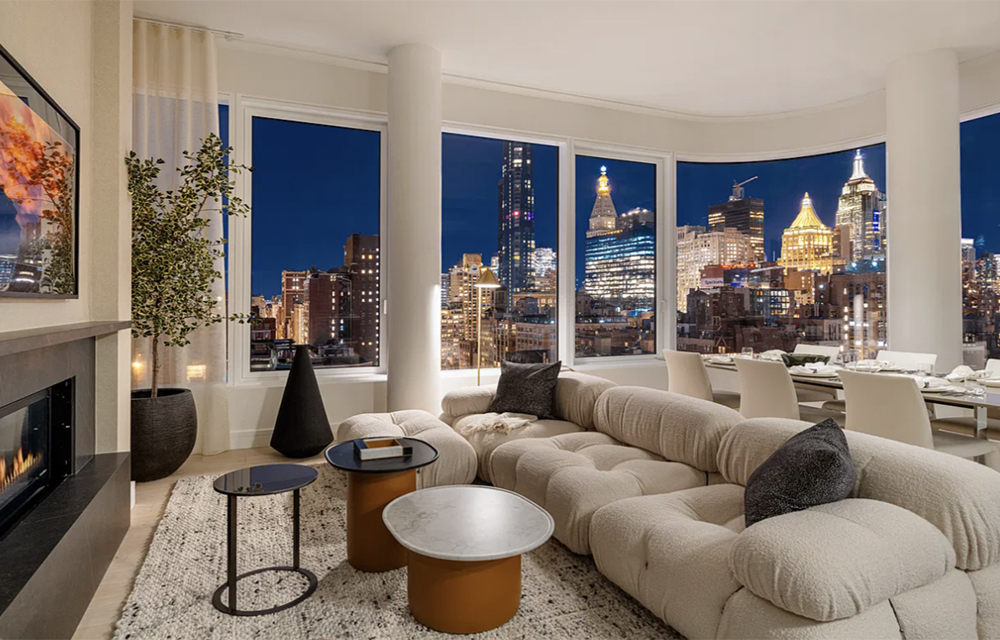
200E20TH sells out in Gramercy, penthouse A closes out sales at the CetraRuddy-designed condominium residences
Manhattan, NY 200E20TH, the CetraRuddy-designed architectural masterwork that brought a curved, contemporary sensibility to Gramercy’s Beaux-Arts streetscape, has




Columns and Thought Leadership

Hunt CRE question and answer: Choosing a real estate agent - by David Hunt
First, we will only work with one agent exclusively. The primary reason is that we want that agent to legally represent our client’s interests. In New York State, a real estate agent has a fiduciary

Hunt commercial real estate question and answer: Fortune 500 wisdom - by David Hunt
Yes, there are lessons to be learned from the largest companies in America when comes to managing your real estate. But the decision to buy or lease real estate may not be one of

New York’s streets are full again, and the retail numbers prove it - by Noam Aziz
Walk down any New York block this year and you can feel it. The sidewalks are crowded, the storefronts are lit, and the energy that defines this city is back at full volume.

The art of investing in real estate - by Thomas Donovan
Real estate investing is as much an art as it is a skill. No one can time the market, or the factors that drive it, perfectly. Location, zoning, size, transportation, and neighborhood density give you a baseline for
.gif)