



News:
Brokerage
Posted: February 19, 2019
An attorney discusses pre-construction management services and mechanic’s liens - by C. Jaye Berger

Offices of C. Jaye Berger
As an attorney who focuses on construction issues, I see mechanic’s liens being filed nearly every day for labor and materials used on construction projects, which have not been paid for by the property owner. Labor and materials for constructing or renovating a building or even a condominium unit are pretty straight forward. However, one category of services that is a bit more controversial and discussed less often is “pre-construction management services.” It should be mentioned at the outset that supervision of actual construction, which improved property, can form the basis of a lien.
Whether or not pre-construction management services can form the basis for a mechanic’s lien can be open to debate, depending on the nature of the labor or materials furnished and when they were furnished. By definition, pre-construction services are those which are completed before the physical construction work begins on the property. By contrast, one court found professional engineering and surveying services in connection with obtaining municipal approvals for development of an equestrian facility may be lienable.
Typically, when a mechanic’s lien is filed, it is met with a demand by the property owner for an itemization of the labor and materials comprising the lien. The descriptive words used in the lien should be carefully chosen, as should those used in the underlying contract describing the scope of services. Those answers may form the basis for a motion by the owner or developer to try to discharge the mechanic’s lien. A motion to discharge may be filed “[w]here it appears from the face of the notice of lien that the claimant has no valid lien by reason of the character of the labor or materials furnished and for which a lien is claimed...” New York Lien Law § 19(6). Up until recently, there have been few cases to use as guidance for authority on deciding such cases. Also, in the event that such a lien is vacated, it leaves the door open for a counterclaim for willful exaggeration of lien.
The general idea is that the labor or materials used and liened for are supposed to be for the “improvement” of real property at the request of the owner or at least with his consent. This applies to landlords consenting to tenant renovations. The “improvement” is defined as including inter alia demolition, erection, alteration or repair of structures connected with the real property or for its improvement, including the drawings by an architect or engineer of plans to be used for or in connection with such improvement. Therefore, assisting in procuring subcontracts, bids and permits may not be lienable. However, superintending new construction or demolition of the old building may be considered lienable, because it was necessary work for construction and improvement of the real property.
The actual services must be analyzed to determine whether they resulted in a permanent improvement to real property. Services such as preparing site logistics and access plans for the property and a constructability review for the project at the property may be included in a lien. As a general matter, the lien law statute is liberally construed to secure the beneficial interests and purposes of the lien law. This can result in a lien not being entirely invalid on its face and subject to summary discharge, unless there is clear case law precluding a mechanic’s lien for that type of work. Therefore, lienors should be more descriptive of the services they performed than just using boilerplate language such as “pre-construction management services.”
If the term “preconstruction management services” is used in the lien, the court reviewing such a lien would have to look at a more elaborate description of the nature of the services on order to decide the motion. This might be found in affidavits in the motions opposing discharge of the lien. The bad news is that this assumes that there may have to be some motion practice to reach that conclusion.
The kinds of services which may be lienable are comparable to those provided by architectural and engineering firms for planning work, which recommend and consult on systems, site logistics and access plans. The caveat is that supervision of construction work may not be lienable if the supervisory work occurred after the construction work has ceased. In other words, if the property is not being improved, there is nothing to supervise and no basis for a lien. Therefore, when the services were provided is as important as what the services were.
Would-be lienors should consult with knowledgeable legal counsel about their current contract and proposal language describing the scope of their services relative to the possibility of filing a mechanic’s lien in the future.
C. Jaye Berger, Esq, is a principal at the Law Offices of C. Jaye Berger, New York, N.Y.
Tags:
Brokerage
MORE FROM Brokerage

Investment Property Realty Group represents The Vaja Group in $26.4 million acquisition of fully entitled Astoria development site
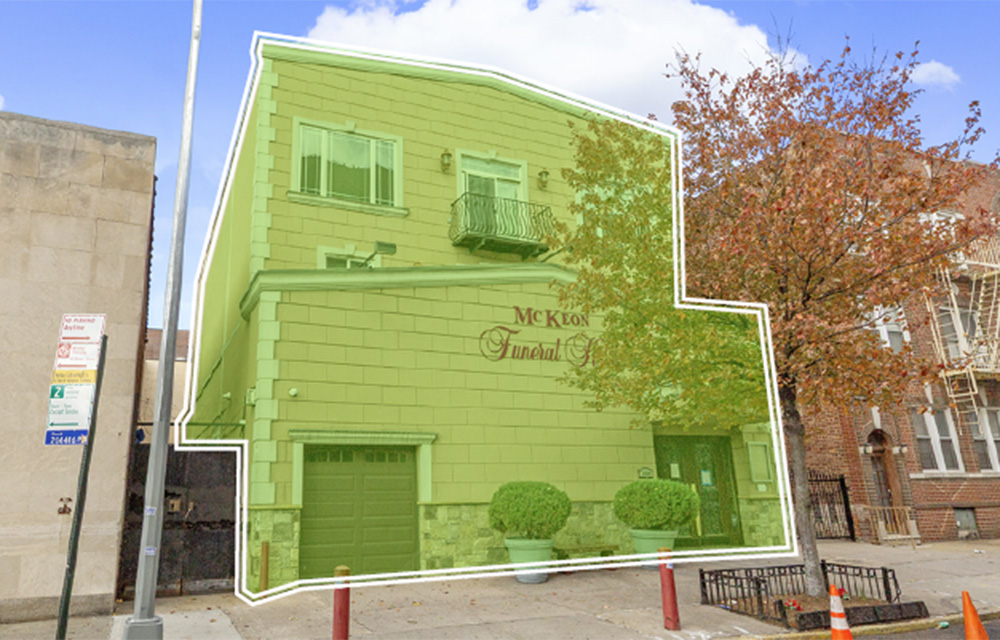
Queens, NY Investment Property Realty Group (IPRG) arranged The Vaja Group’s $26.39 million acquisition of 24-41 31st St., a fully entitled development site in Astoria. The 29,638 s/f site traded for $176 per buildable s/f.





Columns and Thought Leadership

New York’s streets are full again, and the retail numbers prove it - by Noam Aziz
Walk down any New York block this year and you can feel it. The sidewalks are crowded, the storefronts are lit, and the energy that defines this city is back at full volume.

Hunt commercial real estate question and answer: Fortune 500 wisdom - by David Hunt
Yes, there are lessons to be learned from the largest companies in America when comes to managing your real estate. But the decision to buy or lease real estate may not be one of

A guide to finding the right NYC property management company - by Sanjay Gandhi
Being a small to midsize landlord in NYC is an increasingly demanding endeavor. From navigating complex regulations, increased compliance demands to dealing with tenant issues and remediating violations. It is wise to enlist the assistance of a partner, a professional

Positive forecast for New York’s pro-housing push? - by Philip Butler
New York’s housing crisis remains a hot button topic despite growing consensus that varied and affordable housing is desperately needed statewide. Governor Hochul has recently introduced several initiatives to overcome N.Y.’s anti-housing
.gif)
September Promotion
