


 (2).gif)
News:
Spotlight Content
Posted: October 27, 2014
Poskon of Trinity: Exciting to turn over a great project
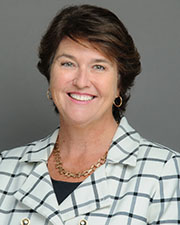
Name: Jennifer Poskon
Title: Project Manager
Company Name: Trinity Building + Construction Management
Years in Commercial Real Estate: 10
In the last 12 months, which project, transaction, honor or accomplishment are you most proud of and why?
Two things from the last 12 months really stand out in my mind. I received an official promotion to project manager (which I had been functioning as for some time), and completed a restaurant in the DUMBO area of Brooklyn that was quite a transformation of a very old building. It's always very exciting to turn over a great project.
What were your biggest fears when you started out in your profession?
I had typical fears that I think most young professionals have, such as wondering if I was good at my job, if I'd be successful, would my co-workers like me, etc. I think my biggest fear, however, was getting into the construction field (which at the time was very male-dominated) as a female - I worried if I'd be taken seriously. I can still remember the first time I was asked if I was the "coffee and donuts girl!"
What was your first job and what did you learn from it?
My first real job was as an estimating intern at Turner Construction. I learned a lot about construction, how to read plans and details, how to use unit costs to verify subcontractor quotes, etc. I think the biggest thing I learned from working there is just the sheer importance of teamwork. We had a really great estimating team - everyone brought different strengths to the table.
What are you doing differently in 2014 that has had positive impact on your career?
I'm learning to take one thing at a time, and that it's ok to do so.
As a project manager, I tend to try and work on change orders, RFI's, Submittals, and email correspondence all at the same time, which can result in about 10 half-completed emails by lunchtime! As important as work is, you need to find a good work-life balance.
Tags:
Spotlight Content
MORE FROM Spotlight Content

2026 Women in Commercial Real Estate: Deborah Smith, The CenterCap Group
What leadership lesson has made the greatest impact on your career? Leadership isn’t about being the smartest person in the room; it’s about creating an environment where the best ideas win.



.png)



Columns and Thought Leadership

CRE Guide Featured Company: Merritt Environmental Consulting Corp.
Merritt Environmental Consulting Corp. (MECC) was established in June of 2009 after being part of a larger engineering firm for almost 20 years. The focus of the company is to assist lending institutions, attorneys, real estate investors, and property owners with environmental concerns. Today, MECC has offices in New York, Florida, and Vermont and has grown into a regional consulting firm serving clients along the East Coast.

2026 Developing Queens: Long Island Board of Realtors advances commercial growth and advocacy in Queens
The Long Island Board of Realtors (LIBOR) Commercial Network continues to play a key role in advancing opportunities and strengthening the commercial real estate landscape across Queens. Through targeted programming and global outreach

From vacancy to vitality: How adaptive reuse is reshaping Long Island’s CRE landscape - by Andrea Tsoukalas Curto
Adaptive reuse has become one of the most important conversations in commercial real estate today. Long Island has a large inventory of aging retail, office and industrial

Properly serving a lien law Section 59 Demand - by Bret McCabe
Many attorneys operating within the construction space are familiar with the provisions of New York Lien Law, which allow for the discharge of a Mechanic’s Lien in the event the lienor does not commence an action to enforce following the service of a “Section 59 Demand”.
September Promotion
